Episode Transcript
[00:00:02] Speaker A: Part two, Part two, part.
Instead of doing even our opening music, we're just jumping in because there's a little bit of a bonus episode. Go home. Go home and listen to bonus. Go home and listen to. Or if you already are at Horror in the Car, listen to the song Science by System of a Down.
Because there's some profound. There's some profound lyrics in there about the.
The marriage of science and religion, which was a big theme from last week.
We were listening to it before the show started, so that's the only reason we bring it up. That's instead of our bump music this week. If you would like a little bit of a bump music, go listen to that. It's three minutes long.
[00:00:40] Speaker B: Sure you don't want to sing it, Nate?
[00:00:41] Speaker A: Science is a. Recognize the single most voting. I'm not gonna sing it. I'm just kidding.
[00:00:46] Speaker B: Yeah.
[00:00:47] Speaker A: Yeah. And then Jason. There we go. That's all we needed was just you hitting us. Yeah. All right, Jason.
[00:00:52] Speaker B: Welcome to the bonus episode of the weekly Deep Dive podcast. We're covering a little bit more of Noah. So last week, as Nate and I were talking, there was just. It felt like so much spilling over, even after the episode was done recording, we wanted to come back and hit a few things.
So let's.
Let's talk a little bit about the birds.
[00:01:16] Speaker A: Okay, let's talk about the birds.
[00:01:18] Speaker B: So when Noah gets to the end of the deal and the water is drying up, he's. He's hit ground.
He obviously knows he's hit ground, but he doesn't know if he can open up the hatch because two thirds of the ark is underwater. And if you still have 10ft of water, because the ark is about 30ft high, maybe more, depending on how you define a cubit, and the water is still there, it's going to flood in or cause problems. He's got to wait till it recedes, and he can't see quite where it is out of the window that he's created the opening, or whatever the case may be that he's his viewport.
So he sends forth a raven.
The interesting thing about a raven, I think a lot of people try to associate that with the death and carnage that comes with the flood and the destruction, because they say that the raven just went out there and fed on the carcasses. And the raven is a black bird, symbolic of death, as opposed to the dove that's going to go out there as the Holy Ghost representing life.
But I don't think the whole purpose is just to have a Raven, go feed on the carcasses.
[00:02:25] Speaker A: Yeah, it doesn't make any sense.
[00:02:26] Speaker B: No, there's a little bit more behind this.
[00:02:29] Speaker A: Okay.
[00:02:30] Speaker B: Maritime.
When we're talking about sailors and, you know, you've got the pirate there with the bird sitting on his shoulder. Kind of a classic image comes to be that there's actually a significance to the birds. When you send.
When you're out there sailing, you can't always see the stars. You can't always tell where you're at and where you're going to be. But you send that bird out and it has this innate ability to find land, and it's searching for something. It's searching for what it knows to be there and instinctively knows where to go to find it. And so as he's sending this raven out, it says in Genesis, not that the raven doesn't come back, but rather that the raven goes to and forth. So if this raven is instinctively going out and finding land, however far away it is from where they are at, as the ark is grounded in its spot and coming back and going and coming back, the time it takes for it to go and come back is giving Noah an idea of how fast those waters are receding. Until finally Noah states, or states in Genesis that Noah becomes aware that the water has now receded off the Earth. The raven just goes. And it is land all over. Okay, but he needs. Scientifically speaking. So this is.
This is from a science perspective, Noah is using his wisdom here.
The dove is a different bird. The dove is going to be trying to nest, and unlike a raven, it's not going to be looking for some rocky cliff or edge somewhere that's going to be looking for a flat, horizontal place. The ark is actually a fairly good spot for a dove to build a nest.
So as the dove is going out, you would think it would be kind of weird if Noah is just sending a dove out. How does it know that he's going to be bringing a branch back? Well, that's the whole purpose. It's trying to build this nest, and it is if it takes a branch.
And what happens with plants if you give them too much water?
The roots get waterlogged, the plant dies, and it's not able to produce green.
But as it breaks these in, it brings it back.
At one point in time, no one notices this olive branch that has green, that has new life. And now he knows not only that the water has receded from the Earth, but that the mud, it is receded from the ground itself, that it is stable enough, that New life can now come.
So Noah is relying on the scientific side of things, but we also see a very symbolic faith side of this story as well. Because Noah does not open the door and come out of the ark at this point, he still waits even further.
And it has to be the voice of God seven days later telling him, now it's time for you to come out. If he was just waiting for God all along, why did he even send the two birds out before?
And what I see here is not just a science application to understanding his surroundings and understanding the world around him, but I see a faith based progression. Where you go from the raven, which is representing this innate ability to find land, you know there's something more for.
[00:05:42] Speaker A: You, like the light of God, like.
[00:05:44] Speaker B: The light of Christ lights everyone that's born into the world. We have this quest, this desire to know who we are, where we come from. And this drives us to the next progression. Hopefully that light steers us enough to where we can now receive. And it's the symbolic of the dove is returning greater light and knowledge by breaking off these branches. But also symbolic of the Holy Ghost and the Spirit. And the whole purpose of the Spirit is to bring you to Christ.
So the Spirit prepares Noah, the dove is preparing Noah, bringing him more information. But ultimately, as he stays faithful, he receives the, the second comforter, which is, as Joseph Smith describes God himself being able to have that confirmation, that voice of God telling him what to do.
[00:06:39] Speaker A: Awesome. Fantastic. That's some great insight.
[00:06:42] Speaker B: Yeah.
Something else that I found super fascinating this week as we were studying, when we talked about Enoch, I said one of the most powerful lessons I learned from Enoch was when he sees the heavens weep and he sees God weep over these people and he says, how can you weep over the residue to the point where he starts weeping. It's a touching story and it teaches us about charity and that final what does it take to become a God?
Well, when reading from some of these other ancient Near Eastern materials, talking about this comes from Assyria's library dating back to 700 BC and the account that they have of the Flood, it says, Ishtar cried out like a woman in travail. The sweet voiced mistress of the gods moans aloud. The Anoki gods weep with her. The gods all humbled, sit and weep, their lips drawn tight, one and all.
So I think it's cool because you don't get that account in the Genesis. You get it from Joseph Smith's inspired version as he's talking about this, this story with Enoch and God and the heavens weeping, all played out in detail. And yet this inspired version from Joseph Smith has a parallel or an example coming from.
Not the Bible, not a source he would even be familiar with, but other ancient texts that kind of reaffirm or re.
I don't know, what's the word? Witness to this inspired truth.
[00:08:19] Speaker A: That's awesome. That is awesome. I have never heard that before.
[00:08:23] Speaker B: One other point is in the Epic of Gilgamesh, just to paraphrase this, at the end of the deal, Gilgamesh is going to Noah because Noah becomes like a God. And he wants to understand how it is that he became like a God.
When he gets there, he is shocked because he expected to see a God. He says, as I look upon thee, thy features were not strange, even as I am art thou. Tell me, how did you join the assembly of gods? And as Noah responds, it's fascinating because he says that God went aboard the ship and then he held me by the hand and brought me into the ship. So as we've been talking about this ark.
[00:09:07] Speaker A: Interesting.
[00:09:07] Speaker B: Yeah. As a temple.
And as we talk about the temple that's sealed with pitch on the outside and the inside. And this was a veil because it kept the wicked people out. They could not pass through the ark to be saved.
But God comes into the ship, takes Noah by the hand and brings him into his presence in the ship. And once he brings him into the presence, he takes his wife and brings her into the presence. And then he stands between the two, touches their forehands and blesses them, saying, hitherto have you been but human.
Henceforth you and your wife shall be like unto us gods. Wow, it is a cool story.
[00:09:52] Speaker A: That is amazing. That is again some incredible insight there.
[00:09:57] Speaker B: And this comes from Asher Banipal's library in Assyria. When we talk about Assyria, we don't typically think of the religious God fearing, believing in the same Old Testament stories as we. We credit them more with the destruction of Israel.
[00:10:12] Speaker A: Yeah, we do.
[00:10:14] Speaker B: So going back to this account, we've talked about Adam falling in this quest to receive restoration, the paradise. We see Enoch, who was throned on the right hand of God and became as it was God.
And now we're seeing this account with Noah, this idea of redemption, being able to go back into paradise and reclaim that which was lost through the journey that he had to go through. So I think that's kind of cool, putting the ark in that temple like setting and showing that progression, that salvation, salvation doesn't mean that we get to worship God. It Means we get to be like God, and that's what it's all about.
How do we be like unto Him? How do we come unto Him? And how do we return to be with Him?
[00:10:59] Speaker A: Fantastic.
[00:11:01] Speaker B: All right.
Maybe the highlight of what we were talking about last week takes us back to the window itself as we were looking at this idea of pressed oil.
And for me, I think it came a little bit slower trying to make that connection between oil and light, because the word itself was referencing glistening.
But the name for anointing oil comes from the same verb of pressing this oil.
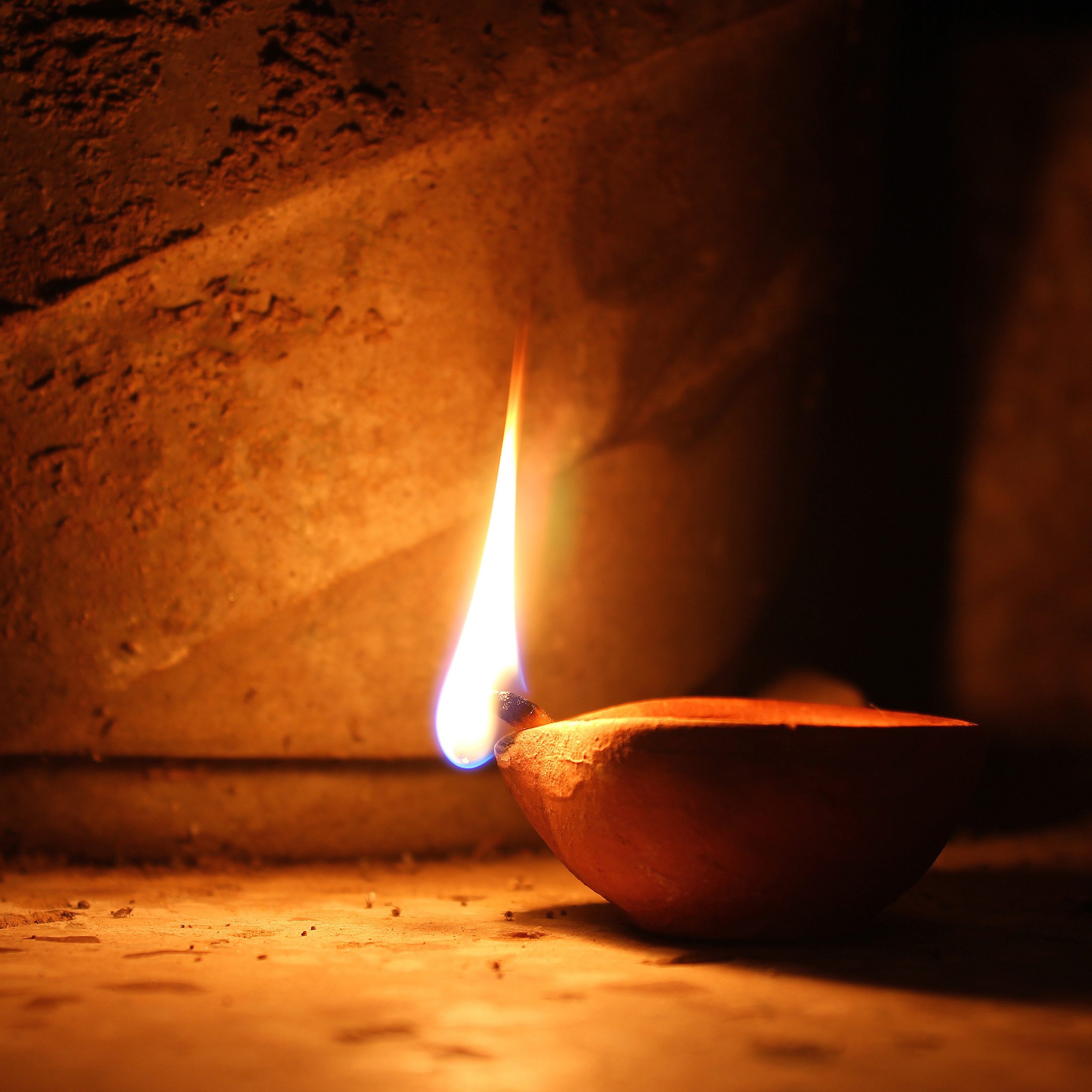
And it is the same oil that is used in lamps that you burn.
And so oil doesn't just represent light because it glistens and it reflects light.
Oil becomes the source of your light.
And, I mean, we can talk about the parable of the 10 virgins, right?
[00:11:53] Speaker A: Which I think we should. I mean, that's immediately when we were kind of going back and forth a little bit on Sunday, which was why I was just like, oh, we got to do this bonus episode was because even when.
Even when I sent you, even when we were just texting back and forth, and my phone tried to autocorrect lamp into the little, like, emoji, and then I let it correct it, and then I was just like, oh, by the way, what does that lamp look like?
Like, do this with your phone right now, if you're listening to this and your phone kind of tries to autocorrect the. The words you use into the word to a picture. Into the picture. And it's interesting because I'm like, hey, what does this look like?
You're like, oh, that looks like a vessel.
Yeah, it's a boat.
It looks like what is described as the ark. And then you're like, oh, my goodness.
That even got us on a whole other tangent of that, too. But it is interesting to your point then, too, to think of, okay, that vessel or that thing holding it. And again, I'll let you. Because you, I'm sure, have more of an intense. Because I've just been trying to think about this. I'm like, there could be a lot of symbolism with that thing that holds within it, like you said, the fuel for that light, right? Which, again, is the flame at the top of that thing, right? Even almost kind of visually symbolic of that ark and at the top of it being the light or the fuel for that light. And that's when I was like, okay, there's got to be a great link into the parable of the 10 virgins here. And you have some really great insight on this.
[00:13:28] Speaker B: Well, going back to this window. Right. How does one word get translated in one sense by Jonathan saying that it's a stone that he finds in a riverbed versus a source of light versus oil, Pressed oil.
And how do you have those many different meanings? But as you were talking about that, when you showed me that picture of the lamp and the text on accident or whatever the case may be, it even made me think, that lamp is made out of baked clay. It is a rock.
It is a rock from which light is shining.
[00:14:04] Speaker A: That's awesome.
[00:14:05] Speaker B: And where's that flame? What's fueling that flame that's causing that rock to glow is the oil that's inside of it.
And so, yeah, instinctively, I think we both kind of went to this parable of the ten virgins. And I know this is all New Testament stuff, but excuse us. It's a bonus episode.
[00:14:22] Speaker A: It's a bonus episode.
[00:14:23] Speaker B: We do whatever we want in this.
[00:14:24] Speaker A: I love the New Testament.
[00:14:26] Speaker B: So when we talk about these 10 virgins, all 10 of them had oil in their lamps. And I think maybe that is a distinction we don't quite get.
All of them were full. It is not like one had a lamp that was full and one had a lamp that was half full or almost empty. All of their lamps were full.
The difference between the five wise and the five foolish were that the wise ones took a second vessel with them with oil in it to refuel the lamp when it ran out.
And the foolish ones, they didn't have that backup vessel. And you can almost. We've been talking about this a lot. Maybe you're sick of us and want to throw a tomato at us, but that's the benefit of doing a podcast instead of a live audience. We don't catch vegetables.
[00:15:16] Speaker A: We should do a live thing someday. That would be great.
[00:15:19] Speaker B: It would be fantastic. I would love it.
[00:15:20] Speaker A: If you ever want us to come and do a fireside, I don't know if we can, but still. Okay, keep going.
[00:15:25] Speaker B: I know a theater we could rent out and everything, guys, just let us know.
[00:15:28] Speaker A: Okay.
[00:15:28] Speaker B: Anyhow, the difference is, do you want to be walking with your hands full with both hands being burdened?
If you think.
[00:15:41] Speaker A: If you.
[00:15:42] Speaker B: If you look at the extra effort it's going to take to take this second vessel and have this preparation and carry the extra weight and have both of your hands occupied while you're going somewhere, You. It's very easy for you to want to take the easy way out and just say, you know, what, this one's full. It's going to be enough, and I'll be fine and just leave it behind.
[00:16:03] Speaker A: And to the point, too, is it takes preparation to even go get it in the first place.
[00:16:08] Speaker B: And.
[00:16:11] Speaker A: To the credit of the five Foolish Virgins, right at nighttime, because I always used to think, like, oh, they don't. They.
They didn't get to partake or be a part of this whole thing because then when it got dark outside, they didn't have any more fuel for their lamp. And I'm thinking to myself, no, like, if you have five of your friends with lamps around you, it's not like you can't see your way to get to the party, right?
And it's interesting because this is when we talked about this, and I hadn't told you this, but a lot of the connections I was making with this was, oh, this isn't.
This isn't what I always thought it was, which is, oh, you can't see your way. I'm like, look, if there's. If there's a whole wedding procession happening, in theory, you don't. You can use somebody else's light, right? In theory. In theory, you can. You can get to the party following somebody else's light or somebody else or a group of people that have light. But what you don't get to do is participate in the ceremony itself, if I understand this correctly, is that you can. You can actually get. Get to where you need to go by using somebody else's light. But that's not the point. That the point is at the end is okay, but, like, what.
What do you have at the end? Like, what did you.
[00:17:37] Speaker B: Where what were.
[00:17:39] Speaker A: If you want to be actually participating, you need to have your own source of light from within.
And again, you know all the details of the ceremony. And again, a lot of this was just kind of reminded even from, like, when I was reading Jesus the Christ, but that a lot of the misunderstanding is that you don't get to necessarily participate in the entire wedding process unless you have a lamp that has fuel in it and you're not just showing up to the party, hanging out.
[00:18:09] Speaker B: And I think understanding this process, the whole wedding ceremony and how this works adds a lot more clarity to the story because it seems harsh that you show up at the door a little bit late and they say, we don't know, you get out of here when you're an invited guest.
[00:18:26] Speaker A: Right?
[00:18:26] Speaker B: That seems a little bit cruel. And part of the deal, too, is all 10 of them fall asleep, not just the foolish ones, the wise ones, and why did they not have enough oil? It says the groom tarried, the groom took his time, the groom showed up late, so maybe what they had would have been sufficient.
It is very easy at this point to blame the groom and say, hey, had you shown up on time, I would have been prepared, I would have had my light. I could have been there in the procession and I could have been part of that celebration.
So it's not my fault, it's the groom's. But you don't see that going on here. So let's get a little bit more context to this wedding ceremony and see if this shines light on the setting.
So what happens is the groom's got to go to the bride's house. He's got to negotiate with the father dowry and the terms of the agreement.
The father is going to agree and things are going to be set up. Now the groom has got to return back to his father's house.
And at the father's house, he has to prepare a room for him and his new bride to consummate the marriage. So in Jewish history, there was no ceremony or rite, really.
The action that sealed the deal, that wrapped it in was the consummation of the marriage itself.
That is what the action was that made it a binding agreement.
So he has to prepare this room, this honeymoon suite in his father's house. So when Christ says in the New Testament, I go to my father's house, my father's house, there are many mansions. Well, he's preparing this room for his bride, and he can't leave until his father approves of the honeymoon suite. So no one knows how long it's going to take. The groom himself might not even know how long it's going to take. It depends on how much preparation needs to go to making this room. Right. Maybe he's more prepared, maybe he's less. Maybe his dad's a little bit more of a stickler. No one knows.
So the ones that are invited to the wedding are going to be along the path between the bride's house and the groom's father's house. So when the groom comes and grabs the bride and returns to his house, they can join along that procession as proof that they're invited. They're part of this group, and they go into the father's house and this is where they're going to celebrate over the next seven days. But the bride and the groom are going to separate, withdraw from the party, go into the wedding chamber and consummate the marriage, make It a binding contract. Make it now your husband and wife.
And so if anyone shows up late to the party, the bride and the groom are indisposable.
Is that the right word?
[00:21:30] Speaker A: Indisposed.
[00:21:31] Speaker B: Indisposed. Thank you. They're indisposed. They're not able to come out and recognize you and say, yes, this is my. So if you're not.
If you're a friend of the groom or a friend of the bride, but not necessarily family or not necessarily part of this group, you've got to be in that line or else they. You run the risk of them not recognizing you when you get there because the groom can't vouch for you in the line.
[00:21:56] Speaker A: Holding a lamp. Right. If it's at nighttime. Holding a lit lamp. Right.
[00:22:00] Speaker B: Yeah. Holding your. Your lit lamp.
[00:22:02] Speaker A: Okay, keep going.
[00:22:05] Speaker B: I think that's about it as far as the customs go.
[00:22:08] Speaker A: And then, I mean, you had just mentioned, like, again, like, we don't think that the Jewish people still follow the same tradition. But then after they come out of the room.
[00:22:20] Speaker B: Yeah. So they consummate the marriage. And the idea, the sense is the bride is supposed to be a virgin. So when she's having this intimacy for the very first time, it's supposed to stain the sheets with blood. And then he brings out the sheets after they consummate it as proof.
So a little bit of discretion here. Nobody needs to see what's happening, but here is the proof that we are now man and wife, that we are now married and that she was a virgin and brings out that as evidence, which also puts pressure in helping understand why Joseph was in an awkward situation when he's going to marry Mary.
And how can he bring out the sheets and prove when everyone can see that she's already with child? Right. It helps understand a little bit of the pressure that he was under, understanding the customs and the traditions and whatnot. Anyhow, this was symbolic of a blood covenant. And we'll get into covenants next week when we talk. Well, at the end of this week, when we talk about Abraham a little bit more.
[00:23:29] Speaker A: That's awesome. And so, again, like, that's what I love about. What I love about the usage of the words in this, like you said, how it can mean so many different things, is that there's really amazing, kind of like lessons to be learned from each of these. Right. And I do love, like you said, how the ark represents a temple. Right. Or in so many ways, but so do our bodies. Right. We're told that our bodies represent or.
[00:23:59] Speaker B: Are a temple of Vessel where that spirit can reside.
[00:24:01] Speaker A: That's exactly right. And that's what, I guess I love. I love at any time when we're learning about something that represents a holy place or a temple, so many of those parallels, if not all of them, can be directly.
You can directly draw from those the same parallels to us as individuals or as humans or our humanly vessel. Right. Like you said, by the way, a vessel made from the clay of the earth.
Right.
That holds this fuel for light, you know, that. That within us innately is this fuel to let our lights shine. And in Third Nephi, when we learn what is our light that we need to let shine? Well, that's Jesus. That's. That's our testimony of Christ. Right. And that the more we do to put the work in to, even when it's not the most convenient or sometimes not the most fun, to always be refueling or to always be ready with.
[00:25:14] Speaker B: More.
[00:25:17] Speaker A: You know, I don't know, with spare oil, I guess, Right. Like, the more that we do to make sure that we are spiritually prepared for when it does get dark outside and we can no longer necessarily rely on the light of somebody else's lamp, but to prove that we're there for the party, we need to be able to hold up our own lamp and.
And in the darkness, be able to say, oh, no, no, I've prepared for this. I've prepared for when things are bleak. I've prepared for when things might be dark outside.
To hopefully be a beacon for other people to come to. Right? To hopefully be a beacon for other people to come and hopefully inspire them before it's too late as well.
[00:26:02] Speaker B: And I love in this parable, because we're going to see this a lot in the Old Testament, that the adversary in this case is almost really the groom, the Lord, he is the one that tarries. When we talk about Jacob and how he gets the name Israel, it is because the adversary, the Lord is wrestling him, right? The Lord is the one that waits. And blessed are those that wait on the Lord.
And when Adam and Eve are offered the fruit, is it not because the Lord is waiting to give them and.
[00:26:34] Speaker A: They can't wait on the Lord their impatience?
[00:26:36] Speaker B: Yes, it is that impatience. And sometimes we feel like we have enough or it is just enough, but enough isn't good enough. Because when we have to wait on the Lord to understand, is just going through the motions and just doing everything that we were told going to be enough to get us through having to wait on him before he reveals and relieves our burden or relieves our trial.
If we are struggling like Paul, who is praying three times for that thorn to be removed from his side.
If Paul didn't have extra oil and waiting on the Lord for that affliction that was never ultimately removed from him. Instead, it served as a gift to keep him humble.
[00:27:27] Speaker A: Fantastic.
Send us any of your other thoughts, comments.
This, this week's episode just, I mean, we were, we were, we were chatting too much about it and there was too much good stuff after that. We really wanted to get in, give you guys a little bit more. For those of you teaching Sunday school classes, for those of you that are just interested in the history of this, we hope that it was worth giving us an extra 30 minutes of your day. We do appreciate you listening.
For any other, like, thoughts or insights on this, please hit us up because we've. Our minds have been racing with this one and we've been having a really awesome experience just even kind of talking through this.
We will be getting together in a couple days again to record for next week, but let us know. Let us know if you have any other ideas or thoughts. Jason, anything else you want to add?
[00:28:20] Speaker B: Yeah, quick shout out to Susan, who a week prior asked me about the parable of the 10 virgins, which really got me diving into it.
[00:28:28] Speaker A: Whoa. Really?
[00:28:29] Speaker B: Yeah. Phenomenal. So it was fresh on my mind as we, as we started going down this road.
[00:28:36] Speaker A: That's awesome, Susan.
[00:28:38] Speaker B: Yeah.
[00:28:38] Speaker A: Thank you, Susan. Thank you for listening. Thank you for your questions. That's crazy.
[00:28:42] Speaker B: That it totally was timing wise.
[00:28:44] Speaker A: Yeah, the timing. That's crazy. All right, Jason, let's get back in a couple days and let's, let's keep this going.
[00:28:51] Speaker B: All right, See ya.