Episode Transcript
[00:00:00] Speaker A: Foreign.
[00:00:15] Speaker B: Welcome back to the weekly Deep Dive podcast on the Add on Education Network.
[00:00:20] Speaker C: The podcast where we take a look.
[00:00:22] Speaker B: At the weekly come follow me discussions.
[00:00:24] Speaker C: And try to add a little insight and unique perspective.
[00:00:28] Speaker B: I am your host Jason Lloyd, here in the studio with my friend and.
[00:00:32] Speaker C: This show's producer, Nate Pifer.
[00:00:34] Speaker B: What's up Nate?
[00:00:35] Speaker C: It's good to be here producing our.
[00:00:37] Speaker B: First Old Testament episode of the year.
[00:00:42] Speaker A: Our listeners are going to be in for a treat because we're going to be posting two, the first two episodes of the new year this coming up soon. Am I right about that?
[00:00:54] Speaker B: You're absolutely right.
[00:00:55] Speaker A: Anything. Last week we were kind of doing family time family celebrations in and out of town, trying to be good husbands and fathers and friends. So yeah, we're we're picking it back up just to give everybody a heads up. We will be releasing this one and then another one pretty much at the same time.
[00:01:14] Speaker C: Yeah, thanks for your patience with me.
[00:01:16] Speaker B: We as we get this figured out and have a little bit of downtime at the end of the year and up and running for Old Testament this year.
[00:01:24] Speaker D: Let's do it.
[00:01:25] Speaker B: This is going to be a dive into the pearl of a great price just before Old Testament. So in the next episode we will get a little bit more into the Old Testament, the Bible, how the Bible works. In this episode we are just at the cusp, not quite there. We are going to be talking in pearl of great price in the book of Moses and the book of Abraham and the book of Moses, if you are not aware, is not based on any text or translation. Joseph Smith was translating the Bible. I guess in a sense it is there, but there is no underlying text from his translation in the Bible that gives us Moses. The book of Moses is a revelation he received as he was translating the book of Genesis. That is where it is coming from, the text of Genesis. And he receives all of this great extra content that he adds in. The book of Moses and the book of Abraham comes from a purchase in early church history of an Egyptian mummy that had some papyrus scribes. Sorry, not scribes, papyrus rolls, scripts that were rolled up in with the mummy that they purchased and he translated it. Unfortunately, the museum in which it was housed caught fire and a lot of those original manuscripts were destroyed. So we don't have anything to compare them or do any work with on the original.
But these are revelations and translations that kind of introduce us into it. This is where the church decided to start and in our study of Old Testament because it takes us to a premortal time frame before the earth was created, that we start with genesis in the creation, the spiritual existence before.
And here we have Moses interaction with God. This is one of the greatest stories I find in all scripture.
Let's just dive into it. Verse 1, chapter 1. The words of God which he spake unto Moses at a time when Moses was caught up into an exceedingly high mountain.
And right there on that phrase is where I want to focus our first energy. Exceedingly high mountain. And this idea of prophets and God being kind of this interaction happening in the mountains is not something that is new. We see this. Nephi was caught up into a mountain. Moses later, when he goes up to receive the Ten Commandments and he receives these revelations, he receives them in a mountain.
And what is the significance of a mountain?
And in the revelation, it was taught that before a temple could exist, if there was no temple, a mountain could be used as a temple.
And the idea was, if the sky was the realm of God and the earth was the realm of man, that man could meet God by going halfway, climbing the highest point he could find. And so they are not just saying that this is any old rolling hill mountain.
This is an exceedingly high mountain. And there is a lot of symbolism behind that too.
Yeah, the idea that meeting God is going to require some serious effort, energy, work.
And I think that you see this with Moses, what he was willing to, the lengths that he was willing to go to please God.
And then God also descending from heavens, wherever his abide is.
And you see these sacred mountains in mythology, Mount Olympus, the mountain of the gods.
You see it in the Old Testament. We'll actually go into this a little bit more detail throughout this year when it comes up. In Isaiah, they talk about Mount Zion, Mount Zaphon, the mountain of the north.
And this idea of living in the mountains, we'll get to that soon. But the mountain of the Lord's house. So there's a lot of symbolism there. And I just wanted us to think about that as we think of the effort that Moses is willing to put in to meet God and how God is catching him up in this place where man and God can meet.
[00:05:42] Speaker A: So there were no temples in Texas is what you're saying.
[00:05:47] Speaker C: Say what you want about Texas.
[00:05:48] Speaker B: I'm not.
[00:05:49] Speaker A: I love Texas. But I'm just saying there's. There's like literally zero hills.
[00:05:54] Speaker B: Yeah, I guess you have to build.
[00:05:56] Speaker D: Why would you go see God if.
[00:05:57] Speaker A: You were in Kansas or Florida?
[00:05:59] Speaker B: Florida's pretty flat.
[00:06:01] Speaker A: The church isn't true in Florida. Ouch I'm just kidding. I'm just kidding. I love Florida. They're weird, but I love Florida. It's one of my favorite places to go. But it is different.
[00:06:12] Speaker C: It.
It's got wonderful weather in the. In the winter. That's about all.
[00:06:16] Speaker A: Everybody there's cool too, but it's just different. Just like the zaniest things happen in Florida. That's all just zany stuff, like not heinous crimes. Zany crimes. I don't know how else to describe Florida, dude. If you're from Florida, you know what I mean? I'm not being offensive. I'm saying it's different.
[00:06:31] Speaker C: Yeah. When it comes to flat places, trying.
[00:06:34] Speaker B: To find a mountain, I don't know. I guess you really do have to build your own. And you look at the structure of early temples. That's what they were doing. Look at the pyramids go down into Native American history and these big structures that they're building. This idea that they're building these temples go into old Babylon.
[00:06:52] Speaker A: That's how you do it.
[00:06:53] Speaker B: The Ziggurats, they build these structures and this idea that approaching God required man.
And they would do this one of two ways. One is through the temple, ascending, and this idea that you have to climb stairs or steps to get holier and holier as you going. The other is they could do a maze, kind of the same idea if it's flat. Like a good point that you bring up, maybe they could represent this journey not laterally, but challenging it through a maze. The idea of where was it in. In the. The islands. They had the.
The myth that I'm thinking of where they capture the Minotaur.
[00:07:34] Speaker A: Yeah. So Icarus and the island of Crete, right? Yeah, that's right. Daedalus built it.
[00:07:40] Speaker B: Yeah. And this idea that it's a maze, if you're trying to get into this sacred center that you have to navigate through this maze that has inherently dangers or struggles that you have to overcome, whether it's cherubim and a flaming sword or a guy with a bullhead in the maze, or this idea that this dangerous mountain that you're ascending, taking. Reaching God takes work.
[00:08:05] Speaker A: Love it. Let's keep going.
[00:08:07] Speaker B: All right. God introduces himself in one of the most powerful ways I see in all of scriptureness. Scriptureness.
[00:08:16] Speaker A: Come on, dude. I can't bag on Florida and then have you use words like scripture ness here in Utah.
[00:08:28] Speaker D: Why Florida, dude? Why?
[00:08:29] Speaker C: I'm sorry.
[00:08:30] Speaker D: Florida. I'm sorry, I'm sorry.
[00:08:33] Speaker A: I didn't mean to turn on you this morning.
[00:08:39] Speaker D: Scripture.
[00:08:40] Speaker A: Ness. Let's keep rolling with it.
[00:08:42] Speaker C: In all scripture.
[00:08:43] Speaker D: I don't even know if we have any listeners.
[00:08:44] Speaker A: Anyways, who cares?
[00:08:47] Speaker B: This is one of the greatest introductions.
[00:08:49] Speaker C: God has ever made.
[00:08:51] Speaker B: Okay, here we go.
[00:08:53] Speaker C: Here we go.
[00:08:55] Speaker B: He introduces himself, he says, Verse 3, Behold, God spake unto Moses saying, behold, I am the Lord God Almighty. And so I looked for this combination.
Lord we've seen all the time. God, absolutely. We see it everywhere.
[00:09:12] Speaker C: Almighty.
[00:09:13] Speaker B: Nothing new. But Lord God Almighty does not appear a single time in the entire Old.
[00:09:20] Speaker A: Testament, which is weird because I swear I've heard that everywhere.
[00:09:24] Speaker C: It shows up four or five times.
[00:09:26] Speaker B: Maybe six, I can't remember. In the Book of Revelation it shows up. Okay, and the Book of Revelation is a little bit more Old Testament. Y.
Wow.
[00:09:37] Speaker D: Here we go.
[00:09:39] Speaker B: What's the way?
[00:09:41] Speaker A: You've been in Florida for too long. Old Testament ish in Testamentish. Go. Let's keep going.
[00:09:47] Speaker B: It does have an Old Testament vibe to it. It cites the Old Testament more times than any other book in the New Testament without actually quoting it. I think it's one of the only books in the New Testament that doesn't actually quote the Old Testament, but it does reference it, allude to it, speak to it. It has that feel. A lot of scholars believe that the original language for the book of Revelation was Hebrew. But that is the only place we see this combination of words and the Lord introducing himself. So let's talk about what this combination of words means.
We've talked about the word Lord before. Lord is a translation in Hebrew. It's Adonai, means Lord. But when it's all caps in the Old Testament or when we're using it as the name of God, usually it's a stand in word for the word Jehovah, which is kind of an invented word. Yahweh, the Lord, the name of the Lord and the name of the Lord. The reason why there's some ambiguity into the name of the Lord, whether it's Jehovah, Yahweh, or whatever you want to refer to it as, it is a name that the Jews were not allowed to say out loud.
It was a stoneable offense.
They could say it once a year on the day of atonement in the holy of holies, the high priest could use it.
Other than that, not allowed.
And so as it's shown all throughout the Scripture, and to keep people from saying it out loud, they would put the vowels for Adonai, which means Lord, into the consonants for the Lord's divine name.
So when the Masoretes vowed the text later on in the ad to help people that were kind of separated from this generation to remind them, say Lord, don't say his name. And that's why in the Old Testament, when you're reading and you see Lord, you'll see it in all caps because it stands for his name, but we're saying Lord instead to avoid saying his name. But that name, the four consonants, comes from the verb to be, havah, to have life, to be, to exist.
And when you prefix it with the yod, it's a third masculine singular prefix. And scholars think the way it was vowed, it was vowed in the sense that he will cause, so he will cause to be. His name was life giver, Creator. He is the one that causes to be.
It's a title for a creator.
And then you have God, Elohim and this idea that he is the preserver, the maintainer. And then you have Almighty, which comes from the Hebrew word Shaddai.
And the Hebrew word shaddai means to destroy. But not just to destroy, but like, to destroy with a vengeance. Like, what should they say?
To destroy the target.
[00:12:45] Speaker A: With extreme prejudice.
[00:12:47] Speaker C: With extreme prejudice.
[00:12:49] Speaker B: Thank you.
That's what this means. It has that sense of to devastate. Let's see. Should I means to deal violently with devastate. Ruin, Destroy. To violently destroy.
[00:13:03] Speaker C: Devastator.
[00:13:04] Speaker B: And that's what we translate as Almighty.
[00:13:08] Speaker A: I gotta tell you, you're kind of like, you're ruining my childhood a little bit with this. Have you ever heard Amy Grant's song El Shaddai? The Christmas one?
[00:13:16] Speaker B: No.
[00:13:17] Speaker A: It's like this beautiful, peaceful thing, and she's just singing like, el Shaddai.
[00:13:22] Speaker D: El Shaddai.
The Destroyer.
[00:13:25] Speaker C: The Destroyer. Come on, Amy. With extreme prejudice.
[00:13:28] Speaker D: Amy, do you know what?
[00:13:29] Speaker C: You're singing.
[00:13:32] Speaker D: Such a sweet, beautiful song. It's about the Destroyer.
[00:13:35] Speaker B: The Destroyer.
[00:13:36] Speaker D: Oh, my gosh, dude. I'm never gonna be able to hear that beautiful song the same way ever again. Jason.
[00:13:40] Speaker B: I'm sorry.
[00:13:41] Speaker D: That's okay.
[00:13:42] Speaker A: I mean, at least now I know.
[00:13:44] Speaker C: But you could just translate to the English Almighty.
[00:13:46] Speaker B: And you know.
[00:13:47] Speaker C: You know what?
[00:13:47] Speaker B: It's the name of God, and God is great.
[00:13:49] Speaker A: Yeah, right, dude.
[00:13:50] Speaker B: But this is how he introduces himself. And these three names have kind of significance. He is the one that creates, the one that preserves and the one that destroys.
[00:13:59] Speaker A: With extreme prejudice.
[00:14:00] Speaker B: With extreme prejud. And he takes it, embodies all three of these roles in introducing himself to Moses, saying, I am all of these.
These different aspects are very significant. As you look at different religious beliefs going back through time. You look at Hinduism, and they've got three main gods, a trinity, if you will. And the trinity consists of Brahma, who is the creator, Vishnu, the maintainer, the God of life and fertility. And then you have Shiva the destroyer. And they believe in some facets, they would believe that it is one God with these three different heads or three different characters or personalities. And God is saying, that is me. I am actually all of them. I do have this characteristic. And we will see this as we get into the idea of creation that he creates, he maintains, and when the time is done, he destroys in order to create again.
Greek, you see the same idea. Poseidon, the sea God. And you think about creation and life coming from the sea. And then you have Zeus, who is the sky God, the God of rain, fertility. How many times did Zeus come down and have kids, this fertile God. And then you have Hades, this death and this hell.
And you see it in the other Canaanite religions. Yam, the sea God, baal, the sky God again, fertility, rain maintenance, preservation, preservation. And then Mot, the God of death and hell. You even see it in the Egyptian mythology. You see it all over. It's interesting.
And to have that borrowed into this God who's coming to Moses and introducing him and saying, I am all of these gods. It is just me. I am the God. So it's a cool name. It's a cool way to introduce himself.
[00:15:57] Speaker A: Awesome.
[00:15:57] Speaker B: Something we kind of miss when you don't understand the meaning behind the names.
He also introduces himself as endless. And this is a common theme throughout this. When he says, behold, I am the Lord thy God, and Endless is my name. I am without beginning of days or end of years. And is this not endless?
And he says, thou art my son, and I will show you the workmanship of my hands. A very significant that he would call Moses his son.
And when he says, I'll show you the workmanship of my hands, but not all. For my works are without end, and also my words, and they never cease. So there's two different kind of aspects to this. This idea that there is no end to his creation can be literally endless in space.
That you can't see the edge of my creation, it goes on forever.
But he's just barely explained himself as a being with no beginning and a being with no end. So if you were to even take a snapshot of everything he did, it's not everything that he will have done, because just after the snapshot is done, he continues to Create it's endless in time.
And it's interesting that this jives with our understanding of the universe.
If you look at a drop, and you were to drop a liquid or a handful, maybe powder, onto a piece of paper from a height and look at how it scatters. What do you notice about that drop at the point of origin? The impact where it first hits, you have a high concentration of material.
As you expand and spread out from that concentration, it gets a little bit less.
[00:17:45] Speaker C: Right?
[00:17:46] Speaker B: And you might have one little particle that found its way a couple inches away from everything else that just really went far away. And you might have a couple that are a little bit further and then most everything that's there.
This tells us a little bit about its creation and where it started and how it spread out and where it began.
When we look at the universe, we see no such thing because it is constant. The distribution of matter throughout the universe. No matter where you look in any given point, you take it and then you run it and mathematically derive the concentration of matter in that given space. And it is the same as any other given space in any direction. As far as we can see, it's universally distributed, meaning it has no point of origin. There is no center.
We are just as much the center as anywhere else. And it seems to expand in every direction as far as we can tell. And we cannot see the limits.
Just as God is telling Moses, you can't see the end of my creation. Scientifically speaking, today, light takes time to travel.
We can only see as far back as we've been. At this point in time. We can't see further because light hasn't had the chance to reach us. It doesn't matter how powerful our telescopes are, we will never be able to see outside of there. And the other crazy thing about how we understand our universe is the idea that space is being generated currently between objects.
So if you have two objects, they can't travel faster than the speed of light. That's our universal speed limit constant. But because space is being generated between the two objects at a rate which causes the two objects to move faster than the speed of light.
One object on one extreme on this side and another object on the other extreme are moving away further from each other than the speed of light can travel, which means the light from that object will never reach us physically. We cannot see the outside curtains of space. If there existed such a thing.
[00:20:01] Speaker A: It's crazy.
[00:20:02] Speaker B: So God's point to Moses that there is no end and you cannot behold it finds today in Modern day science matching agreeance, which is something that I want to kind of come back to when we hit our next episode and we talk about creation, is this idea that science and God are one and the same, not two forces that are at odds. So God explains that to Moses, you cannot see everything. But I'll give you a little bit of a peek, I'll give you a snapshot. And he has this wonderful conversation with him after that, God leaves.
And Moses finds himself kind of weakened. He was transfigured. And it takes him some while to recover from this encounter.
Kind of like Joseph Smith in his first vision. There's a lot of similarities that happen here.
And in this state of weakness, the devil appears to him and says, I am God, worship me. And Moses says, where is your glory?
And one of the things is God is telling him, son of man.
Where God says to Moses, you are my son.
You have eternal nature. Where I am eternal and you are offspring of me, you are also eternal and you are part of this great plan. And Satan is coming and saying, whoa, whoa, whoa, whoa.
You are a product of this planet. You are a product of mortality, man, decay, death.
I am eternal. Worship me.
And Moses says, where is your glory? And refuses to.
And one of the statements that he says is one of the greatest. Verse 18, Moses response to Satan. And again, Moses said, I will not cease to call upon God. I have no things to inquire of. Excuse me, I have other things to inquire of him.
For his glory hath been upon me wherefore I can judge between him and thee. Depart hence.
[00:22:08] Speaker A: It's interesting that you brought up earlier about the, like the, the maze the Daedalus built that had like the Minotaur, the son of God that was there to like, get in the way or to like, try to foil the. Your journey to the presence of God. And it is interesting the kind of, the parallels with even that. You know, when Joseph Smith has his first vision, he is presented with a son of God, even though not like in full glory. Son of God, right? That is also there trying to foil his experience or to try to, you know what I mean? To try to not let the mortal person into the presence of God. And the same, you see the same thing here with Moses. And even when you're in the temple, right, that relates a lot to the idea of Satan continually trying to infuse himself and to keep the full, you know, experience from happening.
[00:23:12] Speaker B: And that imagery of struggle embodied in the mountain. And it makes for a great talking point or self Reflection even to ask what. What are my struggles? Or what do I need to overcome? Or how can I approach God?
And what are some of the things that stand in front of me as a Minotaur, as a maze?
[00:23:35] Speaker A: But also to take hope in the fact that if you're doing what you're supposed to be doing and you feel like all of the bad things are happening, seemingly like right as you're trying to be the best you can be, or trying to fix something you're trying to fix or whatever that journey is, right. To take hope in the fact that that's part of the process.
Part of the process is you're on the cusp of something life changing or the cusp of something divine or amazing.
Yeah, of course Satan or that thing is going to try as hard as it can to keep you from getting there.
[00:24:08] Speaker B: And it's part of the plan.
What point is a maze without the Minotaur?
I love that part of Moses drive. Or maybe what's helping him overcome the mountain is the fact that he has questions.
When he says, I will not cease to call upon God, I have other things to inquire of him.
I think questions gets a bad rap.
And it's important.
Questions can be one of the greatest catalysts that bring us to God.
I think that's why so many times the Scriptures appear ambiguous.
And I feel like that's why the Old Testament has so much to offer us this year is just the questions, the difficult nature of understanding. It is a wonderful opportunity to bring us closer to God.
And it's.
We've talked about these dichotomies before, and a cleaving. It can separate on one side or the other. It can bring us closer or further apart. And if the question is what caused us to doubt God and leave? Or is it the questions that drive us to God to find answers? And for Moses, it was the latter. I will not cease to call upon God because of my questions. I will use my questions.
And that is what is driving him to climb this exceedingly high mountain and overcome this Minotaur that stands in his way.
And what question does he ask in verse 36?
Here is where Moses starts with the Lord. When the Lord returns back to him in his presence, he says, and it came to pass that Moses spake unto the Lord, saying, be merciful unto thy servant. Anytime you preference a question to the Lord with be merciful, you know you're.
[00:26:21] Speaker C: Asking a tall order, right?
[00:26:25] Speaker B: That should just. Yeah.
Be merciful unto thy servant, O God. And tell me concerning this Earth and the inhabitants thereof, and also the heavens, then thy servant will be content.
That's a tall order.
Tell me about this earth, all the inhabitants that are in it, and then.
[00:26:47] Speaker C: Tell me about the heavens and everything.
[00:26:49] Speaker B: In the heavens, and then I'll be happy. I just want to understand everything.
[00:26:53] Speaker C: Everything.
[00:26:53] Speaker B: Tell me everything. That is a tall order.
[00:26:58] Speaker C: And God kind of has to help taper this a little bit, because sometimes what we are asking, we don't even.
[00:27:05] Speaker B: Realize what we are asking.
Does Moses realize, I mean, as exciting as it would be to understand all of the different worlds and life on the different worlds and what it extends to in the life of the universe and how this is going to happen and all of these different things.
[00:27:25] Speaker C: Is.
[00:27:25] Speaker B: He able to comprehend it all?
And God says in response, 37. And the Lord spake unto Moses, saying, the heavens, they are many, and they cannot be numbered unto man, but they are numbered unto me, for they are mine. And as one earth shall pass away, and the heavens thereof, even so shall another come. And there is no end to my works, neither my words.
And by his words, the heavens pass away. By his words, the earth pass away. This is harkening back to his title to Moses as he introduces himself. El Shaddai, I am the destroyer. But as one pass away by my words, so shall another come.
The Jehovah, the Lord.
And he is God who preserves them and makes it so that life can exist.
And kind of hearkening back to that.
But he tries to focus Moses discussion. For behold, this is my work and my glory to. To bring the past, the immortality and eternal life of man. My whole purpose as a God, the great Creator. And when I create and when I preserve and when I destroy, the entire goal or function and focus of this is to bring to pass the eternal life of man and the glory to exalt you, to make you like me, to refine, to find God's and make gods. He is this creator of gods, which, going back to the title Lord God, when you put Lord as the Creator, it's not just that the names are significant independently, but when you put Creator in front of God that he will cause to be or he will create. And then the next name, Elohim, the gods, he will create the gods. That is his entitle, his entire purpose.
[00:29:20] Speaker A: That's awesome.
[00:29:22] Speaker B: And he focuses and says, I want to tell you about this Life. And verse 35, again, another example of him trying to limit the scope to something that's pertinent to Moses and something that he really wants us to understand.
But only an account of this earth and the inhabitants thereof give I unto you.
For behold, there are many worlds that have passed away by the power of my word, and there are many that now stand innumerable, and they are unto man. But all things are numbered unto me. Only an account of this earth will I give unto you.
Which frames the discussion when he's talking a little bit earlier, he says, and the first man of all men have I called Adam, which is many.
And I think a lot of times we look at this verse and we say, oh, he's got lots of atoms.
First man on lots of planets all over the place. But remember, again, he's telling Moses only the account of this earth and the inhabitants thereof will I give you the name. Man in Hebrew is Adam, Mankind is Adam, and the name for Adam is mankind. It's the same. So if I go Here in verse 34, the first man of all men here on earth, I called Adam Adam, which means many, which means mankind.
[00:30:51] Speaker A: So you do not think that. What do you think that?
I know a lot of people say that. Does that mean that there is just a gazillion atoms because of Adam, meaning many?
[00:31:01] Speaker B: Yeah, I look at that and say, I called him Adam because Adam means mankind, because all are going to be flowing from him. Many come from many from one, and.
[00:31:13] Speaker A: Not necessarily a whole lot of atoms scattered across the universe.
[00:31:17] Speaker B: Yeah, and maybe there is a whole lot of atoms scattered across the universe. But again, God is framing this discussion, saying, I am only giving you an account of this earth. I. I give you Adam. And I called him Adam because his name means many, because all man's spring.
[00:31:34] Speaker A: From him seems very much the name, at least, is just in relation to this, to this earth.
[00:31:39] Speaker B: That's how I understand it.
And I think it's cool. When you read the story of Adam, you literally are also reading the story of mankind, because Adam and mankind is the same word in Hebrew.
Put yourself in the shoes of Adam.
Which I think is what the temple is supposed to be doing, is having us embody this experience and realize that the story of mankind is the story of Adam. The story of a man who God created, who God gave specific instructions. Inevitably, mankind has a hard time following those instructions. But when he does, he discovers his foolishness, his nakedness, his embarrassment, his shame.
God takes him aside, sacrifices a life to cover his nakedness, to cover his shame. And the Hebrew word for cover is the same word translated as atonement.
And we'll get into that story of Adam here as we're talking about Old Testament, but back here, this idea that mankind is the story of Adam, or the story of Adam is the story of mankind. Put yourself in those shoes and realize you are God's son and he does care about you. And just as he has taken care of Adam, to exalt him, to take care of him, to place him on his side, that's what role he has for you. You are as significant to God as his first creation was in the Garden of Eden.
[00:33:07] Speaker A: That's awesome. Let's keep going.
[00:33:10] Speaker B: All right.
Maybe one last thing to mention from the Book of Moses before we switch over into the Book of Abraham.
In Abraham, it's going to talk about, who do I send? Here am I, send me. Here am I. Send, send me.
And it circles back into a more lively discussion about this in Moses. And Moses and Abraham are the two places where we have any of this discussion.
[00:33:41] Speaker C: So in the book of Abraham, at.
[00:33:44] Speaker B: The very end of chapter three. And we'll get to Abraham 3 in its entirety here in a second. But I just wanted to tie this back to Moses, because all it tells us in verse 27, and the Lord said, whom shall I send?
And one answered, like unto the Son of man, here am I, send me. And another answered and said, here am I, send me. And the Lord said, I will send the first. And the second was angry and kept not his first estate. And at that day, many followed after him. That's all it tells us in Abraham. So going to Moses, this is outside of the lesson a little bit. But as we were in the Book of Moses, I wanted to kind of bring this in as part of that discussion from Abraham. Verse four.
Excuse me. Chapter four, verse one. And I the Lord God spake unto Moses, saying, that Satan, whom thou hast commanded in the name of mine only begotten is the same which was from the beginning. And he came before me saying, behold, here am I. Send me. I will be thy son, and I will redeem all mankind. That one soul shall not be lost, and surely I will do it. Wherefore give me thine honour.
But behold, my beloved Son, which was my beloved and chosen from the beginning, said unto me, father, thy will be done, and the glory be thine forever.
Wherefore, because that Satan rebelled against me and sought to destroy the agency of man which I, the Lord God, had given him, and also that I should give unto him mine own power, by the power of mine only begotten, I caused that he should be cast down, and he became Satan. Yea, even the Devil, the father of all lies, to deceive and to blind men, and to lead them captive as his will. Even as many as would not hearken unto my voice.
We get another kind of reference to him in Isaiah 14.
Maybe let's just read that real quick and then kind of take this into a discussion. I don't want to hijack this whole episode on a discussion about this, but just maybe understand what was being said here and what happened to try to put it all in context.
So Isaiah 14, and this seems to be having a discussion more about the king of Babylon, but it's in terms of Satan, who verse 12.
How art thou fallen from heaven, O Lucifer, son of the morning? How art thou cut down to the ground, which did weaken the nations?
For thou hast said in thine heart, I will ascend into heaven. I will exalt my throne above the stars of God. I will sit also upon the mount of the Congregation and in the sides of the north.
In the sides of the north. By the way, that word north is Zaphon, which is the name of a mountain which was north of Israel. So that's how it gets translated into north. But again, this is another reference to a high mountain where the gods reside. I will sit upon the mount of the congregation in the cavern of Sapphon, like a Mount Olympus, if you will.
I will ascend above the heights of the clouds. I will be like the most high. Yet thou shalt be brought down to hell to the sides of the pit.
[00:37:12] Speaker A: Wow.
[00:37:14] Speaker B: So this idea that you had, as Abraham tells us, the first says, and as Moses tells us, the first was like the son of man says, here am I, send me.
And then the second comes and says, here am I, send me. But as Moses kind of fills in, and as Isaiah tells us, give me your power.
This is a deviance from the plan at first. God says, what shall I do?
Here is the plan. And Satan says, give me your power so that I can save everyone.
It's not just let me fill the role that you're asking me to fill. It's let me do this differently. But because I don't trust the way you're doing this.
You don't deserve your power.
Give it to me. I will be the king of the gods, the God of the gods, the Lord of lords. I will rise above all, and I will subject all to me.
Destroy the agency of man and take all of the credit for doing your work.
[00:38:29] Speaker A: So where Jesus was willing to descend below all things, basically be born poor in, you know, a stable with you Know, with no earthly, you know, means or whatever, take ridicule, all of, you know, all of the punishment and eventually, you know, be hung in between two criminals.
Satan was going, no, no, no, let me do this, but let me do this from the top down.
[00:39:01] Speaker B: Yes.
[00:39:02] Speaker A: Like send me. Not only, not only will I do this, but I want to do this as the conquering God of gods. Like I want to do this from the highest place. So not only do I not want to descend, you know, below all, I want to rise above all and basically do it as a tyrant, do it as a, you know, as a master.
[00:39:24] Speaker B: Give me your power, give me your glory.
I'm coming here.
I will be God. I will be the greatest of all.
[00:39:34] Speaker A: I will rule as a God and not necessarily descend below all.
Interesting.
[00:39:39] Speaker B: Didn't exactly have our best interest in mind.
[00:39:41] Speaker A: No, I mean it seems very self.
I don't know what the word I'm looking for is.
He was only caring about his own personal status and glory.
[00:39:54] Speaker B: And I think this gets to be a little bit of a hang up for people. And this idea that Satan just had everybody's best interest in mind.
[00:40:01] Speaker A: Sure. Well, it's easy to think that as a kid without understanding the full context of all of this.
[00:40:06] Speaker B: And it's not that he was going to save all people, it was that he was going to.
How can you be saved if you have no agency, if you are not making these choices, if you are not becoming.
How do you become like God without learning to choose to be?
[00:40:27] Speaker A: Yeah, I read, I read Anthony Burgess's A Clockwork Orange, you know, sometime as an adult. But it's interesting because Anthony Burgess went and rewrote kind of the intro to the book, basically saying, hey, my book got hijacked for a movie that I don't like and didn't support and left out. The most important part of this, but the idea is, is that the character throughout the book is he's a knucklehead and then basically brainwashed and forced to. Where he can now no longer make bad decisions in. The whole book deals with the, the idea of if a man is forced to do something good, does that make him good? Right. If a man is. If a man is compelled to do something righteous, does that mean that he's righteous? Right. And, and that the idea is that our acts alone or our deeds alone, righteous or not, mean nothing if it, if it wasn't because we were wanting or personally striving with the choice to also do something incorrect. Right.
[00:41:29] Speaker C: Yes.
[00:41:29] Speaker A: And that, and that that man isn't good by simply doing good things, but a man is. Is good by doing good things with the option to also not do good things.
And you know, Temperance, I love the idea. I do love the idea that is, is that by the way, it, the. The other part of this is too, is that Satan's plan, it wasn't actually an option. Because the idea is, is that once God takes away our agency, he ceases to become God. Like that's the one thing of ours, right? Our, our. Our free will, our agency is the one actual thing that we have that hasn't been given to us by God, right? And that, and that if, if God were to ever take that away from us, that, that's. That disrupts the entire system of the universe. That disrupts eternity, right? And so that's the thing is Satan's plan does. Wouldn't even work. Like, it doesn't even. It's. It's not actually even an option. But what it does is show. Show you.
It shows you where his heart was, right? It shows you where his intent was.
And I mean, that's. I guess an important thing to even remember too, is that it's, like you said, it deviates from the plan. But unfortunately for Satan, it deviates in.
[00:42:50] Speaker D: A plan that's not even possible because.
[00:42:52] Speaker A: You can't, in the natural order of things, take away our free will and still have not the entire universe, you know, burst into chaos.
Because that is the one thing that we have to have for this all to work is we have to have the ability to choose right from wrong or just from one thing to another thing.
[00:43:15] Speaker B: And how many times today do we challenge God and say, you don't? It's, it's foolishness. This, this religion is foolishness. It doesn't make sense. I'm better off if I go and do it. And we put our will above God's will.
And then you can see the inspiration behind that. You can see the source. This is what happened in the very beginning.
Let me do it better.
My way is better. Let me put my will above this. Where Christ comes humbly and says, you know what? I want to be like the Lord. I want others to be like the Lord. I'm going to invite you to come follow me. But I'm going to put my will here. And in the end, he gets his will back. So much better, because now he's gained temperance.
Anybody can step into power. Anyone can try to be the king, but what person can step away from power when they have it is wise enough to know and to learn. And that person that has temperance, that has control, that has the ability, that's a person you can trust.
[00:44:24] Speaker A: You brought up one more thing that I would just like to highlight too, is though, you brought up a great point, too. And that is when Jesus said, send me and all glory be to you, God. Right? All glory be to you, Father.
The difference between that and Satan saying, well, no, I want all the glory and I want to do this, and I want to do this.
[00:44:47] Speaker D: Oh, and also, I'll just make sure that everybody's saved. It's interesting because let me ask you this.
[00:44:52] Speaker A: Whose best interest do you think he had in mind?
[00:44:55] Speaker C: His own.
[00:44:55] Speaker A: That's exactly right.
[00:44:56] Speaker D: Like, so that's the thing is when you said as kids, sometimes we kind.
[00:44:59] Speaker A: Of get caught up with, like, wait.
[00:45:01] Speaker D: Satan was saying that he wanted to save us all? I'm like, that's. That's what Satan does, though, is that he gives you something that sounds good and then he puts his own little spin in it. He gives you the lessons of God.
[00:45:15] Speaker A: Mingled with the philosophies of men, right?
[00:45:18] Speaker D: He gives you just enough, almost truth, and then just enough of what you want to hear. Good versus evil, right versus wrong, and then he slips in. Pleasure versus pain. It's like, those two aren't opposites. Pleasure and pain are not opposites.
[00:45:34] Speaker A: But.
[00:45:34] Speaker D: But that's. But, but when you look at how Satan talks when we go to the temple, when you look at how Satan talks when you read through the scriptures, this is his trick, is that he gives you just enough of, like, what you want to hear or what you might consider good or right, and then interjects his own personal interest in it.
Look at the people. Look at the people that we talked about in Doctrine and Covenants that.
[00:46:04] Speaker A: Were.
[00:46:04] Speaker D: Trying to foil the early church establishment and that were persecuting Joseph Smith or stealing the Scriptures. And it's always like, well, they thought they were doing the right thing because an angel came and told them, you need to go do this to. To, you know, or whatever it is right to. To be doing the right thing. But while you're doing that, I also need you to do this dishonest thing.
[00:46:28] Speaker A: At the same time.
[00:46:29] Speaker C: How many times in the name of.
[00:46:31] Speaker B: Religion are we persecuting in history?
[00:46:34] Speaker A: I mean, if you want to go back even that big of picture, I.
[00:46:38] Speaker D: Mean, that is the story of most organized religion, right?
[00:46:42] Speaker A: And that is the.
[00:46:43] Speaker D: Here's. Here's just enough. Good. But let me just slide in my own personal Because. And by the way, because what's the outcome of all of those things?
In theory, more people to be miserable.
[00:46:55] Speaker A: With me after this life is over.
[00:46:58] Speaker D: Like, it all still comes back to.
He's still looking out for him.
And when he said, when, when, when again, as kids, we look at this and we're like, oh, man, Satan's plan seems pretty good. That's the rub.
That's the rub is that it does seem good when you look at it face value.
But then when you look at the intent behind and when you look at what that actually would require, you go, oh, that's. I mean, it's literally not even possible.
[00:47:28] Speaker C: And it's incredible.
[00:47:31] Speaker B: And we'll talk about this when we get into the Satan in the Garden of Eden. But it's incredible to me how honest he is and yet unhonest at the same time.
[00:47:43] Speaker C: It's not like he's saying whatever it takes. A lot of times it's straight up truth.
[00:47:48] Speaker B: And you start following it and start listening to it and you're like, whoa, whoa, whoa. What is the source of this and what is he really? It's tricky. It's slippery, It's. It's snakey, snaky, Very sneaky.
[00:48:02] Speaker A: Anyways, it's great.
[00:48:04] Speaker D: All right, should we get into Abraham?
[00:48:05] Speaker B: Let's.
[00:48:05] Speaker C: Let's dive into Abraham 3 and see.
[00:48:07] Speaker B: What we have to pick up there.
[00:48:09] Speaker A: Okay.
[00:48:10] Speaker C: Okay. Abraham 3 is going to be taking us into Abraham's understanding of the stars. And again, a lot of the purpose for the Come follow me discussion taking us into Moses and Abraham is to give us kind of a peek at what the premortal life was before coming here on Earth.
And Abraham talks about receiving. Let's see. And I, Abraham had the Urim and Thummim which the Lord my God had given unto me in Ur of the Chaldees. And I saw the stars, that they were very great, and that one of them was nearest unto the throne of God. And there were many great ones that were near unto it. And the Lord said unto me, these are the governing ones. And the name of the great one is Kolob, because it is near unto me. For I am the Lord thy God, which I have set one to govern all those which belong to the same order upon which thou standest. Now this is our introduction to Kolob.
And I want to make an important distinction here in Abraham 3. 3, when they're talking about that, he says, I think a lot of people interpret Kolob to be the planet where God resides or that we're heading To Kolob, if you could hide. To Kolob, if you could get to where God is, this idea that this is our end goal.
But that's not what the Scripture is saying, because it is near unto me. So it's not where he is, it's close to him.
For I am the Lord thy God, and I have set this one to govern all those which belong to the same order, that which upon thou that you stand on. And so I have tried to understand what this is and what Kolob is. Then he goes on to talk about these other stars and the revolutions, and he talks about the day on the Moon being long, longer than a day on Earth, which scientifically today is accurate. The Moon is tidally locked to the Earth as it turns, and it has a longer day period than the Earth does. So there are differences based on this understanding.
In this pearl of great price, the Book of Abraham, these manuscripts, you have a picture that Joseph Smith describes as Abraham sitting on Pharaoh's throne, explaining to him how the stars and the heavens work.
And again, modern astrophysicists and those who study astronomy have come to credit our knowledge of astronomy coming from the Greeks, the constellations and how the stars and whatnot. The Greeks received their knowledge from the Egyptians, who, the Egyptians received it from the Babylonians.
So this idea that Egypt received their knowledge from the stars, from the. The Chaldeans, the Babylonians, is accurate with what Joseph Smith is telling us in this Book of Abraham, which I think is pretty cool.
And he talks about this Kolob governing all of the planets or all of the.
Let's see. Let's make sure I read this right. Kolob, I have set this one to govern all those which belong to the same order as that upon which thou standest. When I first read that, and as I look at this, it almost makes me think of our solar system, this idea. If you're looking up at the stars and there are a group of stars that are brighter than all of the others that travel the same path every night. I don't know if you realize this, because our solar system is disk shaped, the sun being at the center and all of the planets kind of somewhat aligning along this pattern extending out.
That means that the Moon and the planets follow the same path through the skies from east to west.
They don't show up in the north or the south. You can always see them in the same area. They always go right along the same trail through the sky.
And they're brighter than all of the other stars. And because of that. These planets are often named after gods in ancient mythologies.
This idea that these were the gods, these were greater than the other stars, they're brighter than the other stars. There's something different. And so when I look at this idea that this governs all of those upon the order which thou stands on, I almost look at this as our solar system and this idea that maybe the sun is the governing power that governs all of the planets upon which we reside, and these different planets spreading out.
And I tried to understand it that way, but I don't know that you can.
Because then he talks about the revolutions, and he says that verse 9. And thus there shall be one reckoning of the time of one planet above another, until thou come nigh unto Kolob, which Kolob is after the reckoning of the Lord's time, which Kolob is set nigh unto the throne of God to govern all those planets upon which the same order which thou standest. And it is given unto thee to know the set time of all the stars.
And when he talks about the set time, he says that a thousand.
Let's see, verse 5. And the Lord said, the planet which is the lesser light, that which is to rule the day, even the night.
Sorry, let me.
And the Lord said unto me, the planet which is the lesser light, lesser than that which is to rule the day, even the night, is above or greater than that which thou standest in point of reckoning, for it moveth in order more slow. This is an order because which sustain us above the Earth upon which thou standest. Therefore, the reckoning of its time is not so many as to its number of days and months and of years.
And when he gets to Kolob, he talks about it being a thousand.
[00:53:49] Speaker B: A.
[00:53:49] Speaker C: Thousand years, it being a different time. And as we look at our solar system, I don't see how any of the revolutions or any of the.
Even the revolution of the sun or Mercury or Venus, none of them even comes to where a day is equal to a thousand years. You just don't get that same conversion.
[00:54:09] Speaker B: So as nice as it sounds, couldn't you.
[00:54:11] Speaker A: Quite farther away, though.
[00:54:14] Speaker C: Couldn'T you? What?
[00:54:15] Speaker D: Couldn't you get that?
[00:54:16] Speaker A: Couldn't you get that if the. If the. If the object was significantly farther away from Earth than like the sun?
[00:54:24] Speaker C: Well, the problem is it depends on the.
The spin.
If you're talking about days, it needs.
[00:54:33] Speaker A: To be like the size of the planet.
[00:54:35] Speaker B: Yeah.
[00:54:36] Speaker C: And Venus is closer to Earth and it has a longer day.
I believe its day is about 53 days because it spins slower. It almost gets tidally locked with the sun in like a two to three ratio where it does turn and you see the backside of Venus come around. So it does have a day, but.
[00:54:57] Speaker B: It'S a longer day. But the longer day is like 53 days.
[00:55:01] Speaker C: And it really depends on the spin of the planets. And as you're talking about coming towards the center, near to where it governs, it just breaks down. The time doesn't seem to fit with what's being described here.
[00:55:12] Speaker A: Hmm, interesting.
[00:55:14] Speaker C: So a few years back, as I tried to understand what Abraham's talking about, and I hope you guys don't mind I go down this road a little bit talking about Kolob or where this is or what this is.
The Hebrew for kolob I thought first came from Lev Lb, meaning heart and the cough in the front. Kol Kalev would mean like as similar to the heart and where the heart is at the center. Towards the center, it would be like the heart or towards the center and then everything else outwards.
So that was one interpretation. As I try to think, you know.
[00:55:53] Speaker B: What could it mean? What does it mean?
[00:55:57] Speaker C: But then as I look, there's also this idea that Kolob comes from the Hebrew Caleb.
And Caleb, it's the same three letter constants, the kaflamid bet, and it means dog.
And dog as a dog is. If you're going to talk about dog being man's best friend, being close to close to that, maybe, maybe that's not a good comparison to make.
[00:56:32] Speaker A: Isn't there like a dog constellation or something, though?
[00:56:34] Speaker C: There is a dog constellation and there's a dog star.
[00:56:40] Speaker D: Oh, there's a dog star.
[00:56:42] Speaker C: And the dog star's name is Sirius.
[00:56:44] Speaker A: Oh, that's right. That's right. I know that.
[00:56:46] Speaker C: And it's kind of interesting. Sirius gets its name either from Osiris or Isis, named after these Egyptian gods. But there's something about this star that just seems interesting enough.
So let me just read a few points about this and then I'll kind of end it and I'll end it all. Just saying I don't know. I don't know if anybody knows.
It's just kind of fun to think about and hopefully one day we do know. And maybe like Moses, we have the courage to actually ask God to understand it instead of endlessly speculating, thinking that we have an answer on our own. Or we'll figure it out.
Okay, first point. Sirius was known as the Dog Star across time and culture.
It was known as the Dog Star among the Cherokee, the Blackfoot, the Pawnee, the Mayans, among many other tribes in North America.
In Chinese and Japanese history, it was known as the Dog Star.
And back in the near east, the Egyptians associated the star with the dogs.
The. The dog. Days of summer when the dogs would lap their tongues was when Sirius would be out and bright and they would sacrifice dogs to the star.
It was also associated with dogs among the Greeks and the Romans. It's a part of the constellation Canis Majoris, meaning the greater Dog. And it's like the nose, the tip of the dog following, following the other constellation, Orion, right?
[00:58:20] Speaker A: Yes.
[00:58:23] Speaker C: So it is interesting to me. It is fascinating whenever you have parts of the world that are not connected, as far as we know, what do ancient Chinese civilizations have in common with the Cherokees or the Mayans or the Greeks or the Romans?
You just don't see that communication, that, that link, yet to independently come up with this, this link or this association that, oh, by the way, that's the Dog Star.
That, to me, is fascinating.
And the fact that Kolav is Hebrew for dog is fascinating.
Next point.
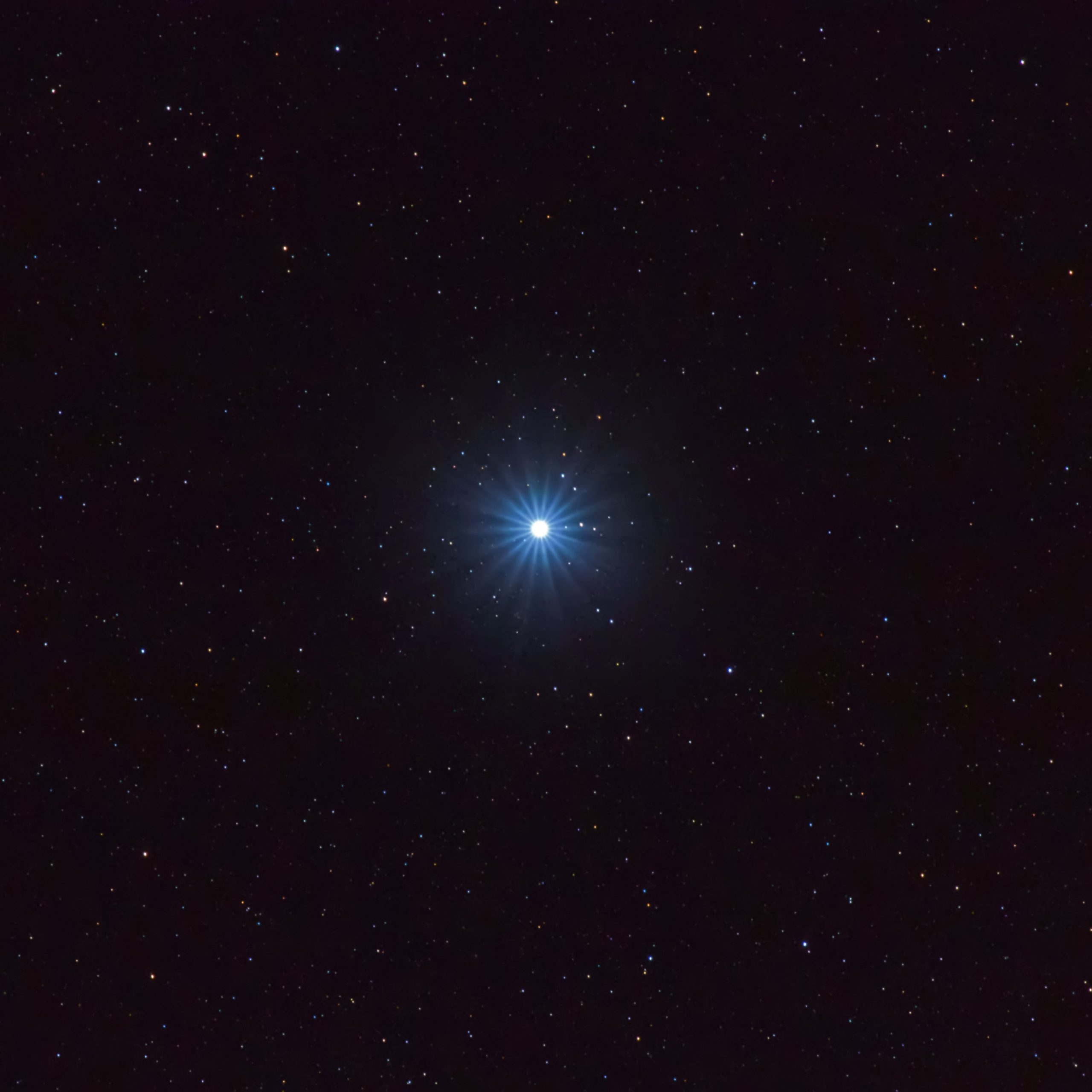
Sirius is the brightest star in our night sky. Not only is it the brightest, it is twice as bright as the next brightest star.
This fits the description of Kolob as provided by God to Abraham. If two things exist and there be one above the other, there shall be greater things above them. Therefore, Kolob is the greatest of all the Kocobeim. Kocobeim is Hebrew. Remember that Im ending means plural. Kokov means star, so Kokobim means stars. Plural. Kolob is the greatest of all the Kokovim. And he's not saying that it is the brightest star of all because scientifically we could say Sirius is definitely not the brightest star. There are brighter stars, but God makes this distinction in Abraham, which I think is important. Kolob is the greatest of all the kokobeam that thou hast seen because it is nearest unto me.
This could well be interpreted as God telling Abraham that Kolob is the greatest star that you can see from where you are. In other words, the brightest star star in our sky. And like I said, Sirius is the brightest star by at least double the next brightest star.
Next point. Sirius has been associated with divinity for a long time. Sirius is a Greek word which may have come from the Egyptian Osiris, the father God of Egyptian mythology.
It is at the very least associated with the Egyptian goddess Isis, the mother of the gods. In Babylonian astrology, it was Associated with Marduk, the king of gods.
[01:00:38] Speaker A: Yeah, Marmaduke.
[01:00:40] Speaker C: Good old Marduk.
[01:00:41] Speaker A: Marduk.
[01:00:43] Speaker C: And also with his act of creation as the brightest star in the sky. There was hardly a religious belief anciently that did not associate the star with their supreme Being. Even the Hindu history, Sirius was associated with Shiva.
Okay, next point. Sirius potentially interacts with our solar system.
An article by William Brown describes that binary star systems are the normal and a single star rather is the exception where our star is concerned. There appears to be another star that our star interacts with. According to Brown, a likely candidate for gravitational locking with our star is Sirius.
There seems to be resonance with our solar system and Sirius, which also helps explain the axial precession evident in our solar system.
Another article talks about how Sirius is and has been viewed as our Sun's sun and that just as our sun gives our physical world light, Sirius is the light to our spiritual world. Compare these views with facsillomy 2 in the book of Abraham.
And if you go into the facsillomy 2 you see Kolob and is giving light to our sun. So you have this two faced kind of creature at the center. They say this is Kolob and it's giving light to our star, our sun, which is then giving the light to the planets. So this, this matches this idea that our star is, is a star from, from Sirius.
Next point. Sirius is a binary star system. What most people see as one bright star is actually two stars really close together. One star, Sirius A is twice as large as our Sun. Sirius B is the same size as our Earth, but has the same density of our sun. Joseph Smith described the place where God lives very similar to what I would imagine. Life on God Almighty himself dwells in eternal fire. Flesh and blood cannot go there, for all things corrupted is devoured by the fire.
Where the dog star is located very close to another star and Kolob is located very close to where God dwells. Perhaps Sirius A is Kolob, while Sirius B is the place where God dwells. If our Earth was patterned after where we used to live, perhaps the place where God lives is comparable in size to where we live now. Only the place where we live now is made of different materials to support our mortal life.
[01:03:02] Speaker A: Cool.
[01:03:03] Speaker C: Next point.
There are several studies that suggest that not only is Sirius a binary system, but there are actually three stars. The studies are not conclusive however, because they have not been able to see a third star. One hypothesis is that the third star is actually a neutron star. A neutron star would be invisible to see from our position in the galaxy with the technology that we have. The concept of three stars close together is reminiscent of the Godhead. The idea that one star is invisible while two other stars are not is also similar to the idea that the Father and the Son have physical bodies, while the Holy Ghost has a spiritual body which we cannot see from our current standpoint in life.
Another connection is that the two unknown stars is mentioned in the explanation of Figure 5 in Facsimile 2. The sun receives its power through the medium of Cliff Flossis or Hakakobeam. The star is represented by numbers 22 and 23 receiving light from the revolutions of Kolob. These two unknown stars are pictured in the same frame as Kolob. According to Brown, Sirius would need the extra stars in order to be gravitationally bound with our solar system. Because of the distance, the two are eight light years apart.
Okay, next point.
Sirius is a major star in our branch of the galaxy and is towards the root of our branch. When the early church scholars were looking for Kolob, they looked to the center of the galaxy, hoping to find a massive star around which the entire galaxy revolved. However, there is no such star towards the center of our galaxy. Our galaxy is made up of four arms, a very symbolic number. The river and the Garden of Eden splits into four streams to go and water the four corners of the Earth. While we cannot trace a star back to the center of our galaxy, Sirius stands towards the front of our arm, perhaps as a governing star that governs all planets that are of the same order or down the same stream or Milky Way river. It stands towards the head of the branch of the Milky Way to govern all stars within that branch.
Next point.
And this is actually, I think, our last point, not necessarily to do a series itself, but in Canis Majoris constellation, there is another star that I find fascinating. It is VY Canis Majoris. It is the largest star we know about. However, its growth was not sustainable and it has died from within. The whole thing took place over a little over 5,000 years ago.
So 5,000 years ago we had.
[01:05:31] Speaker A: These are though.
[01:05:32] Speaker B: Yes.
[01:05:34] Speaker C: We have been observing the star shrink ever since around 1850. Because it is about 5000 light years away from us. What we are observing now already took place.
The way the star is going to die is that a tiny black hole is at the heart of the star and will eat the star up from the inside out. It will eventually explode and destroy everything near it, resulting in a new black hole as opposed to a star this new object will not emit any light, but rather absorb any light around it. The connection I see here starts with the fact that this star is in the same constellation as Sirius. Canis Majoris stars have often been used to represent people. And maybe what we see here is symbolic representation of what has already taken place with the family of God. Perhaps this star represents one of God's children who rose in prominence, so much so that he sought to rule over all the other stars or to be greater than all the other stars. This quick rise to prominence, fueled by pride, also led to the star's downfall. The inward pride destroyed the star, and the star took out anyone willing to follow it. Now it no longer emits light, but reigns in darkness.
Jeez. This star could represent the fall of Satan.
[01:06:41] Speaker A: Wild.
[01:06:44] Speaker C: So I don't.
I don't know.
[01:06:47] Speaker B: But.
[01:06:48] Speaker C: But there's some pretty cool things.
[01:06:51] Speaker B: And. And you know what?
[01:06:52] Speaker C: We can tack on one extra point at the end if you want.
[01:06:54] Speaker A: Okay.
[01:06:55] Speaker C: You know those crazy ancient aliens.
[01:06:57] Speaker A: I love the. The orange alien guy. Aliens with the.
[01:07:02] Speaker C: With the wild hair.
[01:07:02] Speaker A: I love this guy. The weird, weird spray tan. Yeah.
[01:07:06] Speaker C: Books have been written that the Dogon people in Africa believed the aliens visited our Earth around 5,000 years ago, giving the Egyptians the technology that they needed. But they say that these aliens originated from Sirius.
[01:07:26] Speaker A: Is that why all the Egyptian gods and stuff had those, like, dog head headdresses and all the depictions? You know what I'm talking about? Or were they coyotes?
Remember all those old. I mean, didn't you ever see, like, didn't you ever see Stargate?
[01:07:45] Speaker C: I haven't seen Stargate. It was just sad.
[01:07:50] Speaker A: Never mind.
[01:07:51] Speaker C: I'm sorry. When you talk about their headdress, I instantly go to Pharaoh's. He's got the two crown, one from Upper Egypt and one from lower Egypt. And.
[01:08:01] Speaker A: No, we're talking about the different ones. We're talking about the dudes that have. Like. They're like holding the little, like, candy canes and they've got like, the dog heads come.
[01:08:08] Speaker C: I know what you're talking about. Exactly what you're talking about.
[01:08:11] Speaker A: Me feel like an idiot.
[01:08:12] Speaker C: No, I'm not.
No. Yeah, it could be.
[01:08:16] Speaker D: I wonder if they go, I need to watch.
[01:08:18] Speaker A: I need to watch Stargate again. I wonder if the portal that they take is too serious.
[01:08:23] Speaker C: So modern, a lot of modern conspiracy theories and ancient aliens and all sorts of weird stuff gets connected with Sirius. I don't know that I want to drag that in here. I don't know how.
I don't Know how credible any of that is?
[01:08:38] Speaker A: Well, you mean aliens coming and building the pyramids? Whatever, man.
[01:08:42] Speaker C: For the record, I think that is the most. The assumptions that they jump to, like aliens.
I don't know how you get to that conclusion. To me it's just as weird as saying, yeah, Christ is coming with bare legged tattoos on his thigh. Like that's a weird assumption.
[01:08:59] Speaker A: That's also a weird assumption. Yeah.
[01:09:01] Speaker C: I don't know where you're getting there. That from.
[01:09:03] Speaker A: From the guy on the History Channel, man. Dude, it's the History Channel. You know, it's credible.
All right, what are we talking about next week?
Oh, good work today, Jason. I'm excited. This is going to be fun.
[01:09:17] Speaker C: Next week is our introduction into Genesis. It's going to talk about the creation. I want to talk a little bit more about the Bible, how it's put together.
[01:09:25] Speaker A: Okay.
[01:09:26] Speaker C: And the creation account is just, just amazing.
And maybe we'll even at the end, maybe at the beginning of next week, in the end of Abraham, you've got God saying, who shall I send?
And you have here am I, send me. And here am I, send me. And God says he will send the first. And the second is angry and keeps not his first estate. And it kind of leaves us there with not a lot of details or a little bit vague.
[01:09:56] Speaker B: We talk a little bit about the.
[01:09:58] Speaker C: Fall of Satan here when we talk about the star and the Canis Majoris constellation that got too big for its britches and now it is going into a black hole to destroy everything around it.
If we are out of time this week, maybe we will just hit on Christ and Satan and what was proposed at the beginning. What is this whole thing about? And then take us into the creation account.
Genesis and the beginning of Old Testament.
[01:10:24] Speaker D: Cool.
[01:10:24] Speaker A: Yeah, we'll just, we'll. We can, we can chat about that first thing next week for sure.
[01:10:29] Speaker C: Sounds great.
[01:10:29] Speaker A: Okay. Until next week.
[01:10:31] Speaker B: See ya, Sam.