Episode Transcript
[00:00:00] Speaker A: Foreign.
Welcome to the weekly Deep Dive podcast on the Add On Education Network. The podcast where we take a look at the weekly Come follow me discussion and try to add a little insight and unique perspective. I am your host, Jason Lloyd, here in the studio with my friend and this show's producer and Nate Pifer.
[00:00:31] Speaker B: What's up, Nate?
[00:00:33] Speaker A: It's good to be back in the studio.
[00:00:34] Speaker B: I love being back in the studio. Let's do this.
[00:00:37] Speaker A: Let's do it. Hey, just a thanks to those of you, we got an email from the Come Follow Me app. A bunch of you had reached out to them and requested that they add our show on there, and they gave us a spot on the app.
[00:00:50] Speaker B: So what's up?
[00:00:51] Speaker A: Thanks, guys.
[00:00:53] Speaker B: Thank you.
[00:00:54] Speaker A: Appreciate it.
[00:00:55] Speaker B: Thank you, everybody.
[00:00:57] Speaker A: And this week, we're going to jump into a pretty loaded section. We're going to talk about Isaac getting his wife, although he doesn't play a very active role in that process, which is weird.
[00:01:07] Speaker B: We should probably talk about that again, but. Okay, keep going.
[00:01:10] Speaker A: Yep, yep.
Abraham gets married again after his old age, and his wife passes away and has some more kids. I don't know that we're going to say a whole lot about that.
We're going to talk about Rebecca. I think she doesn't give as much, doesn't get as much credit as she deserves.
And we're going to talk about Jacob and Esau, the twin brothers.
[00:01:34] Speaker B: So I love the story of Jacob. And he's out.
[00:01:37] Speaker A: Yeah, I'm looking ready. I'm looking forward to some of your comments on Jacob and Esau.
[00:01:42] Speaker B: I have thoughts.
[00:01:43] Speaker A: Good.
Yeah, I don't. I don't think Esau gets the credit he deserves.
[00:01:47] Speaker B: I totally agree with this. You're already taken. You're already. You're already upstage in my thoughts, dude.
[00:01:52] Speaker A: I'll, I'll, I'll, I'll.
[00:01:54] Speaker B: Let's just wait until we get there and then let's talk about it.
[00:01:57] Speaker A: I'll play it low and play Pull back dog.
[00:01:59] Speaker B: Pull back the reins a little bit. Okay, Jason, I'm on it. Okay, let's go. Let's get into this.
[00:02:04] Speaker A: All right, first off, let's talk about Abraham sending his servant. And when we say his servant, I think it's fascinating as I'm trying to look back and remember what is the name of Abraham's servant. And I go through this entire chapter 24, and he does not mention his name once. And it gets to the point where he is introducing himself to Rebekah's family, to her father, to her Brother. And he says, I am. And I'm like, here it comes, here it comes. And he says, abraham's servant. And you're like, oh, man.
It is intentionally left out.
And it's mentioned earlier. We saw that last week's lesson when Abraham goes to God and says, I am about to die and everything is going to my servant.
I don't have my heir that you promised me.
So Eliezer is his name. Why don't they use his name here?
And I think that the servant really becomes an unsung hero. I don't know that we appreciate the role that he plays in this.
And Abraham makes him swear by placing his hand under Abraham's thigh.
Yeah. Oh, Nate knows where this is headed.
[00:03:22] Speaker B: Well, I know where this is going.
[00:03:24] Speaker A: The, the Hebrew word thigh here is, is kind of the soft, fleshy part. And, and it's used for the loins. It's a euphemism. And, and it's. It's not that you're necessarily touching it, but you're putting it underneath and covenanting on something. I don't know that we can overstate this. There is such an importance, particularly in the old world, on your family, continuing on your seed, on your posterity.
There are rules that if you die before you can have a child, that your brother can marry your wife and bring up seed to your name to keep that line going so that you can stay in the.
In the history.
I mean, we get to all of these sections that you love so much about begatting because they care so much about it.
And it's not unique to the Bible. Even in. We've talked about some of these treaties or covenants over there.
Some of the blessings of these treaties that they would write is if you follow these terms, may your seed continue forever, whereas if you don't, may your seed be cut off. So it was a huge deal.
And it's interesting here we've talked about the nature of Abraham that he's not having his servant swear on his servant's thigh, if you will, if you will.
He's having him swear by putting his hand under Abraham's thigh.
And Abraham has already confessed to God if he doesn't have an heir, everything goes to the servant.
You would think the servant has a large.
I don't know, is motive the right word for this to not be successful on this?
And what's the penalty?
He's swearing on Abraham's posterity. That's already evident if he doesn't fulfill this. Abraham got his son.
But it's not done. The covenant with God is not fulfilled if his son is sterile, if his son doesn't get married, if there's no more seed than the promises that God has done. So all of Abraham's faith in God, all of his faith in this line continuing, he's putting in the hands of this servant that he's trusting, and he's putting his own seed on the line, not the servants. The servant is under no obligation. And in fact, he tells him, go to the land of my fathers and get a wife for Isaac, not to the Canaanites. He refuses to allow Isaac to marry a Canaanite woman.
And maybe that goes back to what we read with Noah and the disdain that they had for the Canaanites. And then also you see in Sodom and Gomorrah, the way they treated strangers and the way they treated Lot's guests, how that went down. For whatever reason, Abraham is just extremely opposed to the idea. He says, go to the land of my fathers. You will find this woman there. And he doesn't even tell him which woman. This is how much trust Abraham is putting in the servant. He says, you find the right girl and tell her that she has to come back to where Isaac lives.
And the servant says, well, what if she doesn't want to come back with me? Is it okay if I come back, get Isaac and bring him back to her? Is that okay?
And Abraham says, no, under no uncertain terms. That is not okay.
She comes with you, or you don't come back with the bride at all. And in fact, he says, if she refuses to come with you, then your obligation is done. You've fulfilled your commitment. I'm releasing you from your bond.
[00:07:29] Speaker B: Wow.
[00:07:30] Speaker A: So this is, this, this becomes super easy for the servant at this point, right? There is no, there's no.
What's the.
[00:07:40] Speaker B: He even has an easy out.
[00:07:41] Speaker A: He has an easy out.
[00:07:43] Speaker B: So it's almost. What you're saying is, is that he's
[00:07:46] Speaker A: got no skin in the game. In fact, he has skin on the opposite.
[00:07:49] Speaker B: Yeah, exactly.
That's wild.
[00:07:52] Speaker A: He's. He can, he can decide not even to go into the land if he wants. And by the way, this is a long journey. He's going to have to cross a desert, dude.
[00:08:01] Speaker B: He could just go hang out somewhere for a while.
[00:08:03] Speaker A: He go hang out some oasis, sip on some water, sit in the shade, come back and say, abraham, I went
[00:08:09] Speaker B: and sorry, man, it didn't happen.
[00:08:11] Speaker A: Not interested. She said if she wants. If he wants to come, she. He's going to have to Come to me. I tried. Abraham would say, okay, your obligation is done and Isaac's not going to have any children, so this is all yours now.
[00:08:27] Speaker B: Why do you think. Okay, keep going.
[00:08:29] Speaker A: Yeah, it is interesting.
[00:08:30] Speaker B: Why do you think the servant then is doing this?
[00:08:34] Speaker A: Because he loves his master?
[00:08:35] Speaker B: Is that what it is?
Is it? Go back to what we were saying about how Abraham is just the greatest person.
[00:08:43] Speaker A: Yeah. He had a lot of love and respect for Abraham and he's not doing this to get gain because if he wanted to get gain, he would have sabotaged the mission.
His seed wasn't on the line. Abraham's seed was on the line.
His future, whatever share of Abraham's property is going to go to Isaac or at least he's going to be minimized because of Isaac.
He's got everything to lose and nothing to gain by doing a good job. The only reason he does a good job is not for what he can get out of it, but for the love and respect he has for Abraham.
[00:09:22] Speaker B: Does this parallel somewhat to the parable of the talents, our favorite parable? I think it does because there's some subtle things here as we're kind of thinking through this because again, it's hard for me to think.
I'm just trying to think through what the motivation is for the servant to not take the easy way out and get everything right.
Even though everything would be obviously temporal. Right. Like short term. Because by the way, if you're making a covenant with all the symbolism here again of like of the covenants we make with God and this is clearly a right symbolism of that. Right. Kind of a parallel of that in, in a sort of a way he, he would basically only be looking at short term game even if he did break the covenant and just kind of take the easy way out. But I wonder if it's similar to this idea that a good servant does it because they love their master and not to get gain out of love rather than fear. And the reward in the end is so much more than what the short term gain would have been.
[00:10:38] Speaker A: Yeah. Abraham absolutely trusts him with, as we'll see, not just with 10 camels, but with gold, with a lot of precious things to go and whatever he needs for his trip because he is the steward, he is over everything. He can requisition anything Abraham has because he is in that position. It is all essentially his. He can say, this is what I need, this is what I'm going to take. And he had all okay to do it. And he's not acting out of Fear that, oh, Abraham might hate me if I don't do it. So it's better to not do it at all. He's acting out of love. How do I make this go super well? And we find that he is a very inspired man. He has a lot of faith in God. He puts his faith in God and what he does to find a wife I find very inspiring. He knew Abraham.
We talked about the characteristics, the nature of Abraham last week. And being a man who was willing to short himself in trying to make sure that he was square or that the other party was taken care of, to do whatever it took.
And so when he gets to the land of Abraham's family, he says, God, if a girl comes out. So he comes in the evening, and when the evening comes, it is the youngest daughter's responsibility to head out to the well and fetch the water for the night. You need water for maybe cleaning up of the dishes or water for the night for whatever the case may be. In the evening, the women come out and they take a pitcher of water, and it's tied to a rope. They lower it down into the well. They draw the water out. And if they have to carry this back from the communal well back to their house, you can imagine that this is not going to be super large, right? She's got to carry this on her shoulders or head or however she's going to carry it on her hip, maybe, maybe a couple gallons at most, back to her house.
And so she's there.
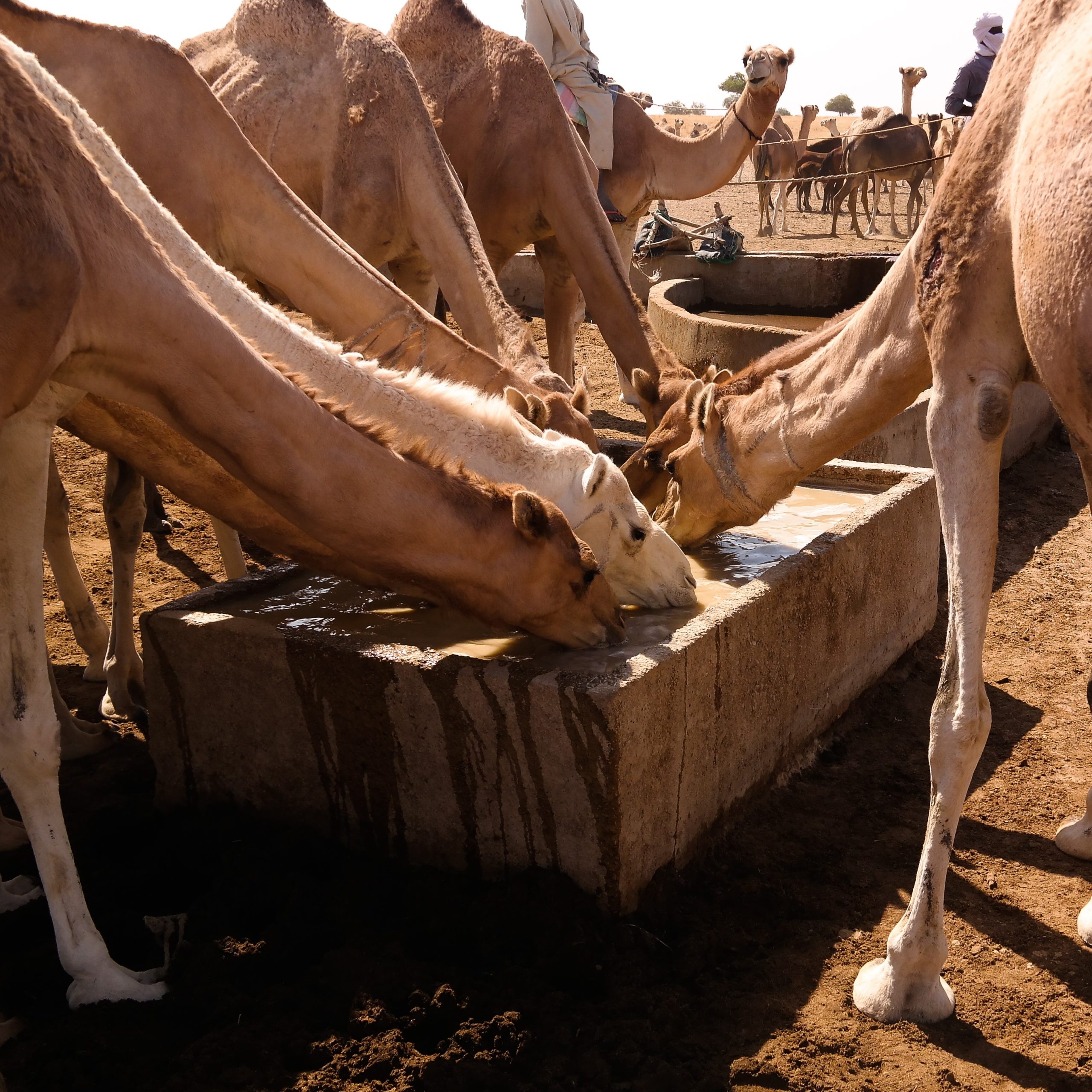
He shows up to where the well is, and he's traveling. He's got his camels. It says he has 10 camels, which is an important detail.
As he gets there, he says, lord, I'm going to wait for somebody to offer me water.
He doesn't have a pitcher on a rope that he can lower down to the well. He has no means to access this water.
But he's going to trust that someone is going to be kind enough to offer him water, knowing that he can't reach the water in the well.
But not just that. He takes it one step further and says, if a maiden comes and offers me water and then offers to water my camels, too, that will be a sign that she is the one.
And why is that important? Why is that the sign?
Camels drink a lot of water, and he's got 10 of these.
I don't know if you know this, Nate. A camel can go through 53 gallons of water in three minutes.
[00:13:57] Speaker B: In three minutes.
[00:13:58] Speaker A: In three minutes.
[00:13:59] Speaker B: How are they drinking it? Do they have A fire hose?
[00:14:01] Speaker A: It seems like it. That's a lot of water.
[00:14:04] Speaker B: No, but seriously, how are they drinking that much water?
[00:14:08] Speaker A: That's what camels do.
[00:14:09] Speaker B: Okay, I'm just saying like this. It's just defying, like, science to me. I don't know, physics.
[00:14:16] Speaker A: Well, think of the logistics of giving water to one camel.
If she's going to be offering him water and then she looks over, how tempting would it be for you, Nate? I mean, if we put ourselves in the situation of a young woman going out to the well to get water.
You see a guy there with 10 camels, and. And. And he's thirsty, looking thirsty. It'd be easy to say, you know what? I've got a picture. I can give him a drink before I take this back. I can dip it in, right?
[00:14:47] Speaker B: Yeah, that's. I'd be like, hey, yeah, here. Here's a picture. Do what you need to do.
[00:14:51] Speaker A: And. But you would ignore the camels, right?
[00:14:53] Speaker B: Oh, yeah, I would. I would act like they weren't even there. I would do that thing when you see, like, your ex, boyfriend or girlfriend at the movie theater, and you just have to pretend the whole time like you just didn't see them. That's exactly what I would do with all 10 of those.
[00:15:06] Speaker A: And potentially avoid eye contact with him.
[00:15:09] Speaker B: I would avoid icon. Honestly, I would just go home.
I would go home and tell my family, sorry, the wells closed. The closed early tonight.
[00:15:20] Speaker A: This is a lot of water.
[00:15:22] Speaker B: This is so much water. This is a lot of work.
[00:15:24] Speaker A: And the servant isn't asking her, hey, can you feed my camels?
He's waiting for the right maiden to approach him and offer this service.
If your container only covers a couple of gallons of water, how many times are you going to have to draw water from that well and feed that watering trough? And by the time you dip your container down, you fill it up, you pull it back up, and then you go over and you dump it in the trough. It takes a couple minutes. By the time you've done that and go back to do it again, the camels would have already drunken all the water that's in there.
[00:16:00] Speaker B: Yeah.
[00:16:02] Speaker A: If you're talking one camel and it's drinking 50 gallons of water, you're talking. You're talking at least a couple dozen trips.
You're talking now 10 camels.
She could potentially be going to this well 200 to 500 times getting water for this guy's camel. Is that something she really wants to get into?
[00:16:27] Speaker B: No, no, nobody does.
[00:16:29] Speaker A: But she does. Why?
[00:16:31] Speaker B: Because she's cool.
[00:16:33] Speaker A: And why does she get.
[00:16:35] Speaker B: Because she gets it.
[00:16:36] Speaker A: And why does the servant put this as a requirement for a wife of Abraham's son?
[00:16:42] Speaker B: Because he needs somebody else that's as awesome as Abraham.
[00:16:45] Speaker A: That's it.
That's it. How do you find somebody as awesome as Abraham?
[00:16:52] Speaker B: Here's a question.
[00:16:53] Speaker A: Yeah.
[00:16:54] Speaker B: Do you think she ended up making all the trips?
[00:16:56] Speaker A: I don't know how many trips she made, but she. She definitely made a lot.
[00:17:01] Speaker B: I'm surprised that the servant wasn't like, okay, cool, you passed the test. Don't worry about the camels.
I'm just surprised the servant followed through with it, like, once. She's like, hey, I'll do this. He should have been like, oh, that's actually. It's like. It's like Willy Wonka and the Chocolate Factory. It's like you just had the correct answer. Like, you won. You won everything.
[00:17:23] Speaker A: Well, he lets her do it.
[00:17:25] Speaker B: That's crazy.
[00:17:26] Speaker A: And the thing is, ok, so you think of human nature and she is a woman. I don't think Rebekah gets enough credit in the Bible.
[00:17:36] Speaker B: Rebecca's awesome.
[00:17:37] Speaker A: She is a woman like Abraham. And that's what the servant knew he needed if he was going to bring seed to Abraham. He needed a woman that was like Abraham, that was willing to go above and beyond for someone she did not know.
And you look at human nature, someone else maybe could have gone there and said, you know, I see you have 10 camels. How much would you like to pay me to water them?
Or, I see you need some water.
Do you want to borrow my pitcher for a while? And you can get the water for yourself and you can feed the camels and when you're done, you can give me the vessel back and I can go do it right.
There's a lot of ways this could have shaken out that didn't involve her doing all of the manual labor to serve this stranger.
But she didn't negotiate, she didn't haggle. She didn't try to make him do. She went above and beyond to serve him.
And when he sees this, he knows he's found the right woman, but he also compensates her. So this again, I think, speaks to the fact that she did so much work.
You don't give. He gave her several gold bracelets and a gold nose ring.
And yes, you heard that right, a nose ring. And it's not a nose ring that they wear over the bridge of their nose like a bull.
In the ancient tradition, usually a nose ring was worn in the left Nostril. And why do we say nose ring as opposed to earrings in Hebrew, when they are referring to earrings, they use the aim ending. So the I am. I believe we have talked about this before, is the plural ending.
The aim is the dual ending, meaning that there is two. If it was earrings he gave her, they would have ended it with the aim, but because it was a singular ring then it was typically, the singular ring was used in that time period, that tradition, that custom, as a nose ring that they would wear in their left nostril. So he gave her gold nose ring and gold bracelets.
And when she came home and Laban saw all of the gold that she had on and the gold that she had gotten, he runs out to meet the guy.
So he's compensating her from the text heavily. He's paying her a lot.
And so I would say the effort that she's putting in, we can't discount it. We can't say, well, maybe he stepped in and help, or maybe she didn't do as much, or maybe it wasn't as many gifts.
[00:20:18] Speaker B: Clearly.
[00:20:18] Speaker A: Yeah, he paid her a very fair wage, but he didn't offer it first. She offered first, and in return, he compensated her heavily.
[00:20:27] Speaker B: Don't you think there's some functionality to what he's doing, too, though?
Because remember, what's he about ready to do next?
[00:20:34] Speaker A: Ask her.
[00:20:35] Speaker B: Yes.
[00:20:36] Speaker A: To come join.
[00:20:37] Speaker B: Yes. What is. What do you think is probably a really compelling way to. To encourage somebody to come back with you, to meet a stranger, to marry
[00:20:45] Speaker A: them, let them know that there's security there.
[00:20:48] Speaker B: That's exactly right, Jason.
That's. I'm saying it's like he is compensating her, and he's also incredibly wise in.
You know what I mean, in negotiating and navigating that relationship. Yeah. Hey, thanks for all the help. And I also just want you to come with me to meet this dude. I promise he's awesome.
And marry him. And can we go talk to your father about it? It's like, okay. Or, hey, here's a bunch of. Here's a bunch of.
Let me pay you for your effort. Here's just an insane amount of awesomeness. So. So, hey, now, do you want to come back and meet this guy? I'm just saying there's some functionality in this, too.
[00:21:29] Speaker A: Absolutely. And do you want to.
[00:21:31] Speaker B: Wisdom.
[00:21:33] Speaker A: You talked about the wise stewards. Do you want to.
Looking at his behavior and how he handles the situation, do you want to put any fine points on that?
[00:21:43] Speaker B: Or for me, I would just look at that and go again, if we're kind of relating it back to this parable. Right. I'm going to assume this, I'm going to assume that this servant was probably pretty well taken care of. Yes. Like when it is all said and done, I don't think that that's an unreasonable assumption. Right, right.
I think that like you said, out of love, he's probably not at all afraid that he's not going to be able to have a fairly good life and probably pretty well compensated. Right. And so what does he do with the extreme. And by the way, again, in relation to the. Well, this is, this, this is the servant that's getting a lot of responsibility. Right?
[00:22:27] Speaker A: Yeah.
[00:22:28] Speaker B: Look at how wise and how awesome and what he's doing with it. Again, like shout out to this servant because he's awesome.
Yeah.
[00:22:35] Speaker A: And who, who would the servant represent in this case? Or how, how do we want to interpret this?
[00:22:40] Speaker B: Well, I think you could go, I think you probably could go a couple different ways. But, but really, is this, is this not what we're supposed to be doing? Right.
Are we not supposed to go out with our responsibilities and make the most of what we have stewardship over? But even too, again, like, if you look at this in relationship, and we've talked about this a couple weeks in a row, where if Christ represents the bridegroom.
Right.
And the scriptures talk so much about the relationship of the bridegroom with his church.
So I guess in this, if you look at this story kind of in that context, what is the servant going out and specifically doing?
[00:23:29] Speaker A: Trying to get the church.
[00:23:31] Speaker B: That's exactly right. Trying to bring people to that marriage with Christ. Right. Trying to bring people into that intimate relationship with God.
And God gave him all resources.
Heavenly Father in this case. Right. Or Jesus, either way. Right. God gave the servant all necessary resources. But what's beautiful about this is you've already kind of said it and this is the, maybe the fine point I would want to put on him is did he go and say this is who you were looking for? Exactly. No, that's exactly right.
[00:24:04] Speaker A: You find who you're supposed to find.
[00:24:05] Speaker B: Okay.
I'm giving you the responsibility.
I'm giving you the responsibility to go, you know what? And by the way, you have covenanted with me about what your job is and what you're supposed to go do.
And I'm also giving you all of the resources necessary, but I'm also allowing you to go and figure out how to do this.
I think it's awesome. And I think it's incredibly spot on in context at least, of that relationship.
[00:24:42] Speaker A: Yeah, I see absolutely us as servants, as missionaries, as ministers, or our responsibility to help bring others to Christ or to bring ourselves to Christ and how we serve God and how we do our responsibility.
And he acted very much like Abraham would have acted.
He acted very generous, he acted very fair, and he acted with a lot of wisdom and a lot of faith.
And I don't know, it's cool to see Abraham putting himself in that position of weakness, just as God put himself in the position of weakness, making that covenant with Abraham. We've talked a lot in this podcast about what it means to be a God. But I think this Stewart was also doing that and trying to be generous and loving Abraham and not letting him down, going above and beyond to try to serve him. But then you see that same thing play out with Rebecca and just that love and how it grows. And now I'm just kind of rambling a little bit, but.
[00:25:47] Speaker B: No, I'm with you. That's great. I mean, I think we've highlighted the symbolism there.
[00:25:53] Speaker A: I love the story, and I love the servant.
Maybe take a minute just to talk about Rebecca and what that application. To me, I see this in a couple of different ways.
One of them, maybe on a simple scale, right in the morning when I get up and I go upstairs, and sometimes I go up there after my kids have already been through the hurricane that is getting ready for school in the morning, and when they're getting their breakfast and they pour their bowl of cereal, if my wife doesn't come up there first and get, like, a warm water of dish soap for them to wash their dishes in, then they'll just pile their bowls in the sink because there's nothing there for them to wash it with. But if she does and they're like, oh, I guess I don't have an excuse to not wash my dishes, I'll wash it. But see, in the strainer, there's still the whole pile of dishes from the night before last night. And it turns into this reverse game of Jenga of like, yeah, yeah, how. What, What? What more dish can I stack before this pile collapses?
[00:27:05] Speaker B: Because that's the thing is you lose when it collapses because then stuff falls everywhere. And then everybody looks at you and, you know, at that point, you lost the game, and now you have to pack everything back up. Like, you have to put it away at that point.
[00:27:17] Speaker A: Yeah, yeah. And good luck, Lloyd. Kids, the thing that's terrible about it is those dishes were dry they air dried. Like, it would be so easy to just put them away. But when you start stacking wet bowls upside down on them, and now everything's soaked and you're like, okay, now we have to wait for them to dry or someone's got to pull out. So inevitably, my wife or I pull out a towel, dry all the dishes, put them all away, and we're doing a big disservice to our kids. But compare that to Rebecca. Like did she try to dance around and do as least amount of work possible?
Or in our everyday lives, what things do we do where we try to avoid eye contact or we try to avoid doing that? Or the garbage can. Right, that reverse Jenga game with the garbage can can I squeeze one more something into the garbage can so that somebody else has to take it out because somebody else will do it. Somebody else will do it. Rebecca's attitude, Abraham's attitude. If we want to be like God, our attitude cannot be somebody else will do it.
I've got to do it myself.
[00:28:31] Speaker B: Love it.
[00:28:32] Speaker A: Okay. And then on a larger point, I wanted to take this and compare this. You've got the story of Abraham on one side, now you have the story of Rebekah on the other. This sandwich of generosity, of going the extra mile in the middle of the sandwich is the story of Sodom and Gomorrah. And I think oftentimes Sodom and Gomorrah because of the sexual nature of the sins that were happening at the time when the angels were there. It's very construed with the sexual place of
[00:29:08] Speaker B: how do I. Deviancy.
[00:29:10] Speaker A: Deviance. Right, sexual deviance. But the Scriptures make it clear. In Ezekiel chapter 16 it says this was the sin of Sodom. Pride, fullness of break, and abundance of idleness.
Neither did Sodom strengthen the hand of the poor and needy.
What was the sin of Sodom? Pride, fullness of bread, and abundance of idleness.
I said that wrong the first time.
[00:29:36] Speaker B: And they didn't take care of the
[00:29:37] Speaker A: poor, and they didn't take care of the poor and the needy. And this idea of the strangers in the land, these two messengers were strangers in the land. Look at the law of Moses. It makes it very clear. Exodus 20:2. Thou shalt neither vex a stranger nor oppress him, for you were strangers in the land.
Exodus 20:3. Thou shalt not oppress a stranger.
Six days shalt thou work, and on the seventh day you rest, that the stranger may be refreshed.
Leviticus 19. And thou shalt not glean thy vineyard Neither shalt thou gather every grape of the vineyard. Thou shalt leave them for the poor and stranger.
And if a stranger sojourn with thee in the land, thou shalt not vex him.
But the stranger that dwelleth with you shall be unto you as one born among you. Thou shalt love him as thyself, for you were strangers in Egypt.
And then, to put a fine point of this, Deuteronomy, chapter 1018, he doth execute the judgment of the fatherless and the widow, and loveth the stranger in giving him food and raiment. Love ye, therefore, the stranger, for you were strangers in Egypt.
God cares about the strangers, the widowless and the fatherless. The ones in society that fall through the cracks, they don't have a support system. They don't have neighbors. They don't have people taking care of them.
So you look at the strangers, the three visitors that Abraham rushed out to and got water for and killed the calf and made bread. And then you look at the strangers as they go into Sodom and Gomorrah, and the people are trying. Trying to sexually violate them.
And then you look at the strangers. In Rebekah's case, this stranger that shows up with camels, and she volunteers to go the extra mile to get water for his camels to love the stranger.
And so as I was thinking about the sin of Sodom being pride, fullness of bread, and abundance of idleness, man, it just feels like society today. And I worry, am I falling in this trap? Do I have it so easy and so good?
And at the same time, as I was getting this ready for this week, I got a message from somebody in the Ukraine.
All right, Candace. She's got a. She's got an organization called Exodus.
They sent a nurse in to go get orphans out of an orphanage that got bombed right after they were able to get them out and bring them back to where they were safe.
And we talk about.
In the news, they talk about what's going on in Ukraine. They talk about what's happening in Afghanistan. They talk about a lot of these things. But do we notice the orphans or the strangers, the people that are kind of left and fall through the cracks?
And so I know not all of us are able to go in and take care of every orphan or every stranger. And I'm so grateful that the church has, at the very minimum, we have fast offerings where you can skip two meals and take the money you would have spent anyway so that there's no skin off your back. You're paying the same as you would have anyways, to take care of the stranger, to take care of the poor.
But maybe there's something we can do where we find an organization that's helping or we find a way to lift, even if we're in the comfort of our own idleness with plenty of bread, find a way to support some of these people or do something to help some of the people falling through the cracks. I guess more on a larger scale. Is that too much?
[00:33:19] Speaker B: I love it. Okay, let's keep going.
[00:33:23] Speaker A: That's all I've got there. Let's. Let's move forward.
Isaac and Rebecca follow the footprints of Abraham and Sarah extremely well.
Isaac, God appears to him just as he appears to Abraham and makes the same promise about his seed.
Isaac digs the same wells that his dad had dug and builds altars and worships the Lord. You see him following in his footsteps. Isaac kind of gets lost in the shuffle there a little bit, but he.
He's a man just like his dad.
And. And then you have the same story where Rebecca and Isaac are going in and the king sees them sporting together in a way that brother and sister wouldn't be, because he had had her say that she was his sister so that the people wouldn't put him to death in order to marry her, because she was absolutely lovely, just as Sarah was absolutely lovely. So you've got these guys filling the role of Abraham and Sarah to the T.
And if Abraham is supposed to be an image of God and Christ is portrayed here in Isaac, you see Isaac kind of following in the footsteps of his father. And I love how they have this set up with Abraham on one, Isaac in the middle. And we're going to talk about this next. Jacob, the son that's coming from Isaac. Jacob's name is changed to Israel.
So if you have Israel on one hand and God on the other hand, then who's the intermediary in between the two? Well, in this case, it's Isaac or Christ, the one that's in between that becomes that connection to Israel and God. So I love the imagery there with that.
Moving on. Rebecca, her name is Hebrew for a rope with a noose.
[00:35:17] Speaker B: Whoa.
[00:35:19] Speaker A: Whoa.
Good luck, Isaac.
[00:35:21] Speaker B: Good luck, Isaac.
Whoa.
[00:35:25] Speaker A: And it's not necessarily the hangman's noose, but more like a snare or a trap.
So who was trapping who? Was it the servant trapping her or was she really.
[00:35:36] Speaker B: Maybe she saw those camels and already. See, now we're flipping it, dude. What if she saw the camels and was like, clearly this dude has Wealth.
[00:35:45] Speaker A: This guy's got some connection I'm going to take me out of.
[00:35:49] Speaker B: Yeah. I'm going to work extra hard so this dude will be like, all right, here's. Here's some of my wealth.
[00:35:55] Speaker A: And maybe there's something to that with the Lord looking for Israel, but come near to me, and I will draw near to you. Maybe she was looking for.
For him.
[00:36:05] Speaker B: We don't know. Yeah, that would make sense.
Okay, so hangman's noose.
[00:36:14] Speaker A: This is snare.
[00:36:15] Speaker B: Trappy snare.
[00:36:16] Speaker A: This is not a slam on wedding.
Marriage.
[00:36:19] Speaker B: Marriage. Okay. I mean. Or is it.
I mean, what if her. What if her name in Hebrew was ball and chain?
[00:36:28] Speaker A: Yeah. Nope, just rope with the news.
[00:36:30] Speaker B: Worse. Okay, let's keep going.
[00:36:34] Speaker A: All right, fantastic.
[00:36:37] Speaker B: Great name.
[00:36:37] Speaker A: And we have a job.
[00:36:38] Speaker B: Dad. Good job, Laban.
[00:36:40] Speaker A: Laban's her brother.
[00:36:41] Speaker B: Good job, Laban. Her brother. I don't know who your dad is.
[00:36:45] Speaker A: They say his name Uthio. I can't remember. I'd have to look it up. He plays a very minor role even in this case. Laban actually participates in. In the negotiations for this marriage.
[00:36:55] Speaker B: Really?
[00:36:56] Speaker A: Yeah.
[00:36:58] Speaker B: Why?
[00:36:59] Speaker A: That's a good question.
I've heard it explained that in some of these cases with polygamous relationships, if you had multiple wives and multiple children, the dad might not be as invested in the dowry and the negotiations. So a brother of the sister would kind of step in and help negotiate that.
[00:37:17] Speaker B: Well, we definitely have some stories later on in the Old Testament where brothers of sisters that were done wrong definitely take it upon themselves to go and exact revenge.
[00:37:30] Speaker A: Brothers were very much.
Yeah, very much had to watch out for their sisters and take care of them.
[00:37:35] Speaker B: Was that part of the birthright? Was that kind of part of the idea?
[00:37:38] Speaker A: Absolutely. It was.
[00:37:39] Speaker B: Okay.
[00:37:40] Speaker A: The oldest son would get a double portion, and the reason for the double portion was to take care of any unmarried sisters or provide for them.
[00:37:47] Speaker B: There it is.
[00:37:47] Speaker A: And help care for the family. So Laban is taking an active role.
We see him. More mention of him than even her father in helping this. And we will see Laban come. Come to play even more with Jacob when he goes over to get his two wives.
[00:38:01] Speaker B: Okay, awesome.
[00:38:03] Speaker A: So we'll get into. We'll get into Laban and Jacob soon.
[00:38:07] Speaker B: Okay.
So back to Rebecca, meaning hangman's noose is where we started with that.
[00:38:15] Speaker A: Yeah, I was trying to think if there was a.
Something else I wanted to throw in there.
[00:38:21] Speaker B: Okay. I mean, that's. That's interesting enough for me.
[00:38:25] Speaker A: Maybe.
Maybe. Let's just go to The. The twins.
[00:38:29] Speaker B: Okay.
I can't wait. I've been waiting for this.
[00:38:33] Speaker A: So Isaac and Rebecca are going to have children.
And they.
When. When she becomes with child, she becomes with two children. And the thing is, these two children are struggling and fighting within the womb constantly right before they're even born.
And she's like, I must have two mighty nations within me. These guys are struggling, and even their birth story is crazy because, yeah, Esau's born first, but Jacob is holding on to his heel.
[00:39:12] Speaker B: Yeah, that's right.
[00:39:13] Speaker A: Like, you're not getting out there without me.
[00:39:16] Speaker B: I love this.
[00:39:16] Speaker A: I am born just as much as you are. At the same time.
[00:39:20] Speaker B: Like, we're coming out together.
[00:39:21] Speaker A: We're coming out together. This is.
[00:39:23] Speaker B: Does this flip the story a little bit?
[00:39:26] Speaker A: How so?
[00:39:27] Speaker B: Because, I mean, we're gonna get into this whole birthright thing. But what if both babies come out at the exact same time?
[00:39:33] Speaker A: Well, one has to come out before another, I guess.
[00:39:37] Speaker B: What if they're all basically just one lump? What if he's holding on to him? What if they're in contact with each other? There's got to be some sort of a rule for this.
[00:39:45] Speaker A: You know, It's. It's. It's. We're gonna get into this even more detail when we get to Judah and Tamar, because Tamar has twins as well, but hers is even stranger because the firstborn technically reaches out his hand. And that's highly unusual for a hand to come out first. Right. Feet, head, not never a hand.
[00:40:06] Speaker B: Yes.
[00:40:08] Speaker A: And the hand comes out, and they tie a scarlet ribbon around it, saying, this one's the first.
And then the hand goes back in, and then the twin is born, and then the one with the scarlet comes out second.
Yeah. Whoa.
Yeah.
There's. There's some. There's some significance called dibs, dude.
[00:40:28] Speaker B: Called dibs on the birthright.
[00:40:30] Speaker A: I might not be coming out first, but it's still mine.
[00:40:33] Speaker B: He put his hand out and said dibs.
This stuff's so fascinating to me. Okay, so Jacob come out at the same time.
[00:40:44] Speaker A: Esau comes out slightly ahead.
Now, here's the weird thing.
We talk about Jacob and Esau because those are the only two brothers we know, Right?
[00:40:54] Speaker B: Okay.
[00:40:54] Speaker A: For all intents and purposes, they are the only two sons of Isaac and Rebecca. Okay, not so. Oh, there are other sons, but later.
But they are never mentioned by name, and we don't know anything about them. The only way I can say with any certainty that they have other two sons is when we go to the Blessing that Isaac Gives them.
So if I go to. Let's see the blessing itself, chapter 27.
And Isaac said unto his son.
Okay, sorry, let me get this right.
Jacob is getting the blessing, and it's kind of sneaky. We'll talk about that.
But in chapter 27 of Genesis, verse 29, let people serve thee and nations bow down to thee. Be lord over thy brethren.
[00:41:58] Speaker B: Interesting.
[00:41:59] Speaker A: So brethren here is plural.
If it is just him and Esau, it would be over your brother.
[00:42:04] Speaker B: Right?
[00:42:05] Speaker A: And you might look at that and say, well, brethren can also mean cousins or distant relationships. But look, at the same time, are you blessing your family to rule over other families, Kids? I don't think so. I think it is directly there. And the next line confirms it when he says, and let thy mother's sons bow down to thee. Okay, so this struggle, they only mention the twins because Jacob and Esau is a story about the birthright.
And even Esau, when he comes back, he says.
He kind of reaffirms the same thing to him about brothers, plural, that he has given him the rule over your brethren, not just you, but your brothers as well.
So this is a whole struggle about the birthright.
And maybe we go into that. Jacob, the Hebrew word Jacob means supplanter.
So Rebekah, from the beginning, figured that this guy was going to be taking the birthright, was going to be taking his brother's spot.
[00:43:17] Speaker B: Why?
[00:43:18] Speaker A: Because. Because his name. From the beginning.
[00:43:20] Speaker B: I know, but why did she think that? Why did she. Why did she assume that?
[00:43:25] Speaker A: I think she had a vision before she. She kind of had when she was pregnant, this inkling that this.
There's some stories there.
[00:43:33] Speaker B: Okay.
[00:43:34] Speaker A: But it seems that from the beginning, she knew she favors Jacob. Where the dad.
[00:43:40] Speaker B: Yes. I was gonna say we knew she. We know she favors Jacob.
[00:43:44] Speaker A: Yeah.
And it's an interesting deal. And so let's get into.
When Abraham dies Isaac.
Jacob is preparing a bowl of lentil stew to comfort Isaac, his father, at the death of Abraham.
And Esau comes in from the field and says, I would love that bowl of stew that you are making.
And Jacob's like, no.
And Jacob says, I will give it to you in exchange for the birthright.
Esau's response is, what does my birthright matter to me if I am dead? So if I do not eat that bowl of lentil stew, I am going to die. And so I lose the birthright. Or I can eat it and live, and I shouldn't have it anyways, because, I mean, that's what Jacob's saying. Like If I don't step in and save your life, then it's going to fall to me and I want the birthright, so why should I save you? If I'm trying to get this birthright, I'll save you in exchange for it. And logically, Esau, this makes sense to him and he buys in the deal.
[00:45:00] Speaker B: Which is weird because that seems like you're really gonna die if you don't eat this bowl of soup.
[00:45:06] Speaker A: It seems super weird.
There, there, there's a.
[00:45:10] Speaker B: Is it, is it kind of also highlight the carelessness with which Esau considers the birthright.
Like, I think, I think, I think. Cuz I'm just saying it's like if you really were like, if it was a thing where you were like, really understood and appreciated and respected the birth, the idea of the birthright, he'd be like, come on, man, give me the super. I'm gonna punch you.
Or, or I'll go kill something and eat it.
[00:45:43] Speaker A: I mean, that's the, that's what.
[00:45:45] Speaker B: He was a hunter.
[00:45:46] Speaker A: He was a hunter.
[00:45:49] Speaker B: I'm just saying it's like there's, there's a weird disconnect there. And the only thing that I can kind of understand is that maybe he, in a weird sort of way, didn't deserve the birthright. You know, like, maybe, maybe that's part
[00:46:01] Speaker A: of the story too, and that's how it's rationalized. There is, there is a story in the legends of the Jews that Nimrod, who was a mighty hunter, lived at the same time. And the reason why Nimrod was a mighty hunter is because Ham stole from Noah his garments. And Noah got his garments from his fathers all the way up to Adam. And it says when God made a coat of skins for Adam, the garments that he wore it made it so all the beasts would be subservient to him, would come and bow down before him. And it gave him power over the beast. And so Ham stealing it, gave it down to his line through cush, down to Nimrod. And now Nimrod was a mighty hunter because he had power over the animals based off of what, what, what Adam was bestowed with in exchange at the end of the. His relationship with God.
So if Nimrod had this garment that said that Esau, being a hunter, was jealous of Nimrod, and he was spying on him, watching him. And once he saw him wander away from his guards out hunting, he went and killed Nimrod and stole the garments for himself.
And then he is fleeing and Nimrod's servants are pursuing him.
And he comes back from this long chase and says, what does my life matter to me anyways? Nimrod's servants are going to kill me. That's fine. I'll just eat this. And when they catch me, I'll die or whatever. But somehow he ends up surviving the encounter.
[00:47:39] Speaker B: Interesting.
[00:47:40] Speaker A: That's their legend.
And I say there. It's not. It's not that that's any. It's in the book the Legends of the Jews written by Ginsburg. And it's an interesting story. It's an interesting explanation, but I still
[00:47:56] Speaker B: don't know that it's the right one.
[00:47:58] Speaker A: Right. And I don't know that it quite connects. Connects the dots for it either. Okay.
In any case, interesting. He does sell his birthright. And this is clearly a story about birthright where none of the other children are mentioned.
And you have the story at the end that I think kind of pulls it all together. So let's talk about this. Rebekah having Jacob disguise himself as Esau to get the blessing.
This is not the birthright.
[00:48:29] Speaker B: Okay.
[00:48:30] Speaker A: This is separate from the birthright.
[00:48:31] Speaker B: That makes sense. Because I've wondered, like, if he sold
[00:48:34] Speaker A: him the birthright, why is he coming
[00:48:36] Speaker B: back to claim it? Yeah. Why is he coming back not only to claim it, but, like, why does Jacob have to go through all of this weird stuff to be like, hey, Dad, I have the birthright.
[00:48:48] Speaker A: Yeah.
And the verse that kind of really makes this clear to me is verse 36. This is Esau talking. And this is Genesis 27. And he said, is not he rightly named Jacob or Supplanter? For he hath supplanted me these two times.
First, he took away my birthright, and behold, he hath now taken away my blessing.
[00:49:13] Speaker B: Because the blessing. Okay. Because that's. That's. I'm glad we're clarifying, because I've been confused about this.
[00:49:19] Speaker A: Yeah.
[00:49:20] Speaker B: Because I was like, why does he have to steal it from him twice?
[00:49:23] Speaker A: Yeah. This is separate from the birthright. Jacob's getting the birthright. But now. And. And maybe. Maybe this was his dad trying to restore kind of balance to it. If Jacob's got the birthright, then I'm going to give Esau dominion.
[00:49:39] Speaker B: Interesting. So. So the blessing.
And again, is this. Is this something in tradition that maybe I don't understand and maybe some of the people listening this would understand, like, why.
Why would there only be one blessing? Or. Because there's clearly not. Because two blessings are given in this story.
[00:49:56] Speaker A: Right?
[00:49:57] Speaker B: Is this blessing Is this the priesthood that he's being given?
[00:49:59] Speaker A: It's not the priesthood. It's. It's a blessing. And it's not that he only gives one.
When you look at Jacob, when he blesses his sons, he blesses all 12 of his sons, and he gives them all a blessing. Lehi gives all of his sons blessings.
[00:50:17] Speaker B: Right.
[00:50:18] Speaker A: And Adam, when he pulls all of his posterity together, he gives them all a blessing before he dies.
[00:50:23] Speaker B: Yes.
[00:50:24] Speaker A: But when he comes to his dad, here's the thing. He had blessed Jacob that he would rule over his brother.
So he's saying, what blessing do you want me to give you if I've already given him dominion over you?
Do I bless you to be a good servant?
[00:50:42] Speaker B: Well, it is interesting because, like, you can see, you can almost, like, hear in the text, Esau just being like, do you really not have anything that you can bless me? Like, is there a blessing left for me?
[00:50:57] Speaker A: And his dad gives him, I think, the greatest blessing he could have given
[00:51:02] Speaker B: him at that time in the circumstance.
[00:51:04] Speaker A: Yeah. He gives him the greatest blessing in that. You shall break the rule of your brother. I will free you from your brother. You shall.
[00:51:13] Speaker B: But you're going to do it with force.
[00:51:14] Speaker A: But you're going to do it by the sword.
[00:51:17] Speaker B: You're going to do with an army,
[00:51:18] Speaker A: which is almost like God condoning him or his father condoning him to go slay his brother. I mean, he's already plotting his.
[00:51:25] Speaker B: Maybe not even necessarily slay, but to be like you, you're not going to be ruled.
[00:51:31] Speaker A: Yeah, I'll bless you to rule over your brethren. Wait, I'll bless you to break that rule. And it's balancing.
[00:51:39] Speaker B: Is this maybe a little bit, because Isaac's not thrilled that he just got duped into this.
[00:51:48] Speaker A: Well, if we believe the blessings come from God, how much of it is Isaac and how much of it is.
[00:51:55] Speaker B: It's hard because, again, like, I'm only going off of what I understand from the text, But Isaac asks multiple times, is this really you?
[00:52:11] Speaker A: This sounds like Jacob's voice.
[00:52:12] Speaker B: Is this really you?
[00:52:15] Speaker A: Yeah.
Okay.
[00:52:17] Speaker B: But I mean, is this really you, though?
And so there is a part of me that goes. The text would lead me to believe that Isaac was duped, man.
But I don't know. Like, I'm just. What am I missing?
[00:52:33] Speaker A: Here's where I think this is the neatest story ever. And here's where this story somewhat redeems itself in my mind.
I look at this as none of us are the firstborn. If we talk about God's firstborn. Who is it?
[00:52:51] Speaker B: Jesus.
[00:52:52] Speaker A: Jesus.
Jesus is the firstborn. Are any of us entitled to anything? God has no. He gets the birthright, he gets the blessing. What's left for us?
What motivation is there for us to serve Him?
But what does the church do?
Teaches us to be like Christ.
Teaches us to impersonate, take on, take
[00:53:19] Speaker B: on, take on his name.
[00:53:20] Speaker A: His name.
[00:53:21] Speaker B: Pray in his name.
[00:53:23] Speaker A: And when we take the sacrament, we are taking his body and internalizing it.
Taking his blood and internalizing it. That's the physical characteristics of him. Similar to Jacob putting on fur.
[00:53:39] Speaker B: Yeah.
And we're taking his favorite food too.
[00:53:43] Speaker A: And we're bringing. So. So we are praying that his spirit will be with us as we follow him. The spirit or the nature of his brother, preparing this meat. The attitude that we will follow him, be like him in spirit, that his spirit will be with us and we take his name upon us. Where Jacob is saying I am Esau and only through Christ do we then open the opportunity to be blessed as the firstborn, to receive the blessings of Christ.
[00:54:24] Speaker B: I love that.
[00:54:26] Speaker A: That's how I see this.
[00:54:28] Speaker B: That's a fantastic perspective. I've never thought of it like that and that's profound.
But did Isaac know?
[00:54:37] Speaker A: I mean, it's such a weird story, but I look at this and it puts Esau in a little bit different light to me. He's strong.
And Jacob, by holding on to his heel, by grabbing onto him, he receives this strength by, I don't know, he wrestles with him. But guess who else Jacob is going to have to wrestle with in the next lesson.
[00:55:05] Speaker B: Exactly.
[00:55:06] Speaker A: Is he is going to have to wrestle with God.
[00:55:08] Speaker B: Yeah.
[00:55:09] Speaker A: And this struggle to receive this inheritance. But the cool thing in Christ at the end is you will be co inheritors with me and this idea that he is not going to rule over us, we are not going to rule over him.
He is going to break our bondage. We are not going to be subjected anymore that maybe we should have to rule under our brother or maybe he should, but he's going to break that.
When he came here on earth, we tried to rule over him. We threw him in jail, we whipped him, we beat him and he broke that bondage and freed himself.
And subsequently we should all have to be underneath him. He should have dominion over us. But he breaks that bondage that we can be heirs of our Father and
[00:55:58] Speaker B: it's by us taking upon his name and his likeness and his those things
[00:56:04] Speaker A: like just got done saying and, and I know it's not in this lesson. But I don't know that there are many stories in the Bible sweeter than when Jacob and Esau reconciled.
[00:56:15] Speaker B: Honestly, of the Old Testament stories that I'm familiar with, it's, it's, it's truly one of my favorite stories, if not my favorite story in the Old Testament.
[00:56:25] Speaker A: Yeah.
[00:56:27] Speaker B: And it's interesting to, I mean, do, do we want to get into it? We can, because I think it's important.
[00:56:33] Speaker A: Let's go for it.
[00:56:35] Speaker B: Jacob, when he.
So, so we've. So Jacob has usurped his brother twice now.
Once by faking and deceiving his dad. I mean, through, through like deception and dishonesty.
I mean, and again, even in the text, again when his dad's asking him multiple occasions. It's funny because I think that the first few times and again I need to just double check, but I remember Jacob not even having to necessarily answer one way or the other and, and just could kind of like let his dad assume that it was Esau. But then finally he gets asked point blank.
[00:57:23] Speaker A: Uh huh.
[00:57:25] Speaker B: It's an interesting moment for Jacob.
[00:57:29] Speaker A: We've been in that situation where we don't want to lie, but when it comes down to it, when you get
[00:57:34] Speaker B: asked point blank, he lies straight up. Yes, I'm Esau.
[00:57:42] Speaker A: Right.
[00:57:42] Speaker B: Okay.
Whoa. Okay. From there.
So he gets the birthright.
His family grows. You know, I mean, it's like he, he, he has this wealth or whatever. Esau at the same time is also growing and his nation is, is becoming very powerful and liking his blessing is, is, is an army at this point.
[00:58:05] Speaker A: Yeah.
[00:58:06] Speaker B: And, and it's interesting. So, so, and again, correct me where I'm wrong with this, but this is what I love about it. And that is Esau's out at the front of his army.
[00:58:18] Speaker A: Yes.
[00:58:18] Speaker B: Where's Jacob?
[00:58:20] Speaker A: The back.
In fact, he's dividing his family up in different sections just in case one of his divisions gets destroyed. Not all of his family is going to perish.
[00:58:31] Speaker B: And who does he put in front of him? Even between him and his brother.
[00:58:35] Speaker A: The women.
[00:58:35] Speaker B: That's right. He's like, he's, he's almost, it's almost
[00:58:40] Speaker A: a,
[00:58:42] Speaker B: hey, look at all of your family that you would have to kill to kill me first, you know, I mean, let me.
Like, it's almost like, please, you couldn't possibly kill all of these women and children. But dude, at the same time it's like, Jacob, that's kind of messed up, man.
[00:59:01] Speaker A: Well, he brought him a lot of gifts too. He sent, he sent gifts My whole
[00:59:05] Speaker B: thing is, is now go back to your symbolism in that relationship.
Who was wronged in this relationship?
Esau was wronged in this relationship. Right, Esau?
For the whole birthright thing, let's. Let's forget that. Because, again, like, that's just. It's. I don't. I wish I knew every little detail, but it still doesn't quite make total sense to me.
The blessing thing, now that you've explained it, this is like, no, that's just Esau being done dirty.
Jacob has benefited so much from. From the deception. Like, it worked.
It's like there's part of you that's like, go be a man.
You go to the front of that army, Jacob, and you accept it. And he eventually does. I mean, he eventually goes up there, pleads at the feet of his brother.
You know what I mean? I'm sorry.
Here's some gifts. Look at all this family of mine. Whatever. And what is Esau's, who, by the way, is probably fully justified to do what you just said his dad told him, which is, hey, you're not going to be ruled by your brother.
And what does Esau do?
[01:00:16] Speaker A: Stand up and loves him, Embraces him.
[01:00:24] Speaker B: It's a powerful story.
[01:00:25] Speaker A: It's a very powerful story.
[01:00:28] Speaker B: And then go back to that relationship that you're. That you just got done explaining.
It's like, now, now put those players in their place. Where are we?
[01:00:38] Speaker A: How are we going to gravel at the feet of Christ for the sight, the pain?
[01:00:42] Speaker B: Yes.
[01:00:43] Speaker A: And bathe his feet with our tears because we have wronged him and he suffered on our behalf.
And he embraces us.
And Jacob, we are going to see his name changed, becomes Israel, which is symbolic of all of us.
It is a powerful story.
There is also an important distinction, I think, with being born first versus receiving the firstborn. This is something that we see play out throughout the Scriptures. We've already seen it happen a few times, and we're going to see it play out even more as we move forward.
Cain was the firstborn, but he doesn't receive the firstborn privileges, if you will, when you get down to Ham with his sons Shem, Japheth and Ham. Shem is not the firstborn, but he still gets elevated to this firstborn privilege.
Now you take Abraham's sons, Ishmael and Isaac. Ishmael is the firstborn, yet Isaac becomes the favored one, if you will. Now, we are having it with Esau and Jacob. We are going to have it when we get to Jacob's sons. Joseph isn't the firstborn, you've got firstborns ahead of him.
When Joseph has his two sons, Ephraim and Manasseh, his father intentionally switches hands and blesses the younger one with the firstborn privileges. A firstborn blessing.
And even in the Book of Mormon, you see Nephi kind of take this and receive this firstborn, privilege and rule over his family, if you will.
And so I think there's a balance here between the law that's stating that this is what must happen with the firstborn, that this is the blessing, that this is the birthright, that this is what comes with this territory, and yet being born into privilege, as Christ says in the New Testament, you claim Abraham as your father, but I can take these stones and raise seed up to Abraham.
And there's something being said about not necessarily being born into it, but still being able to receive it.
It's not just by your birth alone. Nobody has it made. Nobody has it easy.
And look at what Jacob had to do, wrestling with Esau from the very beginning in the womb and grabbing that hill and that fight and that struggle and everything that he did to finally claim it. It's something that we should want and strive for. And birth doesn't entitle us to anything. Just because we're born in a covenant or just because we're born as Israel means nothing if you don't combine that with the effort, with the work that comes with it as well.
And along those notes, Esau marries outside of who his parents want him to marry, right?
They send this servant to go all the way to the land of their fathers to get Rebekah and bring her in for Isaac, as Abraham had done. And now Isaac and Rebekah are upset because Esau goes and marries a woman from Egypt.
Jacob's going to go back to the land and get a wife from Laban. In fact, two wives, as we know the story goes.
And so Esau is kind of put in this negative light for marrying outside.
And we keep having this with Ishmael, this outsider that kind of drifts away from the family. Esau, this outsider that marries a different wife. I almost want to tell. Take this comparison now, as we have been talking about being born versus earning this privilege. And compare this to the Jews and the Gentiles.
[01:04:41] Speaker B: That's exactly where I was going with it. Keep going.
[01:04:44] Speaker A: Yeah.
God comes and Christ tells the Gentiles, this is not for you. Right? To the woman who says, teach me. And he says, I have come to teach Israel. And she says, even the dogs get crumbs off the floor of the table. Right.
And eventually it's going to come to the point where the gospel does switch from the house of Israel and goes to the gentiles. And now the church is going to become so full that the ropes are breaking because they've caught so many fish, so many converts coming into the gospel, these Gentiles. And this is going to be a very gentile religion, Christianity. It's going to spread and grow among the gentiles and prosperity.
We have got to remember Abraham did not receive the priesthood from his fathers.
He received it from an outsider named Melchizedek.
Moses did not receive the priesthood from the lineage of his fathers. He received it from an outsider named Jethro.
And God has said, other sheep I have which are not of this fold and going and taking this outside wife and these relationships that he has with these other countries and these other covenants, we focus and hyper focus on Israel and put them up on a pedestal. But over and over again, we're going to see this throughout the Old Testament this year.
God loves the gentiles and is constantly pulling them in as the house of Israel goes astray. And there is this counterbalance between the gentiles and Israel that's going to be interplaying throughout the year.
[01:06:30] Speaker B: Awesome. I love it. Anything else we got for this week?
[01:06:34] Speaker A: I. I think that. I think that about wraps it up
[01:06:37] Speaker B: for the Love it. Great, great work as always, Jason. I'm. I'm stoked that we just get to let you loose.
We get to let you loose on your playground.
[01:06:48] Speaker A: I love the Old Testament. This is fun stuff.
[01:06:50] Speaker B: Really well prepared and we appreciate it. Jason. Thank you.
[01:06:53] Speaker A: Thank you.
[01:06:53] Speaker B: All right, what are we talking about next week?
[01:06:55] Speaker A: Next week we get into Jacob Israel.
[01:06:58] Speaker B: Can't wait.
All right, again, thank you everybody for your help in supporting us. Get on some various distribution channels. Our listening numbers tripled this week. So, yeah.
[01:07:10] Speaker A: Thank you guys.
[01:07:10] Speaker B: And thank you to the come follow me app for adding us on there and featuring us on there. And hopefully we can keep delivering good content for you guys.
[01:07:18] Speaker A: And.
[01:07:19] Speaker B: And we always appreciate any comments or questions. We try to do what we can, but if that's it, I guess until next week, see y.
[01:07:34] Speaker A: Sam.