Episode Transcript
[00:00:00] Speaker A: Foreign.
[00:00:15] Speaker B: Welcome to the weekly Deep Dive podcast on the Add On Education Network. The podcast where we explore the weekly Come follow me discussion and try to add a little insight and unique perspective. I am your host, Jason Lloyd, here in the studio with my friend and this show's producer, Nate Piffer.
[00:00:32] Speaker A: What's up?
[00:00:32] Speaker B: Hey, Nate.
[00:00:33] Speaker A: Hey, buddy.
[00:00:34] Speaker B: How you doing, man?
[00:00:35] Speaker A: I am so sore and tired.
It was my turn to go out of town for a few days and I just got back earlier today. I appreciate you being patient and waiting for me so that I can rock the podcast with you, though. I'm just. I may be a little tired, but I'm gonna try to still bring my A game.
[00:00:55] Speaker B: It's worth the wait.
[00:00:56] Speaker A: Okay, perfect. That's all I care about. Let's do this.
[00:00:59] Speaker B: Let's do it. So here's the deal.
We kind of prefaced this lesson last week when we were talking about the building of the tabernacle. So we get to go into this tabernacle, which is kind of fun. We talked about it a little bit last week. So it's going to be Exodus 35, 40, and then the entire book of Leviticus. And I know. Come, follow me. Only has Leviticus 1, 16 and 19.
And I get it.
Old Testament is a massive book and trying to cover everything within a year and just trying to find out some sections maybe have more value than others. And what can we cut? What can we leave?
But from my perspective, it's fair game.
If we're jumping through those chapters or anywhere in the vicinity, I am going to sneak it in there and talk about it because it's Old Testament. I love Old Testament. We're just going to rope it in.
[00:01:54] Speaker A: Yeah.
[00:01:56] Speaker B: So as we start this episode, one thing I've heard a lot as we are talking about Old Testament and it happened here with this last week, it just seems like people say the Old Testament seems so harsh.
And they have a fair point. You look at God wiping out Noah with the flood. He saves Noah, obviously, and his family, but wipes out the rest of the world. And you have Pharaoh's children, the firstborn, and all the Egyptians being slain while the Israelites go free. You have last week with Moses and the golden calf when he has the Levites go and slay 3,000 men. And you are going to have it when they go into the land of Canaan to kill men, women and children. It just seems like the God of the Old Testament is a very harsh, strict God.
If you mess up at all, God is going to slay you like when he's saying, don't pass this line, if anyone touches the stone on the other side, you're going to drop down dead. Or I give you permission to stone them. If anyone's gathering sticks on the Sabbath day, stone them.
And this is not like a happy hippie kind of stoning event, right?
[00:03:11] Speaker A: This is much to the chagrin of the children of Israel.
[00:03:14] Speaker B: Much to the chagrin of the children of Israel. These stones were heavy.
[00:03:19] Speaker A: Let me just ask them specifically, like a super specific question, right?
With just a little bit of maybe just perspective. I'm going to try to get through this real quick to throw this to you. So we just read this story about the golden calf and 3,000 people getting killed for their involvement with this.
And the specific question that again, we've even talked about this was okay with what you just got done, explaining like, yes, the God of the Old Testament can seem brutal versus the God of the New Testament.
You've read some scriptures before where you're like, hey, is this from the Old Testament or New Testament? It's like, oh, that sounds like the New Testament. It's like, love your neighbor, right?
You're like, nope, that's actually the Old Testament. And then there's some stories where you're like, oh, this person came into the house and did something wrong and so they died and then their wife came in, died, and you're like, oh, that sounds very Old Testament. You're like, no, that's New Testament.
I guess the point of that being we don't need to get into that too much. The point of that being no God was consistent through there.
Just the stories in general of the Old Testament are a little bit more kind of gritty and brutal. Right? So I guess my question is in reference to this story specifically.
It feels like some of this has to be taken with, not necessarily viewed through our modern lenses. Our modern day understanding, again, we've talked about, we live in the time of peace. We live relatively in the most peaceful time in the history of the earth with the most information available.
So we sometimes. It's hard for us not to sometimes see historical things. I mean, we can't look at things even a hundred years ago and not help but judge it through our very modern day lens. Right? Our very modern understanding and things like that, which isn't always fair is what I'm going to say.
And two, we sometimes forget that death to us feels like the end. Like that is for humankind in general a final thing. And it can feel very, very much, truly the end of it all. And so when we see death around us, even in this life, and it's hard not to feel like, oh, my goodness, that's like the ultimate sadness. That's like the ultimate injustice. Especially when it's happening to innocent people. Right. I mean, I know for me, it's like, again, like, you look at what's going on with, you know, Russia and Ukraine, and in both these cases, we go, historically, like, what. What's going on? Like, we. I thought we were past this.
One country is invading another country, you know, like that. That feels like something that happened way before I was born. And so it's hard for us to understand that historically, but at the same time, then we see the atrocities happening to innocent women and children, and we're going, how can this death and destruction survive in the same universe as a God that loves his children? Right.
And constantly when you and I have talked about this, you're always good about just being like. But just remember, at least this isn't justifying anything, but at least helping to understand for God, death is not the end. Death is just physical. Death is a step along the process. Right.
And that innocent people are going to be judged correctly in the next life. Right.
And that for us, it's sometimes hard for us not to see death and go, this is evil things happening to innocent people.
Well, yeah, in our perspective, that is what's happening.
That's not God saying, I'm punishing innocent people.
And like you've said on multiple occasions, sometimes maybe we just don't understand. And with the eternal perspective, maybe we will a little bit better, but that the idea is we've all been sentenced to death.
[00:07:19] Speaker B: Yeah.
[00:07:20] Speaker A: We come to this life being sentenced to death. Right. And so I at least just wanted to quickly kind of frame at least this discussion through the perspective of. Let's at least be not looking at some of these stories in a finite vacuum, but with infinite.
Or at least in an attempt to have some infinite perspective.
[00:07:42] Speaker B: Right, right, right. And if I were to say real quick from our perspective of peace and how we live, if these stories don't trouble you and don't, then I become concerned because that means you're familiar with.
I mean, you're living with that kind of familiarity with death.
They had to kill just to live. Every day, something had to die. We don't, you know, we're removed from that. Everything's already killed for us.
[00:08:08] Speaker A: We get our stakes from Ruth's. Chris. Right.
[00:08:11] Speaker B: It doesn't look like a cow anymore.
[00:08:12] Speaker A: It doesn't look Like a cow anymore. I don't even know what part of the cow is being cut from. But that's a good point. Is even for our life to be sustained, something has to die. And so that's a true thing. Now, I want to talk specifically because you have some fantastic insights specifically on this story in Exodus about the golden calf and about the 3,000 people that the Levites go and chop down.
[00:08:35] Speaker B: Yeah.
Okay. So if we are Talking about these 3,000 people that died, let me first ask this question. You have got 600,000 men in Israel.
And Moses starts the question before he orders the death of anybody, he says, who is on the Lord's side? Step here.
Would 3,000 people have died if all of Israel would have crossed that line at that point?
Right. He gave them a chance. And you've got here, we've got to remember this is a nation that is a religious nation in our time. Again, taking our lens, we have this separation of church and state, and we try not to get those two mixed. But back then, the church was the state.
And if you've got a religious state that is creating itself as a national identity and they've established laws to protect themselves, and then you have somebody commit treason to those laws.
And you look at so Moses, thou shalt have no other God before me. And we're going to worship this God and this God is going to deliver us. And let me remind you, they're going to fight armies that God commanded them to skirt around because they were bigger, they were more powerful. God didn't want them to see and be intimidated, lest they didn't go and engage them. And then when Moses sends 12 spies, 10 of the 12 spies come back and say, they're like giants and we are like grasshoppers in the land. We don't stand a chance if God is not on their side. These people very literally will die for physically as they go and engage in battle. So let me ask you this question. In our day and age, if you're going to battle and you have somebody within the government that goes and commits treason against the United States, what is the penalty?
[00:10:31] Speaker A: It's capital punishment. It's death.
[00:10:33] Speaker B: And why, why do we today, in a day of information, a day of peace, why do we execute somebody for treason?
[00:10:43] Speaker A: I mean, I think that it's because you're basically jeopardizing the lives of so many other people, potentially an entire nation. Right, Right.
[00:10:54] Speaker B: And take that story, that instance and apply it to these guys and just look right before this happened, as they fight the who is it? The.
Oh, man, I just went blank.
We could look that up later. You know who I am talking about? Moses raises his arms up, and as his arms get tired and start to drop, the people start to lose, literally. People are dying on the battlefield, and what's going to save them is divine intervention.
If people refuse to worship God on God's terms and are introducing a new God or a new form of worship that will cut them off from divine intervention, they are sentencing a nation to death. Unless these people die, you will kill a nation.
[00:11:48] Speaker A: And not even to mention the fact, too, that it's like. It's also jeopardizing the souls of this nation too. Right.
[00:11:57] Speaker B: Spiritually as well as physically.
[00:11:59] Speaker A: You have this small group of people that are basically.
I think you were just like, loud and you know what I mean? And their voices were strong enough that this small section of people were convincing basically the entire nation to worship a false idol, to do this not the Lord's way. Right.
And like you said, comparing it to committing treason, that's quite literally exactly what they were doing.
They were jeopardizing the children of Israel, the nation of Israel at this time, truly the entire nation, to both a physical death and a spiritual death. And like a cancer needed to be cut out.
[00:12:48] Speaker B: Absolutely. And this isn't the first. I'm glad you said the noise.
Right. Because, yes, not everybody in the crowd. When you're talking about a mass of people, you can't say that every single person in that crowd is guilty to the same level.
Right. You had some people that come and say, I'll stand on the Lord's side. You have some people that won't. You have a lot of people that will just follow whatever. And all it takes is, even if it's a minority, a loud minority, to push on pressure and make things happen. And Moses is trying to hold accountable not all of Israel, all of Israel to some degree when he makes them drink the gold, but the ones that are most accountable are the ones that are going to be bearing the sin and dying to save the rest. And then Moses is going to have that intercessory prayer, pleading with God to even put his own life on the line. Hold me accountable for these people. If you can't forgive them, take my life so that these people can go free. It is interesting, but I do like that you mentioned this noise.
Going back real quick, noise is mentioned to the reason why people fell in the beginning. The children of Seth, when they talk about the riotous noise that they're making down in the valley below. And they're like, we've got to go stop this. Take that story. I believe we've talked about this.
If you guys want to go back and listen to previous episodes so you're not super lost. But as they're making this riotous noise and they come down to go destroy it, and then they end up fornicating and losing their souls, there's parallels in this story because Moses is up in the mountain, Joshua's with him, and he hears the noise. These guys are not just worshiping a calf, but they are doing it in a very riotous, inappropriate way to where the noise is coming up. And Joshua thinks that the people have gone to war and they are getting slain and they have to come down off the mountain to find out what is going on. And God tells Moses, hey, you have got to go down. Because they are worshiping a false God. It is not just that they are worshiping a false God, but they're doing it in a very inappropriate way as well. And this noise, not only is it in that story with the sons of Seth following down and losing their lives, you see it with Noah, the story of Upnapishtim, and some of these other stories we've mentioned in the past. They say that the flood came on account that the men were so noisy and disrupting God, that God decided to destroy them and wipe them off the face of the earth because of the noise, there was no rest.
So it is kind of interesting that you. That you mentioned noise. That's kind of what I hit on.
[00:15:24] Speaker A: That's great. Again, just to kind of put a bow on it again. I think it was a fantastic explanation of this story, at least specifically. Which is. Which is. Yeah, we still treat trees in the same way. Like if you're. If your treasonous acts in jeopardize the lives of a bunch of innocent people around you, you have forfeited your life at that point. And it basically is exactly the same thing in this story back then.
[00:15:53] Speaker B: Let me throw one more thing in there.
[00:15:54] Speaker A: Awesome.
[00:15:55] Speaker B: Approaching God can be for life or for death.
We see that so often when God says, don't extend your hand and touch the rock or I will slay you, or don't be gathering the sticks on the Sabbath or these things that have capital punishment.
When he says, don't come into the holy of holies except for on the day of atonement and it's the high priest. And if you do, or if you burst upon the presence of the Lor, you're going to die. This idea that the dross is going to be killed if you're not worthy, if you're not purified, if you're not ready. The presence of God can be your death, but also the presence of God is your life, because he is here. Approaching God can be for life or it can be for death. So it's an interesting dichotomy.
God gives life and he grants death. And approaching him, it just depends on us and the Spirit and the preparation. Are we washing ourselves and preparing ourselves and approaching him on his terms, or are we substituting his terms for our terms and bringing him to us and trying to unrighteously seek him like the Tower of Babel? And we've talked enough about that. Let's get into Leviticus or.
Well, we're talking a lot about temple, I guess. Let's finish up Exodus and let's get into Leviticus. So in Exodus, you've got four chapters worth of the cubits, the length thereof, the breadth thereof.
[00:17:18] Speaker A: You love the cubits?
[00:17:19] Speaker B: I love the cubits. As much as you love the begatting? I love the cubits.
[00:17:24] Speaker A: Can you just imagine if that was, like, our selling point to people to listen to this podcast?
If you want to go through the Old Testament and know all about who begat who begat who and qubits, this is the podcast for you.
[00:17:40] Speaker B: Cubits.
[00:17:42] Speaker A: Can you think of two less interesting things?
[00:17:44] Speaker B: For most people, Cubits is terrible.
I say I like it, but it's kind of.
[00:17:51] Speaker A: We're kind of being a little facetious.
[00:17:53] Speaker B: Facetious.
Because, I mean, Genesis was so interesting with the giants and this and that and the stories and Exodus with the plagues and the whatever. And you're going to get into the Canaanites and the fighting and the violence, and for whatever reason, it makes for a great read. And you're going to have Samson, right? Great stories.
[00:18:11] Speaker A: I can't wait for Samson.
[00:18:13] Speaker B: But when you get to the tabernacle and the length thereof and the breadth thereof and this many tatchets, it's a little bit tedious. It's like you hit sand and now all of a sudden your wheels are stuck and you just slog through it.
[00:18:28] Speaker A: Do you feel like this is where most people lose steam when trying to make it through the Old Testament?
[00:18:34] Speaker B: I do. I feel like most people start with Genesis, they're pretty enthusiastic, they're feeling good about life. They get halfway through Exodus and they're like, yeah, I can do the Old Testament. This isn't bad. And then they hit the tabernacle and they're like, I don't know if I can keep doing this. And if they're diligent enough to finish the first four chapters, where God is outlining to Moses the specific instructions for the tabernacle, they're rewarded with the story of the golden calf. And like, okay, I can do this. And then they're hit with four more chapters, which is a repeat of the four chapters they just read. So if you want to, like, close, just fast forward, Skip these next four chapters. You know, the 35, 40, you have already read them. It is the same chapters. But I think it is important consider this.
The reason why we have a Bible today is because scribes would take the Scriptures and they would write them over by hand and copying in a manuscript, word for word. What the Bible was is a testament to how important they thought the. The word of God was.
And if I were a scribe, especially living now, today, in the age of comfort, as we were talking a little earlier, if I were to go scribe the Bible, do you know how tempting it would be to sum up chapters 35, 40 as. And Moses built the tabernacle exactly as God commanded him to in the first four chapters we already outlined there. I did it. I saved four chapters into one verse.
And my hand's not sore. And I didn't need to repeat all of that.
[00:20:09] Speaker A: Yes, there you go.
[00:20:10] Speaker B: And if I wanted to even take a bigger shortcut, I would take the first four chapters and sum it up as, hey, God commanded Moses to build a tabernacle. Verse two. Moses built the tabernacle. Done.
Done. Two verses, saved you eight chapters of reading in the Old Testament. So why is it the scribes felt it was so important to maintain every single verse and every single detail?
And I think it is the importance of obedience.
And you look at Israel, gets a bad rap for being disobedient. You see the golden calf, you see him complaining, you see him doing everything that they are doing. But look at, when it comes to the temple, how obedient they were. They had the right amount of tatchets, they had the detail, they had the right materials, they had the cherubim sewn into the clothes. They did it with exactness, and they preserved that history with exactness. I think there's something to that.
[00:21:07] Speaker A: Did they just understand the importance of the temple and the idea of that? Why is this something that they were totally okay with just being totally on, you know what I mean? Like, right on the money with.
[00:21:23] Speaker B: And I think to answer that question, you almost have to Pull two other scriptures in. When you look at Ezekiel, and God commands ezekiel, first he has this vision and he gets carried up into a high mountain. And if you're a prophet and God takes you into a high mountain, I would think at that point I would be fairly excited. Like, what is he going to show me, like, all the people of all the world or other worlds that he's created out there? Am I going to meet aliens? I don't know. Maybe that's just rad. Yeah, yeah. You're getting all excited, right?
[00:21:53] Speaker A: Yes.
[00:21:54] Speaker B: And God shows up with the measuring stick and says, hey, I've got something important for you to do. Measure the temple.
And you're like, really?
Okay. And so here's the gate. It's this many cubits high, it's this many cubits wide. And here is the wall. It's this many cubits and that many cubits. And you go through and measure everything.
You're like, wow. And it's four chapters long, just like you have in Exodus.
Then you see it again in the book of Revelation, John on the island of Patmos. And, you know, his revelations have been crazy. You have got these dragons with horns and eyes and the beast and all sorts of crazy things.
And an angel appears to him and again says, hey, here's a reed. I need you to measure everything for me. I want you to measure this dimension. I want you to measure this. And then here is the critical key, I think when he says, don't measure the court of the gentiles, for it is going to be trampled under feet and destroyed.
And so the separation being that which is measured is preserved, that which is not measured is destroyed.
And this idea that they are building this temple, they are building it because this is preservation. This is life.
We have gone through all of this death, we are living through all of these sacrifices. We are going to die. But in the temple is a sense of preservation, a sense of life that we can be sustained, that we can be alive, made alive.
And I love that the building of the tabernacle is buried in these chapters that gives us the laws of God. Because what God is doing is saying, here are the measurements that I need you to live up to know you, not that you are a tabernacle of God, if you want to be a tabernacle of God. Here are the measurements that you need to live up to, to fulfill so that you can be preserved.
[00:23:49] Speaker A: Fantastic.
Yeah, that's some great insight.
And I know that, again, it's easy to blow by some of this stuff. Too. And it's funny because it is kind of an arduous thing to just read these chapters, right?
[00:24:07] Speaker B: Yeah, that and even Leviticus and detailing all of the sacrifices and the details of all of these and the law.
[00:24:15] Speaker A: But that's kind of a lesson though, too, though, right?
[00:24:17] Speaker B: Yeah.
[00:24:18] Speaker A: Right. Like, even, even just again, I know we kind of go back to this and we will, by the way, so if you're bored of this already, I'm sorry, but we will continue to go back to this, which is like, sacrifice is required if the whole point of this chapter for. Not the whole point, if a major point of this chapter for us should be we are being told to.
Of how we need to measure up and with the exactness that we need to live by. I love that even just the process of just making it through reading this is not the easiest thing to do in the entire world. Like, even that takes a little bit of commitment and sacrifice to go. I'm going to read through things that may feel incredibly boring. Right.
But the point of that whole thing is this isn't easy and measuring up isn't easy, and none of this stuff isn't easy. And if we're requiring obedience with precision, then part of that is tied hand in hand to sacrifice. Obedience and sacrifice. Right.
And it's like we've talked about, yes, sometimes church is not the most entertaining thing.
Sometimes some of those meetings can feel pretty tough to make it through. But that's part of the point, right, is that we're not going there to be entertained.
We're going there to hopefully be edified and uplifted. But with that even comes sacrifice, sacrificing our own time.
[00:25:52] Speaker B: Like when Christ looks at the disciples and says, could you not stay awake with me for one hour?
[00:25:57] Speaker A: It's heavy. It's heavy. That's a heavy thing. And.
And I'm glad that you have on multiple occasions been a good enough friend to chastise me when I get a little complainy and pouty about certain church meetings, fast and testimony meeting.
[00:26:16] Speaker B: When I look at Leviticus combined with this chapter that we see about the tabernacle combined with the chapters that we've read about the law and the tedious. As you've mentioned so much this obedience and sacrifice going. I almost see this whole section of scriptures from a literary standpoint as almost going into a temple as you read it. Right? Because going into a temple is supposed to symbolize climbing that mountain, right? That work.
[00:26:42] Speaker A: Yes, exactly.
[00:26:43] Speaker B: This is us going into Sinai as we read it. This is Us going through all of this and finding a way for us to meet up. And I love that it does get a little bit gritty and it does get a little bit dirty because that is us. We are imperfect. And yet that imperfection fits in this plan of how to be saved as
[00:27:05] Speaker A: well, with that context.
I mean, it kind of sheds a little bit of light on the idea that the court of the Gentiles, you don't need to worry about measuring that because it doesn't matter.
Right. Because that's what's going to be trampled under feet. Right.
I mean, that's kind of a profound. That's kind of a profound understanding of even that idea then, too, which is like. Well, yeah, if you're not committed to be being in the presence of God. Right. If. Yeah, if. If you're. If you're not committed to doing the hard things and sacrificing. Yeah. You like the section of people that don't measure up. I mean, that doesn't. It literally doesn't matter because they're not. They're not in this.
You know what I mean? For the long run, anyways.
[00:27:52] Speaker B: Well. And God refers to us as building material. He says it a couple times in the Old Testament. He'll say it in the Book of Revelation that one of the blessings for measuring up is that we will be as a pillar in the house of God nevermore. To go out as a pillar is something that's set there forever. You will become a part of that.
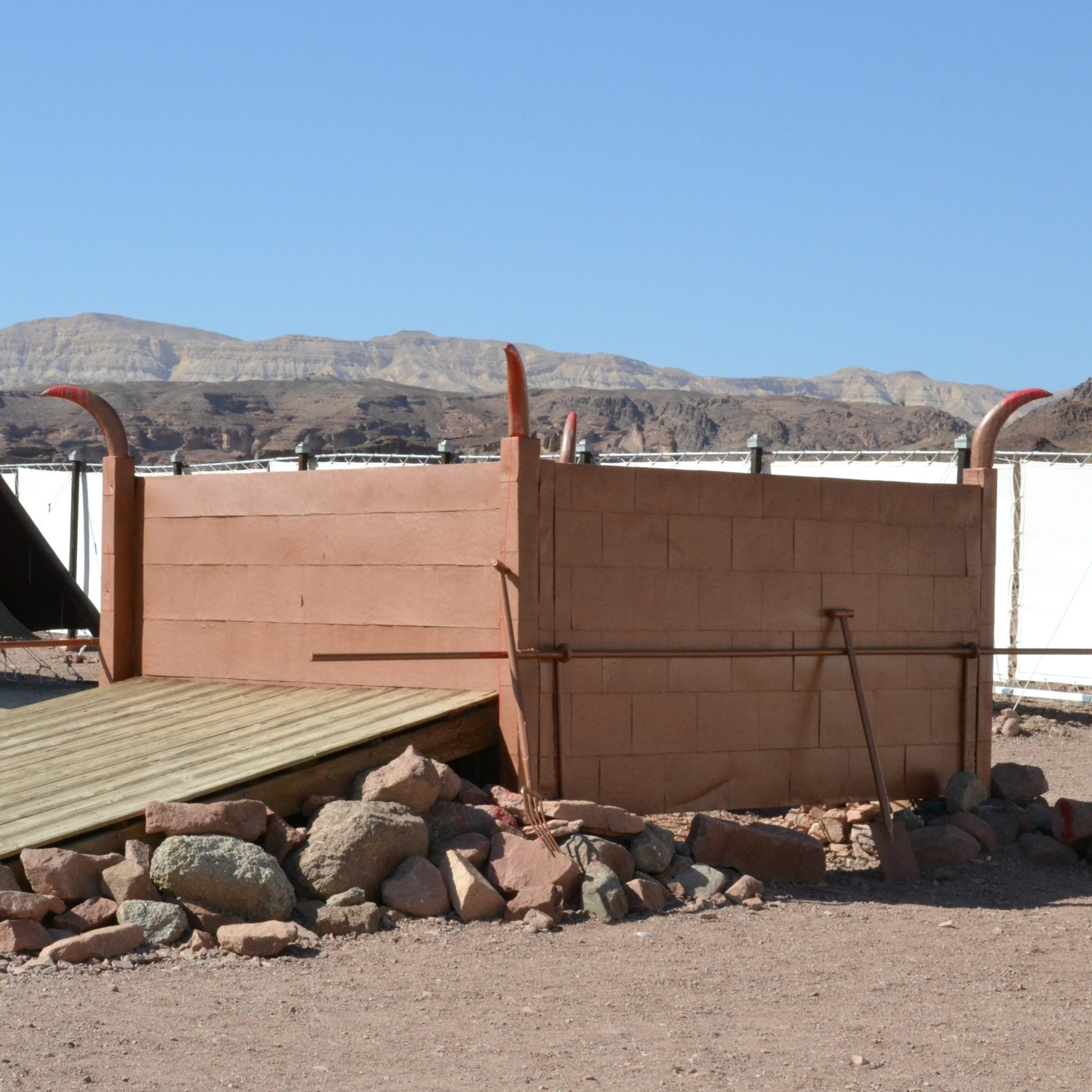
And you don't take a pillar that is two feet too short and put that in your temple to try to build with it, or two feet too long. Anything that does not measure up, it is scrap material that goes into the bin that gets recycled or used somewhere else or thrown away. But you take things that meet that measurement and it has utilization, and you use it and to build on that imagery. When they are doing this, it says here in the Exodus that they built an altar, but then they take 12 stones and put it outside of the altar. And the imagery that came to my mind, think of this, think of the Pantheon, think of the Greek temples. This idea of an altar in the temple and then these pillars, these six on each side. This idea that you have columns and this is the same type of design that you see in Greek temples and Egyptian temples.
These pillars that go along the outside with the altar on the inside, that you can bet Israel are going to be the pillars, the building blocks as part of this temple symbolism in building this here. When we're going through the details of the tabernacle, there's different degrees of holiness.
And the reason why there's different degrees of holiness is because of separation.
Your Levites can come into the courtyard, they can do this and that, but they can't come into the holy place. That's the job of the priest. The priest can come into the holy place, but they can't go into the holy of holies. That's the job of the high priest.
And you've got your court of the women, you have the court of the Israelites, you have the court of the Gentiles.
And what makes them holy is this idea that its exclusive exclusivity, the idea that something is getting left out, something is. Something can't, because you are leaving this behind. That is what makes this a little bit more holy. And as we go through our lives, obviously there are things that we want to leave behind to make us a little bit more holy. But also it is okay that we are not always behaving in the holiest of ways. I look at this separation and look at the temple as a whole. And if I try to compare myself to a temple, I think there are times and settings that listening to some music is good and appropriate. But if I were to take that same music, even if it were a sacrament hymn, and play it in the celestial room of the temple when everyone is trying to meditate, it would be inappropriate. It is inappropriate whether or not it is a good, wholesome song.
What makes the celestial room celestial is the fact that it has separated some of that out. And it is not to say that it is bad.
So when people say, well, you have to be the same you that is going to be passing the sacrament. You have to be that in every aspect of your life. I think there are gradations of holiness and there is a time and a place for certain activities, for certain things that we do. Obviously we want to make sure that we are separating the garbage out of our lives.
And go back to Leviticus when they offer the head on the altar and the legs and the innards and everything else. When you burn something on an altar, most of what you are doing is converting it into gas. If you take the weight of something that you burn and you were to capture all the gas and then the ash left behind, the law of conservation of matter states that it will weigh the same as what it did before you burned it.
But the weight of the ash is so small compared to what you started with, because most of the weight is converted into the CO2 or the gas or whatever is going up in the air, the smoke. Right.
Go back to that. When we offer ourselves up to the Lord and as we burn ourselves, if you will, on the altar, a lot of us is getting purified, is going up. And what gets left behind, hopefully, is the dross and the things that we are willing to cut out as we purify our lives. That symbolism of separating and creating a more holiness to us. But even within that, there are. It's not to say that we all have to be staunch and wear stiff collared shirts with pins poking into our necks to keep us on our best behavior. 24, 7. Even within the temple itself, there's different degrees of holiness. Is that making sense or am I just blowing everything?
[00:32:41] Speaker A: No, I think this is great.
[00:32:43] Speaker B: Okay, Leviticus. We've talked about what Leviticus means before. Levi means to divide.
And I love that.
All of Leviticus is about how to become holy. Like, if you're unholy, this is what you need to do. If you've committed these sins, this is what you need to do to make yourself holy. And you think divide. Well, doesn't that divide me or separate me from God? But we make ourselves holy by dividing out from us those parts that we don't like.
And we're going to see some of that. This idea that we can cut off those parts of us and sacrifice that or get rid of that so that we can approach God. So let's just go into Leviticus 1. And I know Leviticus is another one of these hard reads, but let's try to put a little bit of life into some of this. So verse 7, and the sons of Aaron, the priest shall put fire upon the altar. So I'm going to pause right there. Fire.
We've seen fire a few times already.
1. What guided Israel from Egypt was this pillar of fire.
What appeared to Moses was a burning bush, this fire. So this fire symbolizes the presence of God.
So the altar is where there is sacrifice. What is on the altar?
Fire. God. God is the sacrifice. He is the one that gave himself up so that we can be sanctified. But this is also going to be a portal because as you burn things on the altar, it says, I mean, if you want to have a fun little game, count how many times in the book of Leviticus it says, a sweet savor unto the Lord. This idea that as you burn it, the smoke rises and it goes up to God that through this fire it can ascend to God. So this is going to be representing God, and it Says, lay the wood in order upon the fire. And so God mine house is a house of order. And there is a specific order to how things need to be done.
Verse 8. And the priest Aaron's sons shall lay the parts, the head and the fat, in order upon the wood that is on the fire which is upon the altar. So now you have the head and you have the fat which is in order on the wood on the fire on the altar.
But the inward parts and the legs shall be washed in water. And the priest shall burn all on the altar to be burnt. Sacrifice an offering unto the. Made by fire of a sweet savor unto the Lord. So if you're going to burn everything on the altar, why. Why do they take the time to mention the head and the fat and. And everything else? Why not just say everything gets burned on the altar?
And so we look at this.
There's, I think, a reason why we're talking about these parts. The head would represent the thoughts. If we're offering something to the Lord, we're going to offer up our thoughts unto the Lord.
And the fat? The fat represents the health.
An animal's healthy. If it's got some fat on it, it's doing well. So offering our thoughts, offering the health, our strength of the being in order upon the wood. And then the inwards of the legs shall.
And his legs shall we wash in water.
So the inwards spiritually, and we're going to wash the inwards so that it becomes pure. And we're purifying ourselves on the inside, and then washing and offering that spiritually onto the altar. Everything gets offered to the Lord, but we're going to be offering our thoughts, we're going to be offering our spirit, and we're going to be offering ourselves, who we are to the Lord on the altar, as a sweet savor to him. And this is going to be a symbol of ourselves. We do this because it should have been us that died. And this is going to take our place and be offered to the Lord.
Awesome. All right, moving forward, all sorts of sacrifices and building on that, let's skip forward a little bit. Leviticus, chapter 8.
And going back to these priests again, verse 23. And he slew it, and Moses took of the blood of it and put it upon the tip of Aaron's right ear and upon the thumb of his right hand and upon the great toe of his right foot.
Have you read that and just wondered, why are they dipping their ears and their thumbs and their toes in blood? Like, what's the meaning what's the purpose?
[00:37:19] Speaker A: Yeah, I think that there's some good. I mean, even for those of us that might not be as well educated as you are on these things, you know, I don't know.
I think that we probably know that there's something important there and could probably make some assumptions, but you probably should just tell us what the official things are.
[00:37:43] Speaker B: I don't know if they're official.
[00:37:44] Speaker A: Well, let's get your thoughts on it. Let's get your thoughts on it. And I might have some thoughts to jump in with too.
[00:37:50] Speaker B: Oh, fantastic. I just look at it as the ear. First you got to hear the word of the Lord. And then as you're going to the thumb, symbolic of the hand, there is your ability to make. To do.
[00:38:00] Speaker A: Right.
[00:38:01] Speaker B: So before you can do the word of the Lord, you have to hear the word of the Lord. But if it stops there, it's of no value to you until you start doing it. And when you do the word of the Lord, then you enable yourself to be able to walk in the path that the Lord has lined up.
[00:38:14] Speaker A: I can't believe it. I was right.
[00:38:16] Speaker B: Look at you, Nate.
[00:38:19] Speaker A: I'm so happy. Dang it. I should have gone first. Maybe I can edit this podcast real quick. Hold on, let me just think. Let me think. If I can jump back here and actually punch me in.
[00:38:27] Speaker B: Back in time.
[00:38:28] Speaker A: Going back in time. And actually, because I did know the answer, but whatever, I'm not. I won't cheat our listeners by deceiving them like this.
I will say, though, I will say, though, that is. That is generally my only walk with the Lord was also, though, to stay on the. To stay on the path, you know what I mean? To basically continue so that it wasn't just a one time thing. So it was hearing, doing and then maintaining. Kind of the idea.
[00:38:55] Speaker B: Yeah, yeah.
[00:38:56] Speaker A: Of. Of.
[00:38:57] Speaker B: Of faith comes by hearing. And hearing by the word of God
[00:39:01] Speaker A: then enduring to the end was kind of my, my on the foot. But.
[00:39:05] Speaker B: And then faith is the principle of action. Because of faith, then we can act. And as we act, then we walk in the way of the Lord. And I mean, that's the key. And you're going to see it. When we get into poetry later and we talk about psalms, it'll. It'll do the opposite when it talks about a man who walks one way and then stands another way and then lies. I mean, it's digression rather than progression. And so it's kind of cool how they use this, but we'll get that a Little later.
All right, let's talk about these scapegoats, shall we? One or two.
[00:39:38] Speaker A: Can't wait.
[00:39:39] Speaker B: Fantastic. So you got two goats, and this is actually where the term scapegoat even comes from, if I understand that correct.
You've got one goat that is going to be sacrificed for the sins of the people and their blood offering there, while the other goat gets to go free. And interesting enough, the one that gets to go free is the one called the scapegoat. Yeah, sounds pretty good to be a scapegoat, if you ask me.
[00:40:05] Speaker A: In this context, it does.
Maybe we're misusing the term nowadays.
[00:40:09] Speaker B: Yeah, well, so it's not just all roses and flowers for the scapegoat.
[00:40:13] Speaker A: Okay, let's find out what's going on.
[00:40:15] Speaker B: Because they lay their hands on the scapegoat's head and they transfer all of their sins and iniquities on the scapegoat.
[00:40:22] Speaker A: Luckily, it's just an animal and it doesn't care.
Good. The animal probably is just stoked that it's the one that's not getting murdered.
[00:40:28] Speaker B: And then I love how they say, and you need a fit man to carry that goat out because those are
[00:40:33] Speaker A: violent and we don't like them. And they're. They're violent and strong.
[00:40:37] Speaker B: We don't want to make this any more awkward than it has to be.
[00:40:39] Speaker A: All right, great.
[00:40:40] Speaker B: Fit man. Take this goat outside the city limits and send him away.
[00:40:46] Speaker A: Okay, so give us.
Why are we doing this with two goats? Because honestly, this all feels like it could be done with one goat. You put the sins on it, you sacrifice it, and it still means the same thing.
[00:40:57] Speaker B: That's a great question.
I don't entirely understand the fullness here of this scapegoating, but I do look at it, and in my mind at least, it brings a couple images. If you look at one, you know, having two offerings at the beginning, and which one are you going to choose? And one of them is coming to offer itself as a sacrifice so that we can be cleansed, where the other one we are laying our hands on, and really it is getting cast out. I look at this as Christ who is coming here to offer his life for us, and the other one being cast out, being cast down as the scapegoat, the Satan goat. So is Satan a scapegoat?
Okay.
And maybe another image. You can look at it, and this is open for interpretation. If you guys have an interpretation you'd like to send in, I'd love to see it.
[00:41:46] Speaker A: No, you're doing great. Let's keep going.
[00:41:48] Speaker B: Maybe we get to go free because Christ was able to give his life. Maybe we are the scapegoat that got sent out and able to live outside because Christ was willing to give his life. Although that doesn't quite resonate because it's cast out, really. It's not allowed back into to the Presence.
[00:42:05] Speaker A: But maybe we are, though Adam and Eve were cast out.
[00:42:08] Speaker B: They were cast out of the Garden of Eden, and we're cast out of
[00:42:11] Speaker A: the presence of God.
[00:42:12] Speaker B: The presence of God as we come here on earth and we bear our own sins. So even though we have a goat that died to give its life, it's not to say we're entirely unaccountable for what we do.
[00:42:22] Speaker A: Well, it makes sense that it would be a symbolism of after this life too, right? Like if we don't repent, if we don't, you know what I mean, take advantage of the atonement, then we do carry our own sins and we will be cast out after this life too. Yeah, see, the goat's great, dude, the goat's great.
[00:42:42] Speaker B: And I mean, ultimately it's not just the goats, because really what you're doing is you're offering them in order to redeem the people. And the people are redeemed because one.
And I see the similar imagery of Christ and the two sinners on either side of them is a cross, as one sinner gets lifted up into paradise to be with him that day, while the other one is mocking Christ and doesn't get lifted up, but rather probably cast down or cast away in the afterlife.
And the idea that Christ stands at the middle of that, maybe that is judgment.
Maybe we are the goats. Maybe one of us goes up and one of us goes down.
[00:43:23] Speaker A: Sheep go to heaven.
All right, let's keep going.
[00:43:28] Speaker B: All right, chapter 19. Leviticus and Lord spake unto Moses, saying, speak unto all the congregation of the children of Israel and say unto them, you shall be holy, for I, the Lord your God, am holy. So he's commanding them to be holy like he is. Now get this. You shall fear every man.
Who. Who would you think, not being able to read this?
I'm commanding you to be holy even as I am, and you shall fear. Fill in the blank, Nate.
[00:43:55] Speaker A: Me?
[00:43:56] Speaker B: Me. Okay. And I'm going to go with what you said and go on to the next thing and keep my Sabbaths. I am the Lord your God.
Turn ye not unto idols, nor make to yourselves molten gods. I am the Lord your God. So that makes sense. Right. That reads right? Yes. Unfortunately, that's not what it says. Oh, I'm going to go back now.
[00:44:19] Speaker A: Okay.
[00:44:20] Speaker B: For ye shall fear every man his mother.
[00:44:25] Speaker A: That actually makes sense, too.
[00:44:27] Speaker B: And his father.
[00:44:28] Speaker A: Yeah, that makes sense.
[00:44:29] Speaker B: So he's put mother and father in context of I am your God. And when he says God, remember the Hebrew word is elohim, which is God's plural.
[00:44:43] Speaker A: Interesting.
[00:44:43] Speaker B: And you shall fear me or your mother and father. So going back to the insight you
[00:44:51] Speaker A: had on the Ten Commandments, Baby, let's do it.
[00:44:54] Speaker B: Honor your father and your mother.
I just look at this as one more reference in the Old Testament to heavenly parents. I find it pretty cool. It's not like it's super obvious, but where it's there, it's there. And when you see it, it's hard to. It's hard to unsee it.
[00:45:10] Speaker A: Yep.
[00:45:10] Speaker B: So I love that you pointed that out to me when we went over the Ten Commandments.
[00:45:14] Speaker A: This is great. That's awesome. That's a cool little nugget in there. I like that.
[00:45:19] Speaker B: Yeah, that was.
[00:45:19] Speaker A: Keep that in the back pocket.
[00:45:21] Speaker B: I liked it a lot, too.
[00:45:23] Speaker A: You were right. You told me. You were like, you're gonna love this. And you were right.
I do love this.
[00:45:28] Speaker B: All right, we're almost.
We're probably out of time, but we're almost done.
[00:45:31] Speaker A: Got a few minutes. If we got something else great to go over. Let's do it.
[00:45:36] Speaker B: I think I want to just talk about some of the things here when they're talking about reaping your land, so. Verse 9. And when you reap the harvest of your land, thou shalt not wholly reap the corners of thy field. Neither shall you gather the gleanings of thy harvest. And thou shalt not glean thy vineyard, Neither shall thou gather every grape of thy vineyard. Thou shalt leave them for the poor. And stranger. I am the Lord your God.
And this is important theme.
[00:46:04] Speaker A: This is a common theme so far in the Old Testament.
[00:46:07] Speaker B: Yeah. For as much as the Old Testament, God can be harsh.
He is very much concerned about the poor. He is very much concerned about the stranger. And he says, don't be so greedy to get every last little bit out of your field that some other poor soul is going to starve to death, leave some behind.
And this is going to become important. And this is my segue into the last thing I want to talk about this chapter.
Some of these chapters I know were kind of tedious and hard to read, but they provide so much context to understanding some of the other Stories that without reading this or understanding it, you miss some of the value there.
Look at Ruth and Boaz. What is Ruth doing? She is following the harvesters to pick what they are leaving behind, because that is her right as a poor person.
Her husband is dead, so she doesn't have the support of a husband. She doesn't have as a female. In ancient Israel, you leaned on your husband for support or your father for support. And that is why the firstborn, when the father dies, gives a double portion. The father gives a double portion to the firstborn so he can take care of any unwed sisters.
So where she was once married and her husband's dead, she becomes one of these poor people. And she is going into these fields to pick up what's left behind, because that becomes her lot.
So it provides some context. And I love how some of these stories, like when they're talking about in the law, if you borrow something from somebody and you break it and you have to replace it back sevenfold, you go to the story of the guy who was out chopping wood in the forest, and the axe handle comes flying off into the link and sinks to the bottom.
That's not as big a deal. You think, why doesn't he just take another axe handle or an axe head and put it on the handle and call it good? But because it was borrowed. And he says that to the prophet, I am in trouble. This was borrowed. He has to replace this sevenfold. And he didn't even have enough to buy one to begin with. Right. So that helps us understand the context of the situation that he is in. And perhaps the greatest context, I'm going to take from some of these purification rites in Leviticus. And I'm also going to borrow from numbers, chapter 19, because that's not part of next week's lesson, even though it technically should be.
And in the Scriptures it says.
Let me just. Let me just Skip into numbers 19 real quick, because I want to make sure I'm giving you the right.
It's telling you that you are unclean if you touch a dead body. And not only are you unclean if you touch a dead body, but you're unclean if you're even in the same room as a dead body. So let's look at verse 14. This is the law where a man dieth in a tent, all that come into the tent, and all that is in the tent shall be unclean seven days.
And every open vessel which hath no covering bound upon it is unclean. And whosoever toucheth one that is slain with a sword in the open fields, or a dead body, or a bone, or a man of a grave shall be unclean seven days.
And that might not seem that fascinating to us, but let me show you how this applies to understanding the New Testament real quick.
In the parable of the Good Samaritan, you have a priest and a Levite going past this man.
If they pick up this man and take him and he dies en route, they become unclean.
And their job, they are headed to the temple to serve in the temple. They will be disqualified from service in the temple for the next seven days.
So they're looking at it and saying, my responsibility to the house of God is more important than my responsibility to this man who I don't know, to this stranger. The Old Testament telling us over and over again how we should care for the stranger. But for them, they're saying, no, my responsibility to God is more important.
Now look at how Christ handles this situation. Because he is putting in the exact same situation as the Levite or the priest.
Think of him when he washes the feet of the disciples. And Peter says, no, let me wash your feet. And Christ is like, no, I've come to serve. And think of again when he says, the greatest in the kingdom is the one that serves the humblest, the one that's like a child.
When he goes back to see Lazarus, who is dead, the man who came to serve everyone else orders other people to take the stone and roll it back. Why isn't he touching that stone?
And even though earlier in his ministry he goes into the same room where a dead girl is, instead of going into Lazarus and performing the work and serving Lazarus, he cries with a loud voice, lazarus, come forth.
Why is he making Lazarus do the work? If here is the one that's serving everyone who washes their feet, Lazarus, come forth. And when he comes, remember this is a man. And the verse that every kid knows, because it's the shortest verse in the Bible and Jesus wept applies to Lazarus death. When he comes out, he doesn't hug him, he doesn't hold him. He commands others to unwrap Lazarus.
If we didn't understand this Old Testament law and the purification rites that we see in Leviticus and Numbers, then we would miss the whole purpose of this, that here is Christ.
And this is different from earlier on in his ministry when he raises a girl from the dead, because right now he is headed into the atonement, he is headed into Jerusalem, and he is maintaining ritual purity to perform in the Greatest temple on Mount Olives. This atoning sacrifice for real.
Well, a bowl without blemish.
He maintains this purity.
[00:52:27] Speaker A: And so in the story, just to kind of circle back to the Good Samaritan, the idea is these priests are finding this.
This man beaten up on the side of the road, not dead.
And there. It's almost like these priests can use the excuse of, well, he might die while I'm trying to help him. And in that case, then I wouldn't be able to, like, do my godly duty. So I can't help him because there's a chance that he might die.
And more than anything, it's maybe even a lesson that we can learn. Understanding this context, too, is they were almost using their excuse of.
Which by the way the Pharisees were known for. Right. Is that you almost are using the excuse of, well, I have my religious duties that I have to keep above all.
And not necessarily the most important thing, which is all of that is to serve other people, though. Like, if somebody's laying there and in need of your service, you don't get to. You don't get to cop out with, well, there's a chance that I might not be able to do my religious stuff. So I can't really help this person in need because he wasn't dead.
It was the idea that he might die.
Right. Because again, that's the difference between Jesus still performing the miracle with Lazarus, but not. You know what I mean? But not. Because you could say, well, then how does that apply to Jesus? Not then going over and, like, physically helping him. It's like, no, no, no, no. Jesus 1 did still help him. He still raised him from the dead. Number one and two, Lazarus was dead.
The dude on the side of the road wasn't.
Yeah, he needed help.
[00:54:24] Speaker B: And I love that Christ.
If he can't perform it himself, he doesn't use that as an excuse and walk away, but he finds a way to get others involved and use them to get the work done.
[00:54:38] Speaker A: Great lesson and obviously metaphor there.
[00:54:42] Speaker B: Yeah. I mean, we are the hands of Jesus, right? And he can't bind up every single wound and help every single person on the planet. So what does he do?
He pulls us in and involves us to do things that he cannot do himself for whatever reason, if he is going to maintain his degree of holiness, his separation, and yet he is going to employ us to do his work so that we can help others enter the presence of God.
And obviously, lessons on delegation, too. We can't just step in and save the day. And do everything ourselves.
Sometimes it's a lot better to get others involved and help out, and there's a time and a place. But one thing Christ didn't do was just walk away from somebody who needed his help.
He found a way to still help the man, yet maintain that ritual purity and do his temple duty as well.
[00:55:40] Speaker A: Amazing.
[00:55:40] Speaker B: And we wouldn't understand. We would miss the value of those stories if it wasn't for these boring chapters in the Old Testament that give us that rich context, that background, that setting, to be able to better understand it.
[00:55:56] Speaker A: Amazing.
Let me just throw one thing in there. And we may or may not even keep this. I might edit it out if it's too much of a curve ball.
[00:56:06] Speaker B: Throw away. I've got my mitt.
[00:56:09] Speaker A: With all of the maintaining ritualistic purity and not touching somebody like a corpse or a dead person, Right.
It kind of even puts a different perspective on taking the sacrament each week. Right. Like the Lord is represented as the body underneath the shroud. Right? Underneath the. Underneath the sacrament sheet. Right. His blood in his body.
And so in that case, he does, you know, I guess, use. Use us as his hands to be handling that sacrifice. Right? Or. Or the. Or the body and blood of the sacrificed. But it is interesting because Christ also fills, or we metaphorically fill the place of Christ in. In every aspect of the sacrament. The preparer, the person on the altar, and then the person passing. You know what I mean? The person. The person delivering salvation, you know, or the atonement to. To the people in the congregation. And is this way too far off? Is this way.
[00:57:28] Speaker B: I love where you're headed, because I want to see. I want to. I want to build on this.
[00:57:31] Speaker A: All right, Because I'm just wondering. It's like. It's funny because when you. When you explained specifically the handling the corpse and the burial shroud, I'm just like, oh, man. The first image that came to my mind was the sacrament. And I'm like, am I going down the wrong path with this? Or is this going somewhere?
[00:57:47] Speaker B: The ironic thing about it is if that corpse is in the room, the priests that are handling it are unclean.
[00:57:55] Speaker A: Well, aren't we all, too?
[00:57:56] Speaker B: And we are all in the same room with that. We all become unclean, and yet we become the cleanest by participating in this unclean.
And then think again of Pilate, who washes his hands. And yet in the act of washing his hands, he is becoming as dirty as possible.
And this role reversal of uncleanliness, cleanliness, because Christ is maintaining ritual purity all the way up to the atonement. But when they scourge him, when he goes in and bleeds from every pore, he has an issue of blood, which again is going to make him unclean.
[00:58:31] Speaker A: So he was clean according to Jewish law, right?
[00:58:33] Speaker B: According to. Yes.
And to be clear, Jewish law is very much a health code. Right. This is not to say that you're spiritually unclean. You're spiritually cast off forever, and it's
[00:58:46] Speaker A: only for a period of time.
[00:58:47] Speaker B: Yes. And you have to go and you wash yourself or whatever. But he's maintaining ritual purity because you had to be pure to perform this temple ordinance. But in performing this ordinance, he becomes unclean. And that is what the whole purpose of the sacrifices were. What? Right. The animal bears your sin, the animal becomes unclean.
[00:59:08] Speaker A: The thing on the altar, it becomes
[00:59:10] Speaker B: significant that he bleeds from every pore. Because you go back to Leviticus, if you have an issue of blood, you are unclean. He was clean up until the point where he took our sins upon us, at which point he became extremely unclean and that we might become clean. And you see that full cycle as he comes into a corpse in the room in the sacrament setting, it is ritually making everyone in there unclean. But as we participate, it cleanses us. It goes full circle from clean unclean to clean. He became unclean so that we can become ritualistically unclean. Yes.
Which symbolically represents a purity,
[00:59:54] Speaker A: some cool imagery. See, the Old Testament's rad.
[00:59:57] Speaker B: It is.
[00:59:57] Speaker A: I didn't know how great the Old Testament was until. Until even before the Old Testament. You and I started kind of getting into some of this stuff and I'm like, oh, man, I love, I love, I love the added perspective, so many of these things.
Because the thing is. And I. And. And I would. I guess I would just want to finish my thoughts with hopefully.
Hopefully as we do kind of go down and try to add as much kind of insight and additional perspective to some of these things. Hopefully it's with the purpose of really locking in and enhancing even something as simple as the sacrament. Right.
Like, hopefully this is things that while we're participating in these ordinances, it helps.
It helps make them richer, deeper, and a more fulfilling experience, understanding even more perspective and a bigger picture, I guess, on top of this stuff. I know it does for me at least. So I guess I would say, right, that that's kind of our goal with some of these things with the Old Testament.
[01:01:02] Speaker B: Absolutely. And like I said at the beginning of the year, Old Testament has more references to atonement than any other book of scripture. It is prevalent and so much of this ties back to Christ and helps us understand that.
[01:01:17] Speaker A: What are we talking about next week?
[01:01:18] Speaker B: Next week we are going into numbers. And again, one lesson. I am good at math to cover an entire book.
[01:01:27] Speaker A: Oh, sorry. I was just laughing at my own joke. Not laughing.
[01:01:31] Speaker B: One lesson to cover the entire book of numbers.
[01:01:33] Speaker A: Wow. Okay. Well, we have got our work cut out for us.
[01:01:37] Speaker B: Yeah, I am sorry. I apologize to you guys at home because I know there is so much stuff in the scriptures and we are trying to pull stuff. Stuff in and we're trying to do it, but we're also trying to keep this without being, like, hours long. So we'll. We'll do our best. Send us some questions.
[01:01:52] Speaker A: Send us questions. Help us know if. If there is anything in particular that we are missing that you would like us to talk about. We. We always appreciate.
[01:02:00] Speaker B: Yeah, we feel free to discuss it with you.
[01:02:02] Speaker A: Killer. Until next week.
[01:02:03] Speaker B: See y,
[01:02:09] Speaker A: Sam.