Episode Transcript
[00:00:00] Speaker A: Foreign.
Welcome to the weekly Deep Dive podcast on the Add On Education Network. The podcast where we take a look at the weekly Come follow me discussion and try to add a little insight and unique perspective. I am your host, Jason Lloyd, here in the studio with my friend, your friend, and this show's producer.
[00:00:32] Speaker B: Yes.
[00:00:33] Speaker A: Nate Piper.
[00:00:34] Speaker B: Yes. I'm so. I am so glad we changed that opening.
My friend. Your friend.
[00:00:39] Speaker A: I should have just thrown in our friend.
[00:00:41] Speaker B: Our friend.
[00:00:42] Speaker A: Our friend Nathaniel. Kenneth Piper.
[00:00:45] Speaker B: Close. And yes, you butchered my name completely in every single aspect. But, okay, clearly we need to be better friends.
We need to go camping together. Bowling.
Little inside joke there.
[00:01:00] Speaker A: Chop another tree down.
[00:01:02] Speaker B: Chop another tree down. Little inside joke there. All right, all right. What are we talking about this week?
[00:01:08] Speaker A: This.
This week we are diving into. Can you guess? Can you guess?
[00:01:13] Speaker B: Is it Daniel yet?
[00:01:14] Speaker A: No.
[00:01:15] Speaker B: Okay. It's got to be Isaiah.
[00:01:17] Speaker A: Isaiah. This is. This is just
[00:01:19] Speaker B: going on forever.
[00:01:22] Speaker A: I know you don't like it, but I am. It's
[00:01:24] Speaker B: not that I don't. It's not that I don't like it. It's just I don't get anything out of it without you actually explaining anything that's happening. And so I feel useless.
[00:01:35] Speaker A: You're not useless. But I feel like a pig in mud with Isaiah. I am just as happy as can be.
[00:01:42] Speaker B: Yes, you do.
[00:01:43] Speaker A: And in particular.
So this is, in my opinion, the heart of Isaiah. This is the one lesson of Isaiah that I have been learning, longing for, and can't wait to get to.
[00:01:57] Speaker B: Wow.
[00:01:58] Speaker A: Yeah.
For me, this is my favorite section of Isaiah.
We talked about how cool the prophecies were last week and how great it was that he is seeing into the future and describing all of these events, then it is pretty bold for him to say, hey, when my people get carried into Babylon, captive into Babylon, and when they get let go, and when they return back to Jerusalem, then let's have a conversation.
Of course he's speaking for the Lord. Then let's have a conversation and let's compare my evidence with your evidence and see who actually called the shots and who's actually God, right?
[00:02:35] Speaker B: Yeah.
[00:02:36] Speaker A: And we've talked about all this prophetic power and the significance of prophecy and all of these historical events. But now we're going to get right into the heart of it in prophecy, in regards to Christ, the coming of the Messiah.
[00:02:52] Speaker B: Now we're talking. Now we're talking.
[00:02:54] Speaker A: This is the meat and potatoes, guys. All right, the meat
[00:02:56] Speaker B: and potatoes. I'm ready for this one.
[00:02:57] Speaker A: The best Isaiah lesson there is.
Do
[00:03:01] Speaker B: we get, like, born. Unto us, a child is born.
[00:03:03] Speaker A: No, we actually already passed that.
[00:03:04] Speaker B: I figured as much.
[00:03:07] Speaker A: Sorry. We get led like a lamb before the shares is done.
[00:03:12] Speaker B: That one's good.
[00:03:13] Speaker A: Yeah. We get into the caesarean section. Nate.
[00:03:17] Speaker B: Okay, okay,
[00:03:19] Speaker A: okay.
I don't know why I'm laughing.
We do, and it's going to be great.
So we're going to start in 49 rather than 50. Last week I ended at 48 rather than 49. I think 48 was a good ending for last week's lesson. 49 is actually a good introduction to take us into this week's lesson.
And dare I mention, right before we start, guys, we only have 11 lessons left in the Old Testament.
[00:03:48] Speaker B: Wow.
[00:03:49] Speaker A: And kind of a year in just pulling things together. If there's anything that you have really appreciated looked at and say, wow, I learned something new or something that just struck you in the funny bone or something that you just thought was awesome on the show or something you thought that maybe we messed up a little bit. Send in your nominations so we can pull some of those moments together and put some special episode together for you.
All right, that being said, let's go to Isaiah 49 and dive right into this verse one. Listen, O Isles, unto me, and hearken ye people from afar. When they're talking about the isles, typically we're talking about the Greek nations, the European nations, far out, going into the north and the west of where Israel is. And then he's saying, you people from afar.
A lot of times here we're referring to the Gentiles and the people of the world.
The Lord hath called me from the womb, from the bowels of my mother. Hath he made mention of my name?
He hath made my mouth like a sharp sword in the shadow of his hand. Hath he hid me and made me a polished shaft in his quiver. Hath he hid me.
Who is this?
Who is he talking about? Who is this person that the Lord has called from before he was born? And. And he has made him like a sharp sword and like an arrow in his quiver? Who is it?
I mean, this is up for debate, but I look at this in verse three.
And he said unto me, thou art my servant, O Israel, in whom I will be glorified.
So to me, God is answering that question for us.
Israel is the servant.
His people is who he is referring to. They are the ones that are like a sword. They are the ones that are like an arrow. They are the secret weapon that God is going to use to further his plans in the earth, he is going to be doing it through Israel.
So I don't look at this as Isaiah, but I do look at this. When we get into 50 and we get into here, we are going to be talking about this servant. And this servant is going to go through all sorts of different trials and going to go through all sorts of different situations, scenarios in which the Lord is going to use him. And I want you to look at this in a couple of different ways. One, literally looking at this as Israel, God's people that was carried out of Jerusalem into Babylon, that's going to be restored into there. Look at it as the authors of the Old Testament. Look at it as this people as a whole and how they work as an example to to the rest of the world and to the nations. And what thanks and credit we owe to Israel for bringing us a knowledge of God, for bringing us the Scriptures and really acquainting us with the true and living God. We owe them a deep debt of credit. They are God's servant and they've done a great work. But also I want you to look at this as Christ coming from Israel. So referring to Israel as this chosen one of Israel, the Messiah who's going to be born through the line of Israel and a product of Israel. He is a branch from the house of David. So by extension Israel is going to refer specifically to Christ. And then it's also going to refer to servants that he calls from Israel to save his people, Moses who brought Israel out.
He's going to talk about Christ. He's going to talk about even potentially look at this as Joseph Smith, who's going to be restoring Israel from a lost scattered state.
And then if you also want to look at this on a personal level as yourself, this servant is going to embody all of these. Remember, he's going to go and talk about Jacob and Israel. Remember that the name Israel is not the birth name of Jacob.
Israel is the name that God gave Jacob after he wrestled with God and after God dislocated his thigh and he still wouldn't let go without getting a blessing.
And it was to prevail with God. He fought and wrestled with God. He saw him face to face and God prevailed over him, or he prevailed with God to be able to get that blessing. So those who are willing to hold on to God despite whatever afflictions he throws your way. Now think about this in context of Israel, God's people. What have they been through to this point that Isaiah is talking about Assyrian destruction and Denomination domination, Babylon coming in and destroying them, carrying them away captive. This is like God dislocating Jacob's leg. God's afflicting them in a sense, and yet they still are holding on and earning that title.
So as we read about Israel, think of yourself.
What challenges do you feel God has thrown your way?
Deaths of loved one or struggles with job loss, or providing for your family or loved ones that have gone astray or maybe are lost or wandering in a place that makes you feel uncomfortable, or what things are going, that is trying to shake you from God, trying to get you to let go.
But as you hold on like Jacob, you're not Jacob anymore. You're earning that name, that title, one who perseveres, that even though God prevails, you don't let go. You prevail with God.
You hold tight and you earn that title. So let's keep going. This is who he's talking to, that servant. And so that servant can fill a couple of different roles.
Verse 4. And now saith the Lord that formed me from the womb to be his servant to bring Jacob again to him. And you're like, wait a second.
In verse three it said, thou art my servant, O Israel, in whom I am glorified. But verse four, it says to bring Jacob again to him. So look at this. We see a separation. When he's saying you're Israel, he's not saying specifically Jacob, the man he named Israel, but you are from Israel. You've earned that name.
Because he's going to play that role in restoring to bring Jacob again to him. Though Israel be not gathered, yet shall I be glorious in the eyes of my Lord, and my God shall be my strength. So this servant that he's calling is going to be a tool to restore Israel. And think about that in context of Joseph Smith.
And when we're talking about Israel. In fact, I'm going to. When we're talking. So these chapters are going to keep going back to this messenger. I'm going to Skip to Isaiah 51. I'll come back to 49, verse 1. Hearken to me, ye that follow after righteousness, yea, that seek the Lord. So when we're talking now before, remember, he's saying, hey, isles of the sea, hey, all the Gentiles, everyone out there from the ends of the earth, listen. Now he's changed this.
He's talking, you that follow after righteousness, you that seek the Lord, look unto the rock whence you are hewn. Look to the hole of the pit from whence you are digged. He's now talking about his servant. He's talking you guys that follow me. Israel that are righteous. Verse 2. Look unto Abraham, your father, and unto Sarah that bear you. For I called him alone and blessed him and increased him. And Abraham and Sarah are going to play an important role in this section of Isaiah. But I want to look at this scripture. When they're talking about Abraham and you say, okay, is it literally talking about Israel or who is this? Remember, verse one said, hearken to me, you that follow after righteousness, and you that seek the Lord. And go to Galatians. If you're not turning there, that's all right, I am. And I will read it for you. Galatians, Chapter 3, Verse 7. Know ye, therefore, that they which are of faith the same are the children of Abraham.
Anyone that's righteous, anyone that has faith, remember Christ shows up in the New Testament. You say you have Abraham as a father. I tell you, I can make these stones children of Abraham.
This is not just anyone who's born in the house of Jacob. This is anyone who earns the name Israel, regardless of what ethnicity or background you come from. And then you can see this again in Abraham, chapter two, verses nine and ten. And I will make of thee a great nation. This is God speaking to Abraham. And I will bless thee above measure and make thy name great among all nations. And thou shalt be a blessing unto thy seed after thee, that in their hands they shall bear this ministry and priesthood unto all nations. And I will bless them through thy name. And as many as receive this gospel shall be called after thy name, and shall be accounted thy seed, and, and shall rise up and bless thee as their father.
So this is talking about Isaiah here. He's not specifically referring just to the literal seed of Abraham. He's talking about anyone that's righteous. He's reaching across time. Now he's addressing us.
Anyone who wants to have faith, to believe, go back and look at the example of Abraham. And he's going to use that example to help describe the atonement and the faith and this plan of restoration.
All right, I'm going to go back to 49. When we're talking about this servant and talking about the role that they have to play.
Verse 8.
That thou mayest say to the prisoners, go forth to them that are in darkness, show yourselves.
They shall feed in the ways, and their pastures shall be in all the high places.
And you're talking again. His servant is Israel. Those that take on the name Israel, those that earn that and I think of ourselves today as modern Israel. We take that name upon us. We look to Abraham, who was an example to us, and we claim him as our Father.
And think. I cannot read this verse and not think of the threefold mission of the Church.
The threefold mission of the church is perfect. The saints redeem the dead and proclaim the gospel. Let's go back and read this, that thou mayest say to the prisoners, go forth,
[00:14:52] Speaker B: redeem the dead.
[00:14:53] Speaker A: Thank you, Nate.
To them that are in darkness, show yourselves,
[00:14:58] Speaker B: proclaim the gospel.
[00:15:00] Speaker A: And they shall feed in the ways, and their pasture shall be in halt all the high places. They shall not hunger nor thirst, neither shall the heat nor sun smite them.
[00:15:09] Speaker B: Redeem the saints,
[00:15:10] Speaker A: perfect the saints.
[00:15:11] Speaker B: Perfect them, Redeem them is the same thing,
[00:15:13] Speaker A: feeding the saints.
For he that hath mercy on them shall lead them. Even by the springs of water shall he guide them.
And for me to hear us say that we are Israel, and then to see that our mission aligns with even what Isaiah is saying a long time ago, like the threefold mission of the church, is exactly what Isaiah was saying. This is what my servant will do. This is what those who say they are Israel are going to be performing. That's what their mission is.
And I will make all thy mountains away, and my highways shall be exalted.
[00:15:48] Speaker B: Awesome.
[00:15:49] Speaker A: Okay, moving into chapter 50.
And this is the Lord speaking to his servant, speaking to his people. Thus saith the Lord. Where is the bill of your mother's divorcement? Whom have I put to you away? Or to which of my creditors? As to whom I have sold you?
Israel. Now Isaiah is speaking of them being lost in Babylon, in captivity again.
And he is saying, did I sell you? Did I sell you to the Babylonians for a price? Did I put you away? Where is the divorcement? Where is it that I did that? And he answers himself, behold, for your iniquities, you sold yourselves.
For your transgressions, is your mother put away?
And it's kind of interesting, when he's talking about your mother being put away, I look at the mother as Israel in a sense that if you look at God being the father, and then the bride being Israel his consort, and then through God giving his life to the church, then you are able to be born again through that church, through Israel, through there, you're able to establish yourself and make a covenant and be born again.
So look at the church. Baptism is a vehicle of being born again. And because the church, you now become a member of the church. The Church becomes your mother. Israel is like the mother, and you were born, so now you're a child of that mother. So when they're saying, you've sold yourselves for sin and your mother is put away, Israel has gone away from the Lord.
[00:17:29] Speaker B: This isn't just an elaborate. Your mama joke.
[00:17:31] Speaker A: No,
[00:17:32] Speaker B: boring.
[00:17:36] Speaker A: Verse 2.
Wherefore when I came, was there no man?
When I called, was there none to answer?
So he's going back to this and saying, I am not the one that sold you.
Because when I came, you weren't there.
When I called, you didn't answer.
Now think of this again in context of the Garden of Eden. And I know we keep going back to the Garden of Eden, but I think it's very important when God calls.
Adam hid himself because he was afraid there was none to answer. Was it because God didn't show up?
Or was it because Adam's sins that he had put himself away? Was it because of what Adam did, he hid himself. This is the point that God is making.
When I called, you weren't there.
And it's not just that when they were gone because Jerusalem was vacated, there was nothing left. The temple was destroyed. They. The city was emptied, the people were gone because they were carried away, captive into Babylon, or they fled into Jerusalem, or like Lehi, they crossed the sea and came across the world. So literally, when he came calling, they had sold themselves for their sins. But not only that. This is very prophetic of when Christ comes and he calls, no one answers. And Christ says, when I come, the foxes have dens, but I don't have a place to lay my head. You guys aren't. You don't even recognize me. And this goes back to the very beginning, Isaiah, chapter 1.
The ox knoweth his master, the ass is master's crib. Or the ox knoweth his purchaser. The. The. The ass, his master's crib. But my people doth not know. Israel doth not consider. You don't know me. You don't hear me. You don't answer by my call, you don't answer my voice. You have sold yourselves.
Then he goes on, is my hand shortened at all that I cannot redeem or have no power to deliver? Behold, at my rebuke, I will dry up the sea.
And this is something that's going to play a role over and over and over again. In fact, maybe we should just take a quick tangent on drying up the sea, because we're going to see this several times.
[00:19:52] Speaker B: Can I take a guess?
[00:19:55] Speaker A: Shoot, Nate, go for it.
[00:19:57] Speaker B: Does this have to do with what we've been talking about the last few episodes with, like, water being Revelation, or, like, the living water? So when he says he's gonna dry up the sea, does it mean that he's gonna take, like, his power and revelation off the Earth?
[00:20:15] Speaker A: Wow, that's fantastic insight.
[00:20:17] Speaker B: Wait, is that wrong?
[00:20:18] Speaker A: I wasn't going there, but I'm glad you did. You should go where you're
[00:20:21] Speaker B: going. No, you should go where you're going.
[00:20:22] Speaker A: No, Nate. You've opened my eyes.
Nate.
Kate, we've been talking about there's two sides to this coin.
[00:20:31] Speaker B: Yes,
[00:20:32] Speaker A: and I have always been seeing heads, and you just showed me tails.
[00:20:36] Speaker B: All right, all right. Well, I'm excited to see heads also. Let's hear it.
[00:20:39] Speaker A: Okay, I was going, so. Isaiah 51, verse 9. Awake. Awake. Put on strength, O arm of the Lord. Awake. As in ancient days, in the generations of old. Art thou not it that hath cut Rahab and wounded the dragon?
Art thou not it which dried the sea, the waters of the great deep, the that made the depths of sea a way for the ransomed to pass over.
Therefore the redeemed Lord shall return.
When they're talking about cut Rahab and wound the dragon, remember the poetics here, the parallels. Cut is synonymous with wound, Rahab with the dragon. And this is the chaos. And we're talking about, art thou not that dried up the sea, the waters of the great deep.
You got to understand the ancient Canaanite religions and their viewpoint on creation. When you look at BAAL and how he created it, or you look at Marduk in creation, the idea was that he went to battle with a massive sea dragon.
Think of the Kraken.
Think of Leviathan.
Think of. And in here, Rahab is what they're referring it to, or Tiamat.
So when he goes against Tiamat, this represented chaos, and chaos was representative of the primordial seas.
And when we're talking about waters, see, I took this, Nate, the salt waters, which is symbolic of chaos.
And you took it. Fresh waters. And I really like the direction you went with this. And I'll revisit that in a sec. But when we go to this chaos and this waters of chaos, God. So in the Babylonian mythology, Marduk takes the wind, shoves it down Tiamat's throat, and it splits her in four different directions. And he takes the body, and from her he's able to create the earth and the men. And creation springs forth from his victory over the dragon, the chaos, the monster.
So when we're talking about this. In this case, I'm looking at the waters as chaos. And when he's drying up the seas, men are creating chaos. They're living outside of the order, the laws, and they're reintroducing chaos. Because in the beginning, creation, he divides light from darkness, he divides the water from the land. He separates. He's very careful. And men are overthrowing those boundaries and, and throwing up chaos. And now he has to go through and do this again. And it's a recreation and it's showing superiority over chaos by imposing his law. You see it in creation because Genesis 1 says the Spirit, the breath of God, moved upon the face of the waters and he had domination over the waters. And as he controlled the waters, he caused it to separate from the waters above the earth, the waters below the Earth, and he separated the waters from the dry land and he created.
And what he's doing is he's drying it up so that land can exist, so that man can come onto the land. So he saved them from chaos by giving them his word, the breath of God. The word which is law, which is order, which is establishment.
Not only does this happen in the creation, now think of Egyptian when they're leaving Egypt, and then the breath of God moves upon the Red Sea and pushes it on either side and, and he's once again imposing his will, his word. And by his word he's saving them that they can cross over on the dry land. So this verse is in reference to creation, it's in reference to Egypt when he saved them from Egypt. And now it's not only that, then this is the magic about Isaiah is the application three, four, five different times, because it's going to happen again. When Cyrus frees the Jews from Babylon, he, he diverts the river Euphrates, massive river, into swampland and dries up the riverbed so they can come in and free the Jews from Babylon. Once again you have this act, this domination over the seas.
Think of Noah when the people turn to chaos.
The water breaks forth from inside the earth and from the heavens. And the water, representative of chaos, overcomes everywhere. And then Noah's saved.
And then the breath of God, the wind of God is going to dry up the earth again and deliver him and recreate so he can come out. And then think about the Jaredites crossing the sea in their boats and the dominion that they have over the sea. Think of Nephi and Lehi and crossing the ocean. And this idea, it's going to keep showing itself till Christ himself in the New Testament as they say, master, carest thou not that I perish? And his voice, peace be still, shows dominion over the waters. So I go back to this verse and go back to what they're saying with chapter 50.
Behold, at my rebuke, I dry up the sea and then go back to 50. 1.
Awake. Awake. Put on the strength. Art thou not him that cut Rahab and wounded the dragon? Art thou not it which dried up the sea and the waters of the great deep, which made the depths of the sea a way for the ransom to pass over? This is how he saves us and water. Joseph Smith said he's known to swim in deep waters. It's this idea that tribulation and trials is like a water. Think again of Peter sinking into the water and Christ calling his focus and giving him that ability to stand above it, to stand above the waters that are going to drown him and take his life. Think of baptism.
The idea that water is symbolic of death and the ability to be raised from the waters, coming out of there saved and white and holy. He will deliver us from the waters. That's where I was taking it, Nate.
But where you're taking it was fascinating because it's the flip side of the coin. But it's the same thing. If you reject God, then the waters dry up because for them that did it, it led to famine, it led to an apostasy, it led to a lack of the word of God.
And it's interesting because you have God drying things up to save us, but then you also have your turning away from God is drying things up to doom you. The same hand that smites the hand that saves.
[00:27:28] Speaker B: Yeah, baby, let's keep going.
[00:27:29] Speaker A: All right. Thanks, Nate, for pointing that out.
[00:27:32] Speaker B: Piping up.
[00:27:33] Speaker A: I like it. Pipe up more, boy. This is one of my favorite verses. Just because God's speaking and when he says just carries some weight to it.
Verse 10. Who is among you that feareth the Lord, that obeyeth the voice of his servant, that walketh in darkness and hath no light, let him trust in the name of the Lord and stay upon his God.
Behold, all you that kindle a fire, that compass yourselves about with sparks, walk in the light of your fire and in the sparks that you have kindled.
So here we have a contrast.
Who among you fears the Lord that obeys the voice of his servant, the that walketh in darkness and hath no light, let him still trust in the Lord. Does it sometimes feel like the path that God is asking us to follow is darkness? And we're desperate for that light.
And it says, he hath no light. Let him trust in the name of the Lord and stay upon his God, even though it is dark.
And think about Lehi in the vision that he had of the Tree of Life, because it is after they find that rod of iron. It is after they hold on. All of a sudden, mists of darkness appear.
And even if you can't see anything, hold to the rod which was symbolic of the word of God. Hold to it. And if you do, you're going to be delivered and you're going to have light. Now contrast that. Behold, all you that kindle a fire, that compass yourselves about with sparks, walk in the light of your fire and in the sparks that you have kindled.
So rather than waiting for God to provide you with the light so that you can see where you are going, you're going and creating your own light.
And for those of you who are going to create your own light and walk in the sparks that you have kindled, this shall you have at my hand. You shall lie down in sorrow.
I know. How many times, Nate, have we gone back to this very simple story with Adam and Eve in the Garden of Eden, waiting for further light in the knowledge for God.
And even though you don't know what that is, you're in darkness because you're waiting for him to tell you what's next. You're waiting for him to reveal what happens.
And rather than wait for him, here's a solution.
Light your own fire.
Take it into your own hands. Why are you waiting for God? Don't trust in Him.
This is what he wants for you. Light your own fire. Take this fruit and eat it and get your own knowledge and be like Him.
That path will always lead us to sorrow.
And there's. There's times that God is going to try us. Think about Jacob learning, earning that name, Israel. It's because God was wrestling with him. Think about Job and what he was going through and the role that God played in that. There are times that our.
Our adversary is going to be God himself. Or that by following what he asks us to do, we are put in a place of darkness where we are hoping that he will save us. We are hoping that he will deliver us. And if we are patient and we wait on the Lord, you will receive that light.
But if you lose patience and decide that you are smarter, you are going to provide your own solution and your own salvation and your own understanding.
It is going to lead you astray.
This is powerful today. I agree. Because how many People today get confused by the gospel or some of the decisions or what they are doing or they don't understand and it feels like darkness. And rather than wait and ask God for a solution and pray and turn to him and spend some time in the darkness, really trying to use that to grope and hold to the word of God, they light their own fire and they kindle their own sparks, and it's not a brightness that's going to fulfill them.
Anyhow, I'm going to keep moving.
51 Such a beautiful verse when we're talking about look to Abraham because I mean, you're just finishing this story about walking in darkness and he says look to Abraham your father and to Sarah.
What darkness did Abraham go through and having to sacrifice Isaac? You don't think that was a dark tunnel for him to have to walk through?
He didn't see the ram at the beginning.
And it doesn't just say look to Abraham your father and to Sarah.
That poor woman, how desperate did she want a child?
And she prayed that she would have a child and it seemed impossible she was not going to have that child. And when she finally did, her husband was taking him up into the mountain to kill him.
You cannot tell me that she did not have to walk in darkness and still trust in the word of the Lord.
And yet rather than spark their own little sparks or take their own little light and try to make sense of this and leave God for their own gospel, for their own light, for their own salvation, they were willing to walk in the darkness and hold to the word of God, hoping that they would find the light at the end of the tunnel. And they were look to Abraham, look to Sarah that bear you. I called him alone and blessed him and increased him.
For the Lord will comfort Zion, he will comfort all her waste places, and he will make her wilderness like Eden. Again, this reference, tying it back in, we can't get away from this. The garden of Eden and her desert like the garden of the Lord, Joy and gladness shall be found therein. Thanksgiving and the voice of melody and there are so many beautiful passages. I hope you guys take the time to read this for the sake of time and trying to keep this podcast within a reasonable scope. I am not going to read all the beautiful passages of Isaiah.
Verse 12. I even I am he that comfortest you. Who art thou that thou shouldest be afraid of a man that shall die, and of the Son of man which shall be made as grass and forgettest the Lord thy maker, he that stretcheth forth the Heavens and laid the foundations of the earth, and has feared continually, every day, because the fury of the oppressor, as it were he to destroy, and the fury of the oppressor. Think again of Peter looking at the waves and being overcome by them.
And he's so overcome that he forgets that Christ is standing on the water right in front of him.
I think of Israel, who was so overcome by the destruction of Assyria, by the attacks of Babylon, by the threats of Egypt or whatever the case may be, that they forget the Lord, they forget their Maker, and they perish. They're sunk. They're being. Think of going into Babylon like sinking below the waters.
In order to be saved, God has to dry up the sea and pull them back out and deliver them.
Remember me. And he's like, I get it, I get it. It's easy to forget me when everything goes dark.
But remember me. Remember me.
Okay, first chapter 52.
Awake. Awake. Put on thy strength, O Zion, and put on thy beautiful garments, O Jerusalem.
Where did we see this? We saw the opposite of this already in Isaiah when he says that she has lost her beautiful garments, her ornaments, her tinkling, her whatever right she lost. The prophet, the man of war, the mighty man, the elder. All the people have been cut off, have been carried into Babylon, and she is stripped naked of her people, and she is sitting in the dust, and she is exposed and naked.
Now we're saying, awake.
Put on your strength, put on your beautiful garments, O Jerusalem, the holy city. For henceforth, thou shalt no more come unto the uncircumcised and the unclean. Shake thyself from the dust. Arise and sit down, O Jerusalem. Loose thyself from the bands of thy neck, O captive daughter of Zion.
For thus saith the Lord. You have sold yourselves for naught, and you shall be redeemed without money.
Again, go back to the Garden of Eden.
Because what happened after Adam and Eve partook of the fruit, they discover that they're naked.
And then what does God do is he takes a sacrifice.
He slays an animal, and he takes the skin of the animal, and he uses it to cover their nakedness. So if cover is the word translated as atonement, and a covering is an atoning, then nakedness is a symbol of sin, embarrassment.
And you've gone to one side where you're ashamed. You're naked and you're ashamed.
That's without atonement. You can't be atoned. But now put on your garments. I am atoning for you. I am paying the Price, I will redeem you. You. You stripped your clothes off. You embarrassed yourself. You were naked and you were hid into Babylon, afraid of your nakedness. Now I will bring you out of Babylon and I will clothe you again, and I will bring back your people, and I will restore you as a nation. Beautiful verbiage. And I love how we keep going back to the Garden of Eden in this story.
Okay, I'm trying, Nate. I'm trying.
[00:37:35] Speaker B: These are amazing. No, you're in your lane right now. Keep going.
[00:37:39] Speaker A: Okay. And something that really strikes me, I'm going to go backwards a little bit again in verse 50, and then I'm going to skip into 53, if that's okay.
And thinking of that metaphor of clothing and atoning, boy, look at this. In chapter 50, verse 3, I clothe the heavens with blackness and I make sackcloth. They're covering, right? Clothing, the heavens and clothing.
When you're talking about sackcloth, that's typically associated with after you've sinned, you're trying to repent, you're taking sackcloth, because that's a humble form of clothing. That's like Adam and Eve sewing fig leaves to cover themselves before they're atoned. It's maybe the beginnings, but it's inadequate. It's woeful. But it's still a step to try to cover.
But listen to this, because this is talking about his servant again.
And when we're talking about his servant, remember, this is Israel. This is the nation of Israel.
Think about this.
Verse 4. The Lord God hath given me the tongue of the learned, that I should know to speak a word in season to bring him that is wary. He waketh in the morning, he wakeneth morning. By morning he wakeneth my ear to hear as the learned. The Lord hath opened mine ear, and I will.
And I was rebellious.
Excuse me. Let me. Let me read that again. Verse 5. And the Lord hath opened mine ear, and I was not rebellious, neither turned away my back. Verse 6.
I gave my back to the smiters, and my cheek to them that plucked off the hair. I hid not my face from shame and spitting. For the Lord God will help me. Therefore shall I not be confounded. Therefore have I set my face like flint, and I know that I shall not be ashamed.
He is near that justifieth me, who will contend with me. Let us stand together. Who is mine adversary? Let him come near me.
Who is he talking about?
The Lord hath opened mine ear, and I was not rebellious. Neither turned away back I gave my back to the smiters and my cheeks, them that plucked off the hair, I hid not my face from shame and spitting. For the Lord God will help me. Therefore shall I not be confounded and remember. His servant is Israel.
Israel gave his back to the smiters and his cheek to those that are afflicting him, in the sense that they were turned over to the Babylonians, to the Assyrians. They were smitten and they were carried away, yet they were still not ashamed because the Lord was near to justify him. And so the servant, it's interesting because it's not just Israel, but a product of Israel, is going to be Christ, who also later does not turn his back, but he gives his back to be smitten. And he turns his cheek to those that are going to be pulling off his hair are going to be treating him poorly.
This is Israel as a suffering servant, but it's also going to be Christ as a suffering servant. And Israel going down into Babylon and perishing as a nation, only to be resurrected and restored back to the land so that they could save the world, is going to be symbolic of Christ, who was given to the smiters, to the Romans, and who was hung on a cross and who died only to be resurrected and to later save the entire world.
And we look at these passages as Messianical, and we look at them and how they apply to Christ, but we miss that Isaiah is talking very literally about the people of Jacob as well. When they're carried away captive into Babylon, when their backs are smitten, when they are downtrodden, when they're going into darkness, they are going to be beaten, they're going to be abused, they are going to be led like a lamb before the slaughter.
And they're going to open not their mouth, they're going to subject themselves to it, they're going to trust in the Lord, and the Lord will bring them, even though the nation has died and Jerusalem does not exist. And when he called, there was none to answer.
They will resurrect as a people and they will be brought back into the promised land. And not just once. The miracle happened again when Jerusalem was established even recently in the last few hundred years. And this people out of nowhere is reunited into a land that they had lost. Right? This idea that it doesn't matter if you suffer physical death or spiritual death, the Lord can redeem and save, and so his people are going to be symbolic of Christ, who is also going to die and be resurrected from the dead and save them. As well. And I think often we read these scriptures and we think, oh, this is Christ. Oh, this is Christ. Oh, this is Christ. But we miss the significance of his people as well and the significance of the role the Jews played in converting the world to God.
Because before the Jews were. I mean, how many people today worship Marduk or BAAL or Jupiter or Zeus, right?
Worshiping God was such a minority practice. It was one little nation.
And yet the whole world worships God. And I say the whole world, not the whole world, but a majority of the world today worships God, thanks to the Jews. And there's a little limerick that used to go around early on, and it's kind of funny because it's almost like the parallelism that you see with Hebrew poetry. But it goes, how odd of God to choose the Jews.
And people would say that, and like, you know, this people are such an awkward people and they've always been smitten and beaten down. How odd of God to choose the Jews.
And somebody penned a response to that.
How odd of God to choose the Jews, though not as odd as those who choose a Jewish God, but spurn the Jews.
And you think Christianity sprung from Judaism?
And in the Book of Mormon, it says it so well. A Bible, a Bible. We have a Bible. And you wouldn't even have a Bible if it wasn't for the Jews. And what thanks do you give to them? But you spurn them and you reject them and you criticize them, but do you not know it was them staying steadfast in their belief? It was them. This is the oldest religion in the world today and they have held to that belief, whereas in everyone else has rejected or shed or turned away from their belief. Yet these guys for thousands of years have held to their traditions and have been assault and a light to the rest of the world to turn us in the way of God and help us to see God. And through this people that was rejected, beaten down through the Holocaust, through the Babylonians, through the Assyrians, through the Egyptians, through whatever it was, and yet they still had the grit to hang in there. And we can't look at them and spurn them, but we should be encouraged by them and look to them as an example, look to Abraham and Sarah and our forefathers and realize this dedication, this faith is what we need to get us through darkness as well. If we want to know how to overcome depression and anxiety and stress and the trials that we have today that we think are so unique to our generation, then honestly, you've got to Go looking back to our roots and how these people have survived and been a light to the world through the darkest of situations throughout history.
So I just want to give my hat off here that Isaiah is not just talking about the Messiah. He's talking literally about Israel's ability to die as a nation and come back. All right, I'm going to keep moving on.
If not, I'm going to give Nate an aneurysm probably.
All right. All right.
This is such beautiful stuff.
Awake. Awake. Put on thy strength. We already read that. Okay, 53. Nate, I hope you'll be patient with me on this, because 53 is where I'm going to hit this with a hammer. This is my favorite chapter of all, maybe the entire Bible.
All right, who hath believed our report? And I actually have to back up. Sorry. I was going to go into 53.
I have to hit 52, verse 7.
How beautiful upon the mountains are the feet of him that bring good tidings, that publish peace that bringeth good tidings of good, that publish salvation that saith unto Zion, thy God reigneth.
When we're talking about awake, put on your strength. Restore yourselves.
We're saying, Cyrus is coming. He's letting you free. Awake. Go back to Jerusalem and rebuild your temple and re establish yourselves as a people.
How beautiful upon the mountains are the feet of somebody that can bring that news. You're no longer slaves. You are free.
There can't be anything more beautiful than that.
And it happened not just with them being let go by Cyrus, but how beautiful on the mountains are the feet of those who proclaim that Christ died for us and that we are free from death. We can resurrect again, that we are free from sin. We can be forgiven the atonement.
It's a different kind of salvation that those that sit in the dark in the prison can be let go. This is very directly referring to Christ. But then even how beautiful upon the mountains are the feet of him that today bring the gospel back and say, there is a prophet. God has not forgotten you. Israel has been lost. Israel rejected me. I didn't reject you.
Where's the bill of my divorce? I didn't leave you guys. You left me. You changed the laws. You changed the ordinances. You decided to light your own sparks and walk in your own paths.
And so now I am sending another part of Israel to. To redeem Israel, another one of my servants to call to you. And how beautiful up on the mountains are those who say, my God reigneth and I will bring you back together and I will pull you all in. And with that context of 52, now look at 53 who hath believed our report, and to whom is the arm of the Lord revealed?
As amazing news as that is who believed it and to whom the arm of the Lord is revealed.
Why do people have such a hard time accepting this and believing this when it's such great news?
Verse 2 this gives us a little bit of understanding of why for he shall grow up before him as a tender plant and as a root out of dry ground.
So why do people have a hard time as a tender plant and as a root out of dry ground? And Nate, this is going back to what you were saying with a lack of water, an apostasy.
Because when he is going to come, he comes at a time when the ground is dry, when there is no revelation, when there is no water. That is why nobody believes the report. They are not in tune with the Spirit.
Not only that, he hath no form.
Now this is not the best way to say it in Hebrew when we're saying he hath no form.
It's saying there's no difference in his form from anyone else, nor comeliness.
This word comeliness is better translated as majesty or adornment.
So his form is not different from anyone else. And there's no majesty about him that we should recognize him as being our better.
So think about Christ coming.
No form that's different. No majesty. He's not coming of this king. Think about Joseph Smith coming. He's not different from any other old farm boy and there's no majesty about Him. This is why people want to go back to that who hath believed our report. As beautiful as this is, it's hard to find people to believe because there is no form or majesty that we should desire Him.
He is despised and rejected of men.
And think again. Israel.
The layers of Isaiah. Israel's despised and rejected of men. Were they not despised in the holocaust? Were they not despised? Are they still not despised today?
Think of Christ being despised and think of any of the righteous who take the name Israel who are mocked for the decisions that they make.
Think of what the early saints went through and think of sometimes how you are persecuted for being a goody two shoes or whatever the case may be. This works on a personal level. It works on a national level. It works on Christ. And even think about it as Joseph Smith as being the one who is called to restore Israel, who believed his report. Was he not despised and rejected and criticized. The layers on how this applies a man of sorrows and acquainted with grief, and we hid it as it were, our faces from him. He was despised, and we esteemed him not.
So if you're looking for this Savior, who's going to save Israel, who's going to redeem him, who's going to bring who's going to cry, your God reigns.
Should we not be surprised that it's somebody that most people hate, that we missed the point?
Which it just makes me all the more convinced that Joseph Smith was a prophet. As I read Isaiah.
But this is where it starts talking, I think specifically of Christ, or more particularly of Christ.
Surely he hath borne our griefs and carried our sorrows. Yet we did assume him stricken, smitten of God and afflicted.
And I love the verbiage. He has borne our griefs and carried our sorrows. Because as we get further in this chapter, we're going to see that this language is referring to childbirth. You bear and you carry, much like a mom is going to bear and carry a child through to full term.
And then verse five, and I'm going to offer a few different translations from the Hebrew here. But he was wounded. Take that, wounded, if you would like, circle it. The Hebrew word means pierced.
But he was pierced for our transgressions.
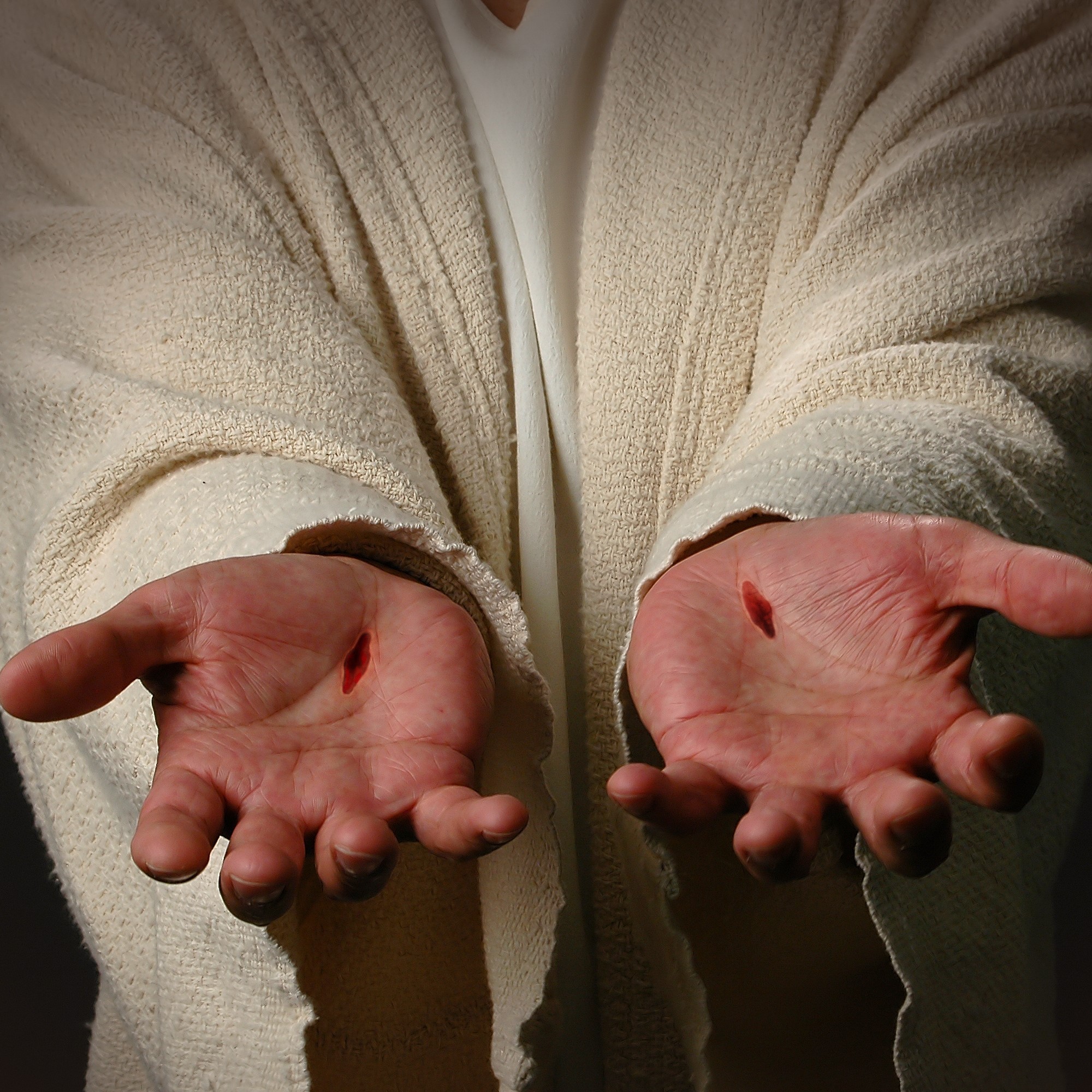
Think of the nails being driven through his hands and his feet. Think of the thorns placed over his head. And think of the spear that was run through his side. He was pierced for our transgressions.
He was bruised. You can take that, bruised. And the Hebrew word here means crushed.
Think of Gethsemane. He was crushed for our iniquities and the winepress and the olive press. Gethsemane is where they press the olives to get the oil to come out. And think of him bleeding from every pore as he is bearing the weight of the world in Gethsemane. Crushed for our iniquities.
The chastisement of our peace was upon him. And with his stripes are we healed. And think of his flogging and the stripes that he endured, tearing the flesh of his back, so that when he was put to the cross, his blood would stain the post of the cross, much like the Passover lamb did in Israel that night that they sacrificed all we like sheep have gone astray. Speaking of lambs.
And it's so cool that they're referring to us as sheep and Christ as a sheep.
It's not that he's different from us. He has no form different from us or majesty that we should see him as anything different than us. For God became man so that man could become God. He refers to us as sheep because he is a lamb.
He is one of us. We have all, like sheep, gone astray. We have turned everyone to his own way. The Lord hath laid on him the iniquity of us all. He was oppressed and he was afflicted, yet he opened not his mouth. He is brought as a lamb to the slaughter. And as a sheep before her shearers is dumb, so he openeth not his mouth.
And he was taken from prison and from judgment. And maybe I'll even back up here when they say he is brought as a lamb to the slaughters and as a sheep before her shearers. You'll notice the pronoun they use here, her.
The word in Hebrew is Rachel, and it's a female sheep.
And it's interesting that God here is being described in feminine terms.
He bore and he carried. And he's being compared to not just a sheep like all of us, but particularly a female sheep. You're thinking, if you're talking about Christ, you're talking about God.
Why aren't you referring to him as a male sheep?
But the role that he's going to play here, you'll see it.
For he was taken from prison and from judgment. And who shall declare his generation when they say his generation? This is your favorite part in the whole Old Testament, the begats.
Let the begatting begin. And who shall declare his begatting? Who did he begat?
For he was cut off from the land of the living? Nobody.
He didn't have a chance to begat because he was put on a cross. And he was crucified. For the transgression of my people was he stricken. And he made his grave with the wicked.
His cross placed on the hill on either side of wicked men who had been convicted. And he was slain with the wicked. His grave with the wicked and with the rich in his death. And you think of the tomb that was donated to him by the wealthy man Joseph. Because he had done no violence. Neither was there any deceit in his mouth. Yet it pleased the Lord to. And you can take that bruise. The Hebrew here is crush.
Yet it pleased the Lord to crush him and to pierce him. He hath put him to grief. When thou shalt make. And this is the most beautiful part, I think, in this whole thing. When thou shalt make his soul an offering for sin, he shall see his seed. Wait.
It said that who shall declare his generation? He didn't have any begetting but when you take his soul, that sheep, that we laid all of our transgressions and his chastisement of our peace was on him. And the Lord hath laid on the iniquity of us all on this little lamb, when you take that as an offering for sin, he shall see his seed, because then we are born through him. Look at this. He shall prolong his days, and the pleasure of the Lord shall prosper in his hand. He shall see the travail of his soul. Travail again.
He's travailing and laboring and delivering.
What he bore and what he carried was us.
And now he is delivering us.
And he shall see his seed, because now we become his children.
He begat us.
And that's the whole symbol behind baptism, the idea that we will die and yet through him be born again. He overcame death. He's given us. We will overcome Babylon, we will overcome Egypt, we will overcome whatever it is you are dealing with in your life right now, you will overcome it.
And even the end, as scary as it may seem or may not seem, that one day we die, that's like our Babylon, we're going to overcome it. We're going to rise again. Because that's what he did.
And Abinadi answers this so beautifully in Mosiah, because they ask him, the priests ask him, what do these scriptures mean?
And he quotes Isaiah. And by the way, as I'm opening this up, Isaiah is the scripture that Christ quoted most.
Nephi quotes it, Abinadi quotes it. And in third Nephi, when Christ comes to the Americas in the Book of Mormon, he says, a commandment I give to you. Study the words of Isaiah. These are powerful, super powerful.
And just a second, I'm still flipping through here as I get to.
So Abinadi states this so well. Mosiah, chapter 15. He's going to quote Isaiah. He says verse 10. And now I say unto you, who shall declare his generation? This is him quoting right there. Isaiah, Behold, I say unto you that when his soul has been made an offering for sin, he shall see his seed. And now what say ye? And who shall be his seed? Behold, I say unto you that whosoever has heard the words of the prophets, yea, all the holy prophets who have prophesied concerning the coming of the Lord, I say unto you that all those who have hearkened unto their words and believe that the Lord would redeem his people and have looked forward to that day for remission of their sins, I say unto you that these are his seed. Or they are the heirs of the kingdom of God.
So now the seed of the one who could not have children because he was cut off from the land of living becomes even greater than the seed of anyone that could have had children because he inherits all of the righteous who are willing to follow him and willing to take that covenant on. And this is why it flows into chapter 54. Look at this. Verse one. Sing, O barren, thou that did not bear, he was cut off from the land of living.
Break forth into singing and cry aloud, for thou that did not travail with child. For more are the children of the desolate than the children of the married wife, saith the Lord. And now all of a sudden, go back to Sarah.
More are the children of the desolate. That woman could not have a child to save her life, but when she did, and Isaac was born, now everybody claims Abraham is a father. More are the children of the desolate. How is that? Now Sarah is an image of Christ, one that was travailing and laboring, and she could not have a child. And she passed the age of when she could. And yet now she's had more children than anyone. She is a powerful image of Christ.
Enlarge the place of thy tent and stretch forth the curtains of thine habitations. Spare not. Lengthen the cords and strengthen thy stakes.
You were talking about this earlier this year, Nate. The stakes being what you're using to tie down the tent. And these are stakes that we talk about in Zion. Each stake is a stronghold in Zion to fortify Israel.
For thou shalt break forth on the right hand and on the left, and thy seed shall inherit the Gentiles, the nations, and make the desolate cities to be inhabited. Now we're not just talking about literal Jacob.
Isaiah just called out that all of the gentiles, the nations, will also follow the Lord, that he will inherit all of them as well.
And it's such a powerful prophecy, because look at what happened after the death of Christ, chapter 53. We just read about him being offered up as a sacrifice, and yet right after his death.
And the Jews are trying. Not the Jews, the apostles are trying to preach the gospel to the Jews, and they're not having any success. The Jews are very stuck in their ways. They don't want to hear it, they don't believe it.
And they're out fishing.
And Christ comes to them and like, whoa, didn't I not tell you to be fishers of men, not fishers of fish. And he tells them, cast your nets on the other side.
And they passed their nets on the other side. Now they've got so many fish that it's breaking the nets.
Don't be fishers of fish, fishers of men. You're going to the Jews and they're not accepting it. Now it's time for the Gentiles to receive the gospel. Go to the Gentiles. And when you go to the nations, now all of a sudden so many people are joining and following Christ that the structure, the nets themselves are breaking. The church is going into apostasy because it can't keep up with the growth.
And so the time of the Gentiles goes where they starting to reject it. We've got to expect that with these nets broken, God will call another prophet, another servant who is going to be a servant that we don't recognize that maybe we miss that maybe we treat poorly, that maybe we afflict, that maybe we put to death.
And yet he is going to bring Zion from all the different corners of the earth and restore the gospel. Because that's what Isaiah said would happen. Because that's what God told Isaiah was going to happen thousands of years ago. And it has played out to a letter to the T. And God says, all right, come, let us reason together. Here's my evidence.
Here's everything I said that was going to do. At what point did you frustrate any of my plans?
At what point did you divert the course of human history and make it so everything I said was going to happen didn't happen?
And at what point did you prophesy anything and have that come about over thousands of years?
So when Isaiah is calling out all of these prophetic things, all of them pointing right back to Christ.
Because if you can see history and you can believe history, then you can believe Christ is going to save you from the dead. And what greater hope do we need than to believe in Christ?
[01:04:44] Speaker B: I wish I could give you a hand right now, like a round of applause.
That was an hour's worth of like, just perfect sermon, my man. Seriously,
[01:04:57] Speaker A: I'm telling you. And I only got Isaiah 54, but this is such a beautiful section of Scriptures.
[01:05:04] Speaker B: You've done an incredible job of helping to bring that to life, too. Is there anything else you want to try to hit? Are very much out of time. But honestly, at this point, I don't even care. So I have a feeling that anybody that's been listening to this so far would also. If there's anything else you want to throw in there, I mean, this has been gold. So
[01:05:25] Speaker A: Maybe I'll wrap it up with this.
As we're talking about the Lord and how we can look forward to a restoration, I'm just going to finish with a few verses in 54, verse 6. For the Lord hath called thee as a woman forsaken and grieved in spirit and a wife.
In fact, let me back up, because there was something.
Let me back up to even verse four real quick, because there's just one little thing Here in verse 4 I think I need to hit. And then I'll go back into verse six, verse four. Fear not, thou shalt not be ashamed, neither be thou confounded, for thou shalt not be put to shame. For thou shalt forget the shame of thy youth, and shalt remember the reproach of thy widowhood anymore.
He's talking to Israel, and I think it's fascinating that he says, remember the reproach of thy widowhood anymore. Why is Israel being called a widow? She's been called a virgin, she's been called a prostitute, but now she's being called a widow.
And Isaiah is prophesying Israel is going to put their husband to death. The Lord.
And because he's dead, she's a widow.
That's a very subtle detail, but it's very.
I mean, it just puts. It's
[01:06:50] Speaker B: very prophetic.
[01:06:51] Speaker A: Yes, it puts a fine point on Isaiah 53. He's going to die, and you're going to be a widow because he died for you.
And even though he's going to die, he's going to come back. But let's go to this promise.
For the Lord shall call thee as a woman forsaken and grieved in spirit, and a wife of youth when thou hast refused, saith the Lord, for a small moment I have forsaken you, but with great mercies will I gather thee in a little wrath. I hid my face from thee for a moment, but with everlasting kindness will I have mercy on thee, saith the Lord, thy Redeemer.
And so you do have this directly referring to being carried into Babylon. And for a small moment I was offended. You went there for a while, but I restored you. But think about this. At that point, they weren't a widow because Christ hadn't been put to death.
He's referring. Isaiah is reaching even further into the future and saying, after you put him to death, after you've inherited the Gentiles, remember more are the ones that inherit after the Gentiles. And after all of this happens, you're going to sell Yourself again. Now I'm going to hide my face. You're not going to see me hiding my face. The only place you can see God is in the temple. The temple is going to be destroyed. You can't have access to him anymore.
But then I will rebuild the temple. You can come back into my presence. I will restore you.
This is prophesying. Not just the return of Babylon, but an apostasy after Christ and eventual restoration in the last days.
For this, as the waters of Noah unto me. For as I swore that the waters of Noah should no more go over the earth, so have I sworn that I would not be wroth with thee nor rebuke thee. And that's such a beautiful promise to me that after this last apostasy that you turn away.
We're not going to play this game anymore. You turned away from me.
And for the last time, I am going to take you and I am going to bring you back to me. And at this point, will the gospel never again leave the earth? Will Israel never again turn away from me? And will I never again turn from Israel? Which gives us great hope in the restoration today.
And the beautiful promises. For the mountains shall depart and the hills be removed. But my kindness now shall not depart from thee, neither shall the covenant of my peace be removed, saith the Lord that hath mercy on thee.
And they talk, all thy children shall be taught of the Lord. And great shall be the peace of thy children. And righteous shall thou be established. Thou shalt be far from oppression, and thou shalt not fear from terror. And it shall not come near thee. Just these beautiful promises that come after the restoration.
[01:09:35] Speaker B: Great stuff, man. Great stuff, man. For real.
All right, next week. What are we still in Isaiah?
[01:09:42] Speaker A: Yeah, one last lesson in Isaiah and. Happy New Year, Nate.
[01:09:47] Speaker B: Well, Jewish New Year or something like that. It
[01:09:50] Speaker A: is. It is. Today is Rosh Hashanah.
[01:09:53] Speaker B: Rosh Hashanah, baby.
[01:09:55] Speaker A: Rosh means head, chief, principal. Ha Means the Shanah means year. So the head of the year. The beginning of the year. Happy New Year.
[01:10:02] Speaker B: We got it. We made it. We made it. Another year.
[01:10:05] Speaker A: Another year.
[01:10:06] Speaker B: All right, until next week.
[01:10:08] Speaker A: See ya, Sam.